
Is Bitcoin an Inflation Hedge? Examining the Evidence
“Digital gold” and “inflation hedge” get used almost interchangeably in Bitcoin marketing, but the actual evidence is far messier than the slogan suggests, supportive in some conditions and genuinely contradicted in others.
The Case Supporting the Thesis
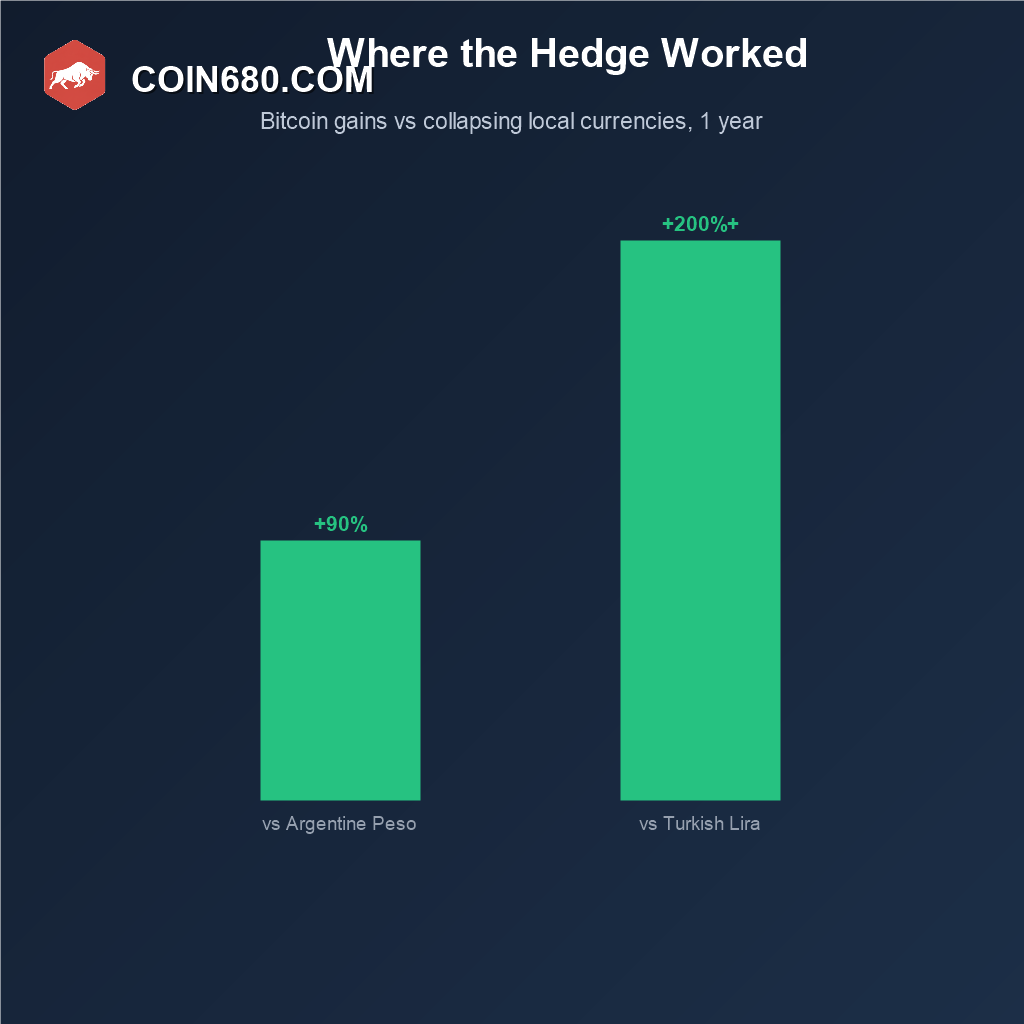
Academic research covering monthly data from 2010 through 2023 found that Bitcoin returns increased significantly following positive inflation shocks, real statistical evidence in Bitcoin’s favor. The clearest real-world case comes from countries with chronic currency collapse rather than the United States: Bitcoin appreciated roughly ninety percent against the Argentine peso and more than two hundred percent against the Turkish lira within a single year, a genuine hedge against fast local currency debasement.
Where the Thesis Breaks Down
In more recent periods, Bitcoin has fallen alongside rising inflation expectations and tightening monetary policy, the opposite of what a clean inflation hedge should do. Its correlation with risk assets during periods of market stress undercuts the pure hedge narrative, since a genuine hedge should hold or rise when risk assets fall, not move together with them.
Why Timeframe Changes the Answer
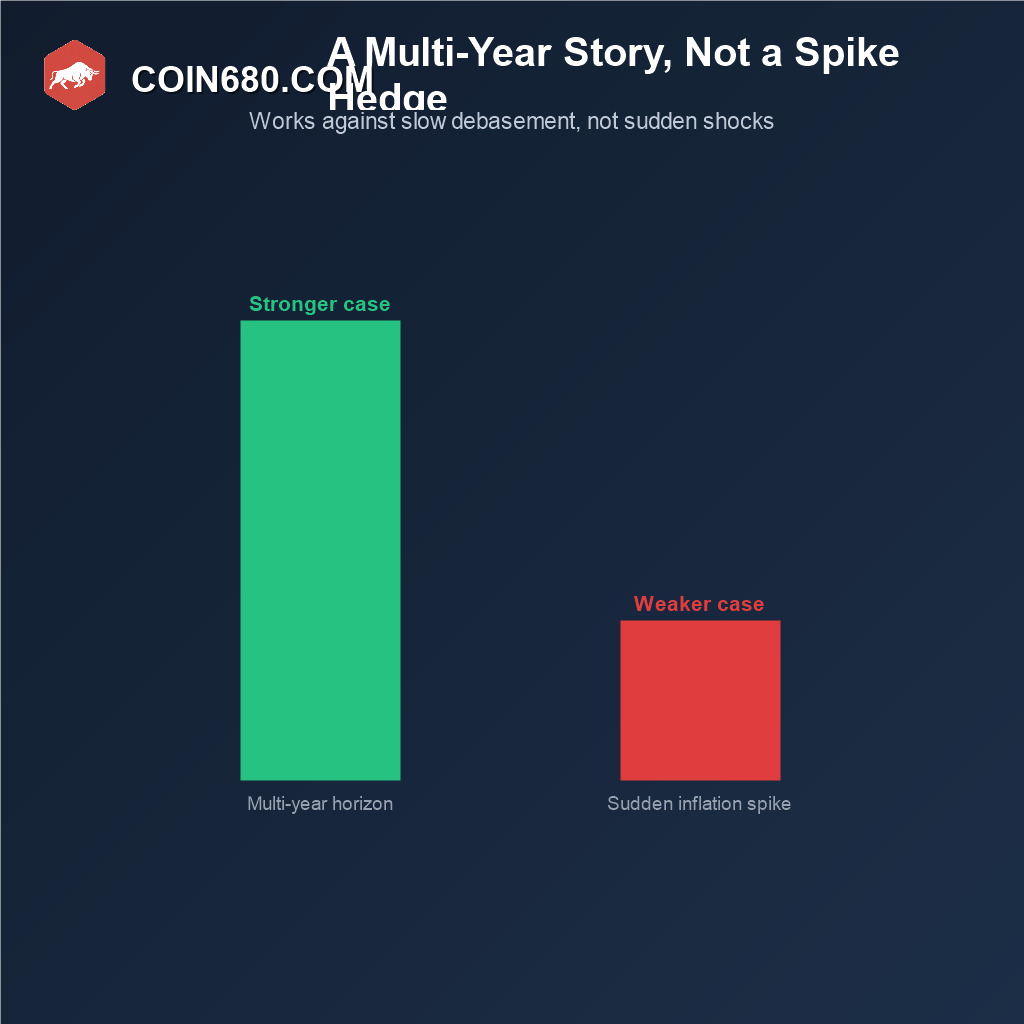
The most defensible version of the thesis treats Bitcoin’s inflation-hedging property as a multi-year phenomenon tied to slow currency debasement, not a tool for immediate protection against a sudden inflation spike or a single bad economic data print. Researchers increasingly describe it as a context-specific hedge rather than a universal one, working well against gradual currency debasement in unstable economies, working far less reliably as a short-term hedge in a stable, developed-market economy like the United States.

Frequently Asked Questions
Does Bitcoin protect against inflation the way gold does?
The evidence is mixed and depends heavily on timeframe and location. It has shown real protective value against chronic currency debasement in unstable economies, but weaker, less consistent protection against short-term inflation spikes in stable developed economies.
Has Bitcoin always risen when inflation rose?
No, more recent periods have shown Bitcoin falling alongside rising inflation expectations and tighter monetary policy, directly contradicting the simple hedge narrative.
Where has Bitcoin worked best as an inflation hedge in practice?
In countries experiencing severe currency collapse, such as Argentina and Turkey, where Bitcoin posted large gains against the rapidly devaluing local currency within a single year.
Is Bitcoin a reliable short-term inflation hedge?
Most current research suggests its hedging property, where it exists, works over multi-year horizons against slow currency debasement rather than as immediate protection against a single inflation spike.
Educational content only, this is not financial advice. Inflation-hedge claims are debated among researchers and carry no guarantee of holding true in future conditions. Always research independently before investing.
The inflation-hedge debate connects directly to Bitcoin’s broader value proposition. Continue with the store of value thesis, Bitcoin vs traditional safe havens, or return to the full Bitcoin Academy.