
How Do Interest Rates Affect Bitcoin’s Price?
A central bank meeting thousands of miles from any crypto exchange can move Bitcoin’s price within minutes of a rate decision. That reaction is not random, it runs through a specific, well-understood economic mechanism worth actually tracing.
The Opportunity Cost Mechanism
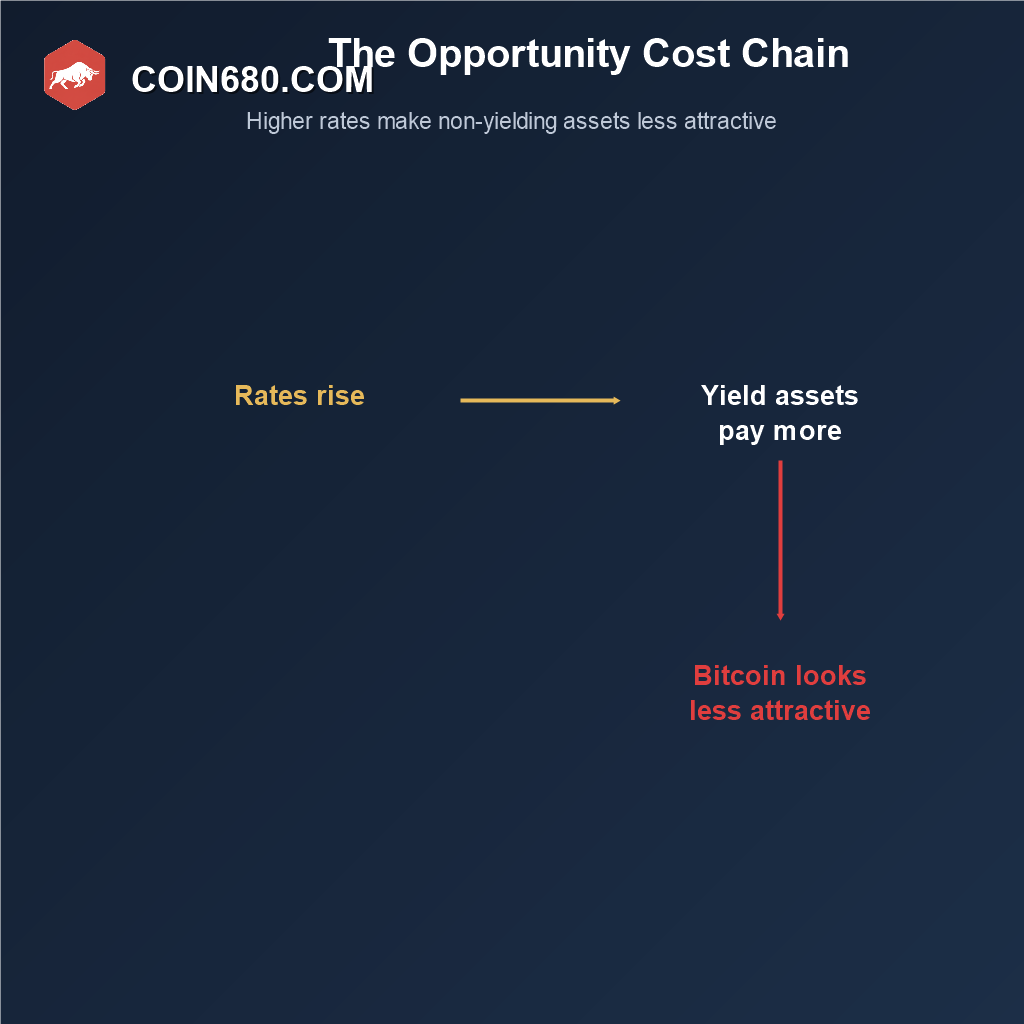
Bitcoin generates no yield or interest on its own the way a bond or a savings account does, so holding it carries an opportunity cost, the return an investor gives up by not holding a yield-bearing asset instead. When interest rates rise, that opportunity cost rises with it, since safer yield-bearing assets suddenly pay more, making a non-yielding asset like Bitcoin comparatively less attractive to hold.
Why Bitcoin and Gold Sometimes Fall Together on Rate News
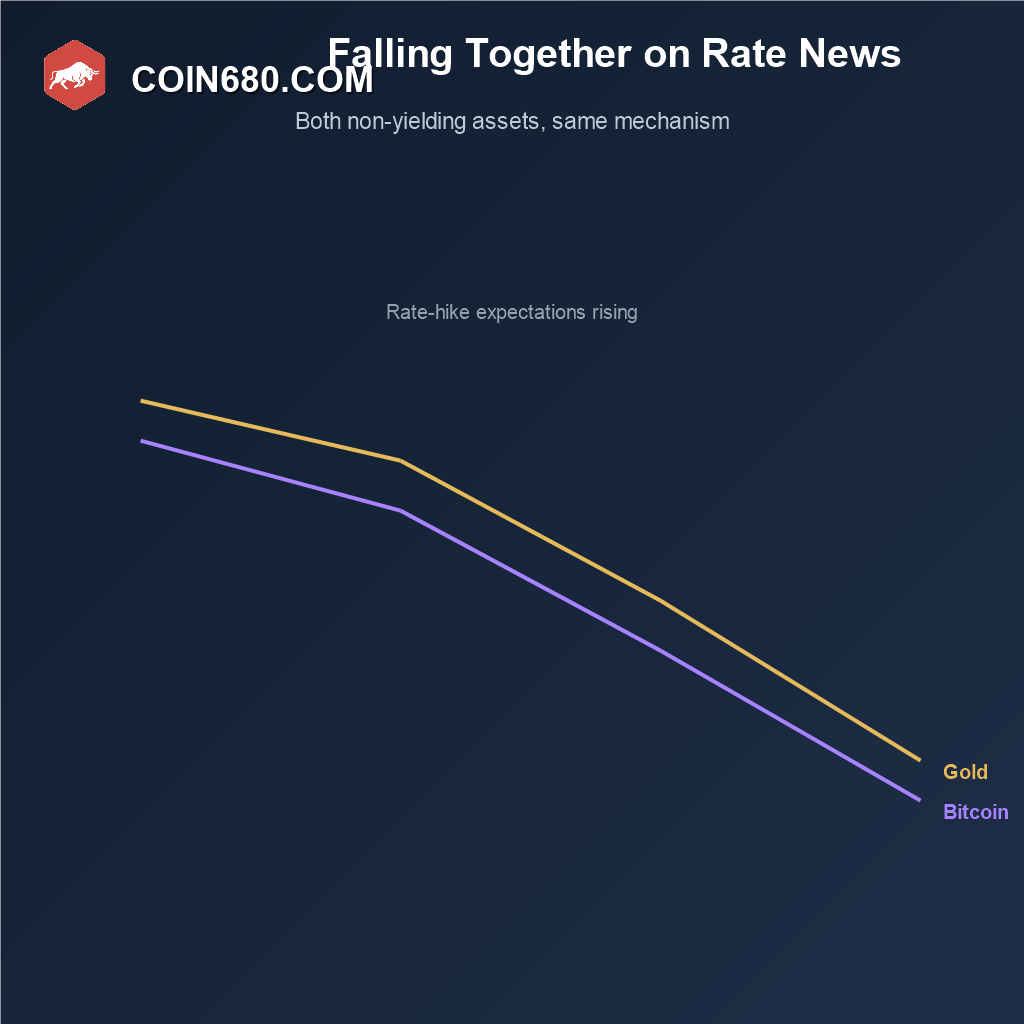
This mechanism is not unique to Bitcoin, gold shares the same non-yielding structure, which is why the two have been observed falling together specifically around rate-hike expectations, both losing relative appeal to yield-bearing alternatives at the same time for the same underlying reason. That shared reaction is one of the clearer, more mechanically explainable links between Bitcoin and a traditional asset, distinct from the more erratic correlation swings covered elsewhere in this chapter.
Rate Cuts and Liquidity Work the Other Way
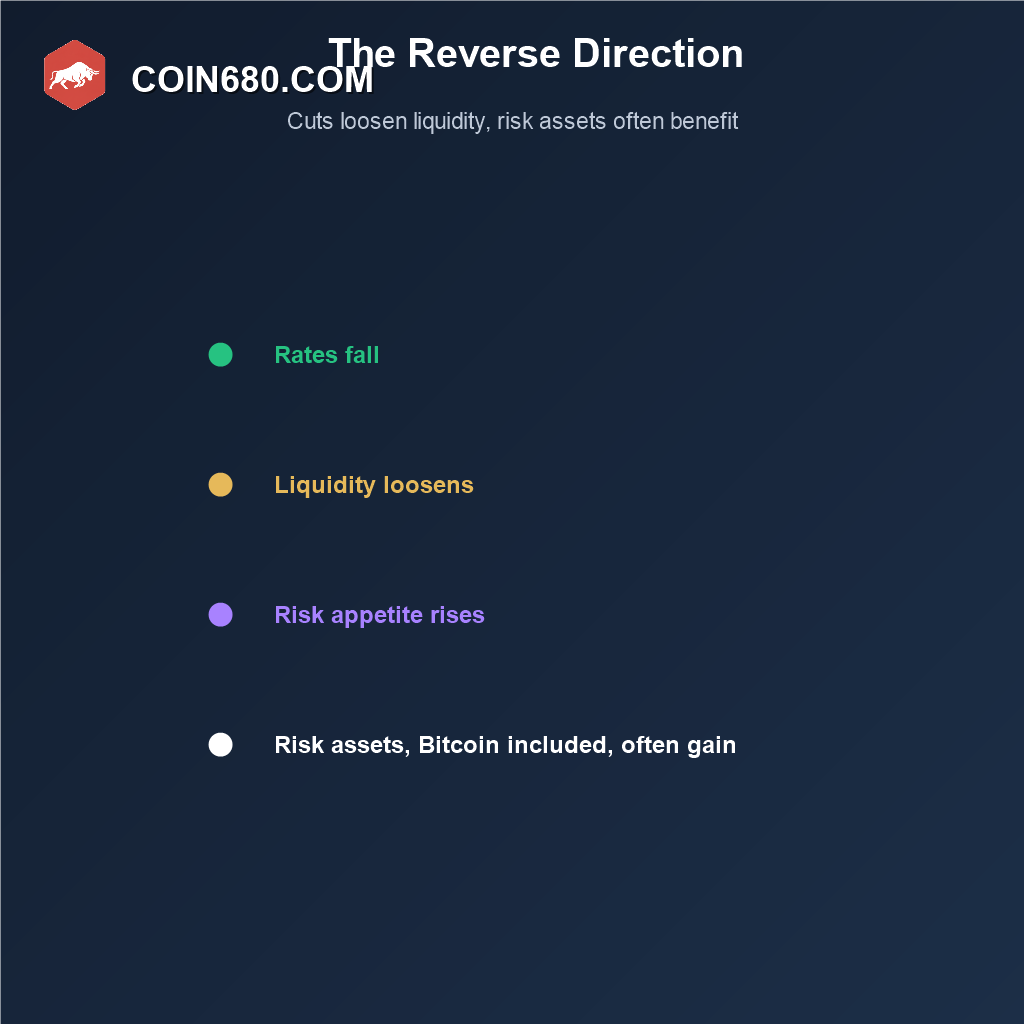
When central banks cut rates or otherwise loosen monetary policy, the opportunity-cost logic reverses, and cheaper, more abundant liquidity has historically coincided with stronger periods for risk assets broadly, Bitcoin included, a dynamic that connects directly to the global liquidity relationship covered later in this chapter. It is a genuine driver, not the only one, and rate expectations interact constantly with the other macro and crypto-specific factors covered throughout this Academy.
Frequently Asked Questions
Why do rising interest rates tend to pressure Bitcoin’s price?
Because Bitcoin generates no yield of its own, rising rates make yield-bearing alternatives more attractive by comparison, increasing the opportunity cost of holding a non-yielding asset like Bitcoin.
Do gold and Bitcoin react to rate changes the same way?
Often yes, since both are non-yielding assets, they have been observed falling together around rate-hike expectations for the same underlying opportunity-cost reason.
What happens to Bitcoin when interest rates fall?
Falling rates tend to reduce the opportunity cost of holding non-yielding assets and loosen overall liquidity, conditions that have historically coincided with stronger periods for risk assets including Bitcoin.
Is interest rate policy the only driver of Bitcoin’s price?
No, it is one significant macro driver among several, including liquidity conditions, regulatory news, and crypto-specific catalysts covered throughout this Academy.
Educational content only, this is not financial advice. Macro relationships shift over time and offer no guarantee of a specific future price reaction. Always research independently before investing.
Interest rates tie directly into the liquidity relationship covered next. Continue with global liquidity and Bitcoin, revisit Bitcoin vs gold, or return to the full Bitcoin Academy.