
What Is the Relationship Between Bitcoin and the US Dollar?
Bitcoin was conceived partly as an alternative to a monetary system anchored by the US dollar, yet its price is still quoted in dollars everywhere and its behavior is still deeply entangled with dollar dynamics. That relationship is genuinely two-sided, worth unpacking from both directions.
How a Stronger Dollar Tends to Pressure Bitcoin
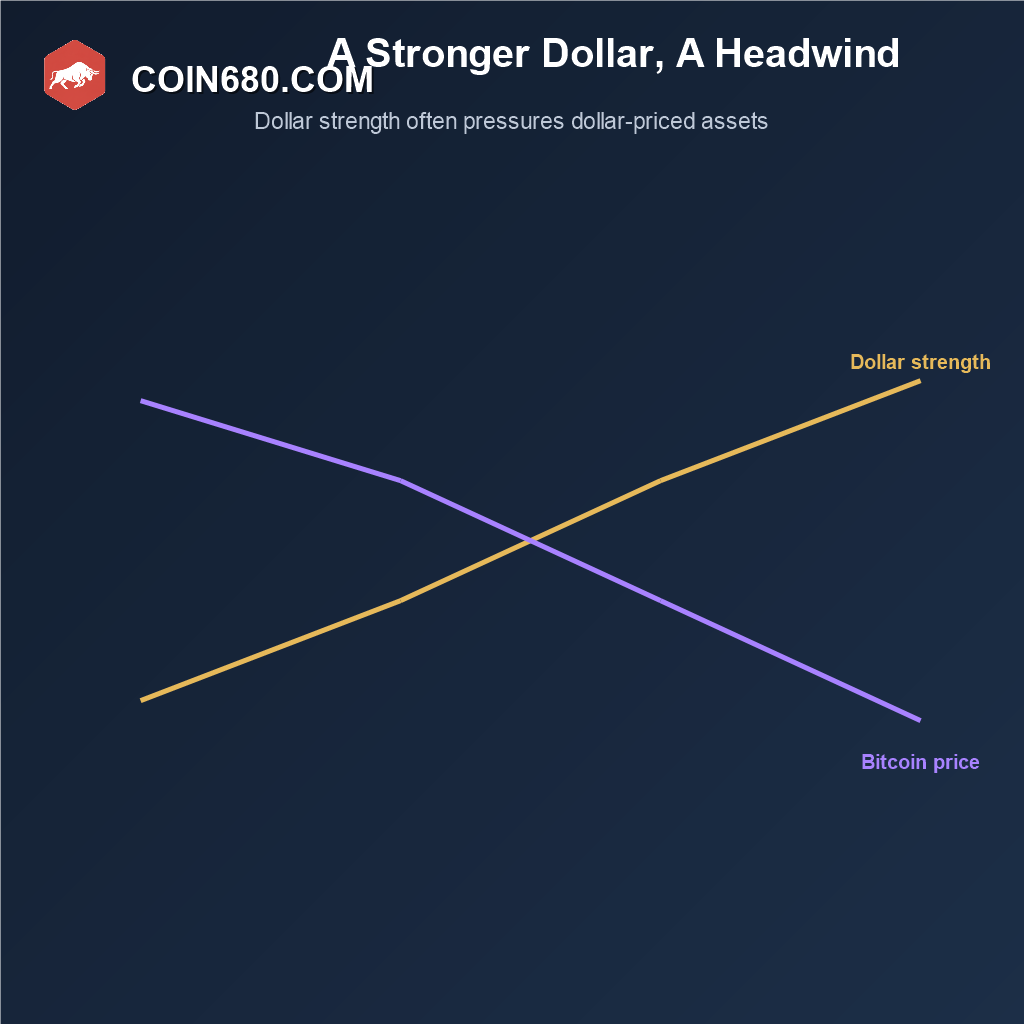
Bitcoin, like most globally traded assets priced in dollars, tends to face headwinds when the dollar strengthens broadly against other currencies, since a stronger dollar makes dollar-denominated assets more expensive for holders of other currencies and often coincides with tighter global liquidity conditions. This dollar-strength effect works through a similar underlying mechanism to the interest-rate relationship covered in the previous lesson, since dollar strength and rate expectations frequently move together.
How Bitcoin Sometimes Acts as a Dollar Alternative
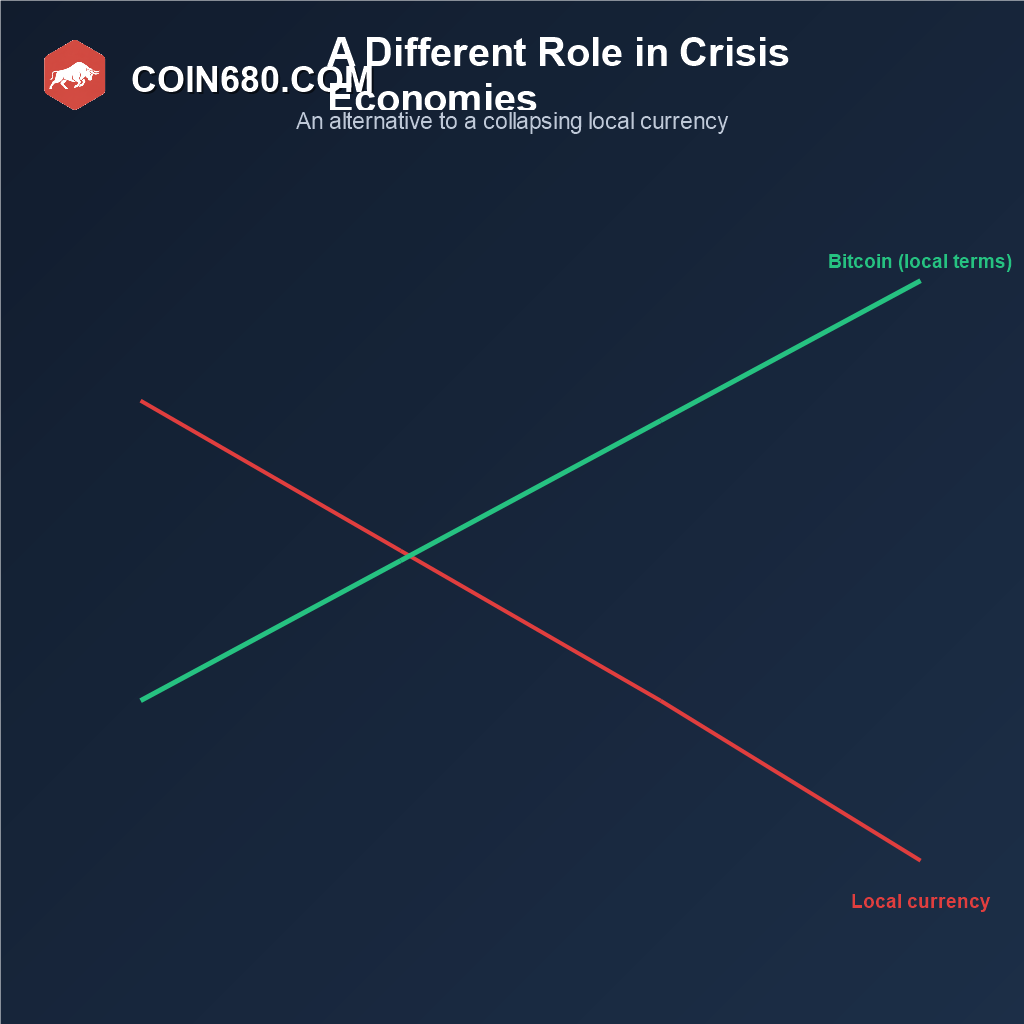
In economies experiencing rapid local currency devaluation, examined earlier in this chapter’s inflation-hedge coverage, Bitcoin has functioned less as a dollar-correlated risk asset and more as an alternative store of value entirely outside any single national currency, dollar included. That dual role, sometimes trading as a dollar-denominated risk asset, sometimes trading as an alternative to national currencies altogether, depends heavily on which economy and which investor base is actually driving demand at a given moment.
Why This Relationship Is Not Fixed
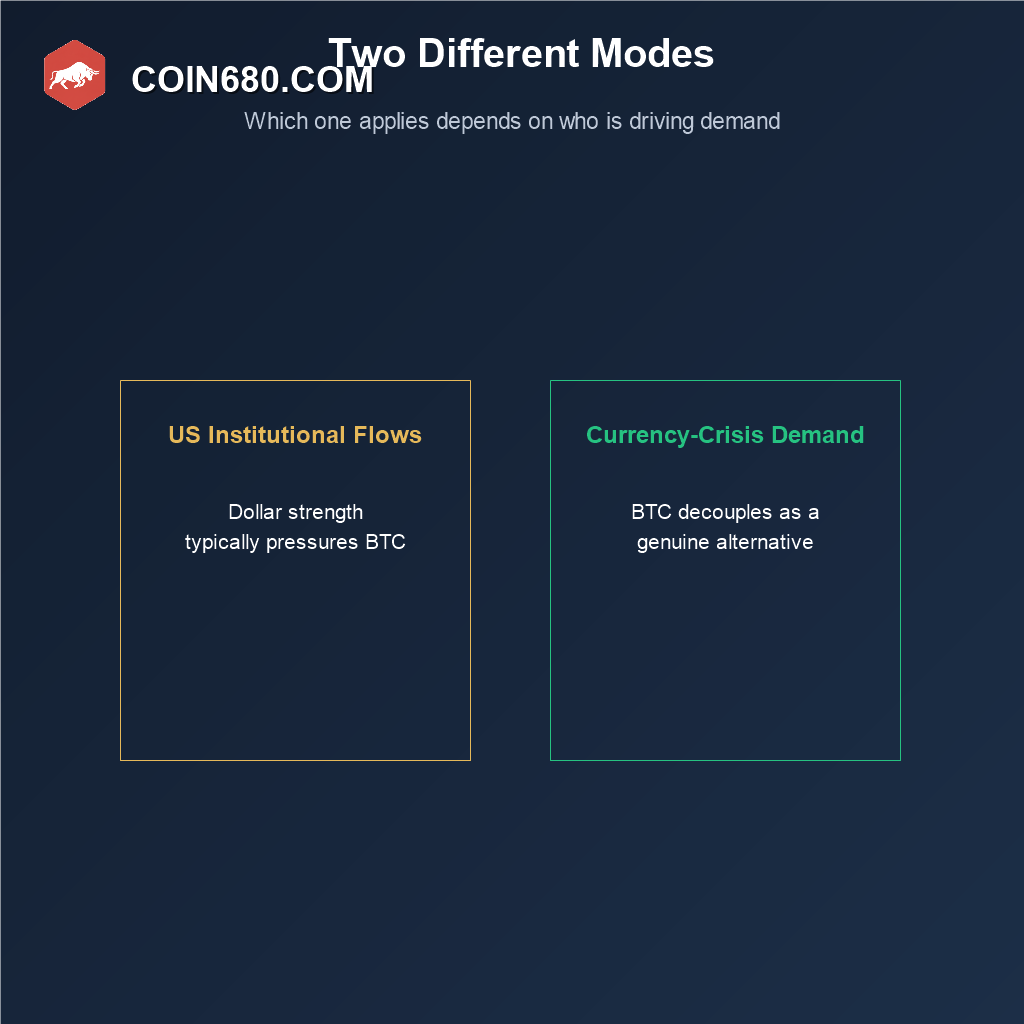
Unlike the more mechanical interest-rate relationship, Bitcoin’s link to the dollar shifts depending on whether it is being driven by US-based institutional and liquidity flows, where dollar strength typically pressures it, or by demand from economies actively fleeing their own local currency, where Bitcoin can decouple from typical dollar dynamics entirely. Reading this relationship correctly requires knowing which type of demand is dominant at the time, not applying a single fixed rule.
Frequently Asked Questions
Does a stronger US dollar always hurt Bitcoin’s price?
It tends to create headwinds, particularly when dollar strength is driven by US institutional flows and tighter liquidity, but the relationship is not a fixed rule and can shift depending on what is driving demand elsewhere.
Can Bitcoin act as an alternative to the dollar?
In economies experiencing rapid local currency devaluation, Bitcoin has functioned as an alternative store of value outside any single national currency, including the dollar, rather than simply tracking dollar strength.
Why does Bitcoin’s price get quoted in dollars if it aims to be independent of it?
Dollar pricing is a market convention reflecting the dollar’s role as the dominant global reserve and trading currency, not a statement about Bitcoin’s underlying design or independence from any single currency.
Is the Bitcoin-dollar relationship the same everywhere in the world?
No, it depends heavily on which investor base and economy is driving demand at a given time, with behavior differing meaningfully between US-based institutional flows and demand from currency-crisis economies.
This content is for educational purposes only and is not financial advice. Currency and macro relationships shift over time and offer no guarantee of future behavior. Always research independently before investing.
This dollar relationship connects closely to global liquidity, covered next. Continue with global liquidity and Bitcoin, revisit the inflation hedge debate, or return to the full Bitcoin Academy.