
Bitcoin’s Market Cap Compared to Gold, Stocks, and Real Estate
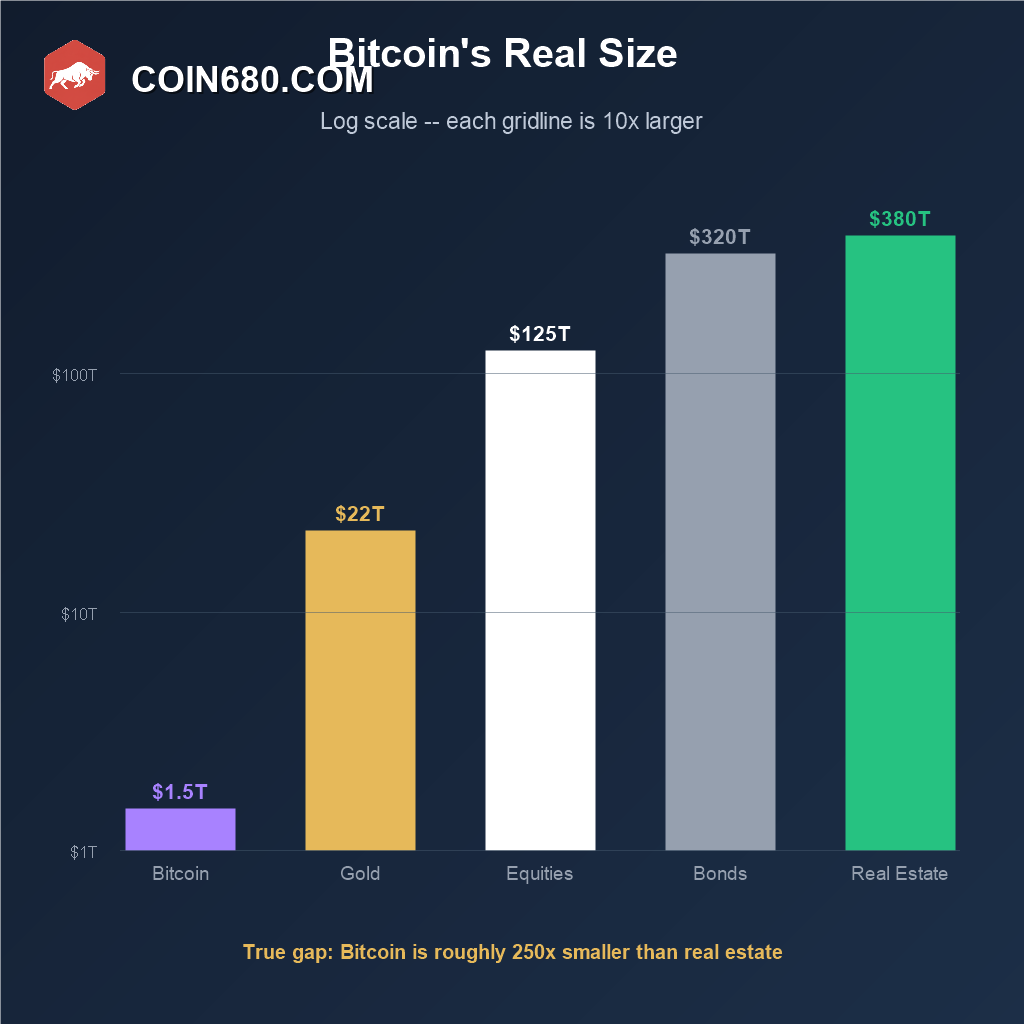
Bitcoin’s price headlines can make it feel enormous, a multi-trillion dollar asset dominating financial news cycles. Placed next to the world’s other major asset classes, the actual scale looks considerably more modest, and that gap matters for how investors should think about it.
The Numbers Side by Side
Recent estimates put Bitcoin’s total market capitalization in the range of roughly 1.4 to 1.8 trillion dollars, compared to gold’s global market of over 20 trillion dollars, the S&P 500 alone at around 50 trillion dollars, and global bond and real estate markets each running into the hundreds of trillions. By that comparison, Bitcoin represents a low single-digit percentage of gold’s total value and an even smaller fraction of global equities, bonds, and real estate combined.
Why This Gap Is Actually the Bull Case, Not Just a Reality Check
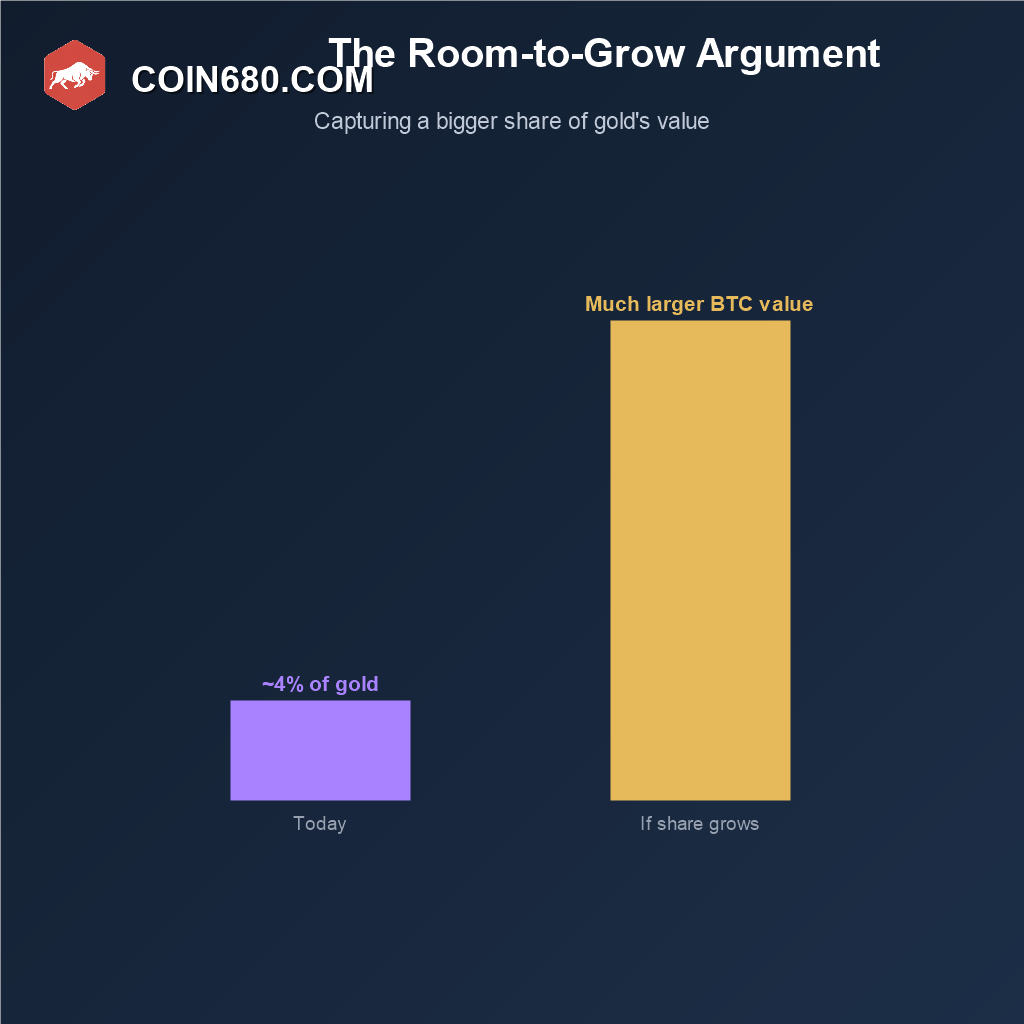
For investors who believe Bitcoin will keep capturing a growing share of the value currently stored in gold, bonds, or broad portfolios, this size gap represents substantial theoretical room to grow rather than a ceiling already being approached. This is the logic behind long-term price models built around Bitcoin’s total addressable market relative to these larger asset classes, a framework built entirely on the comparison covered in this lesson.
Why the Gap Also Argues for Caution
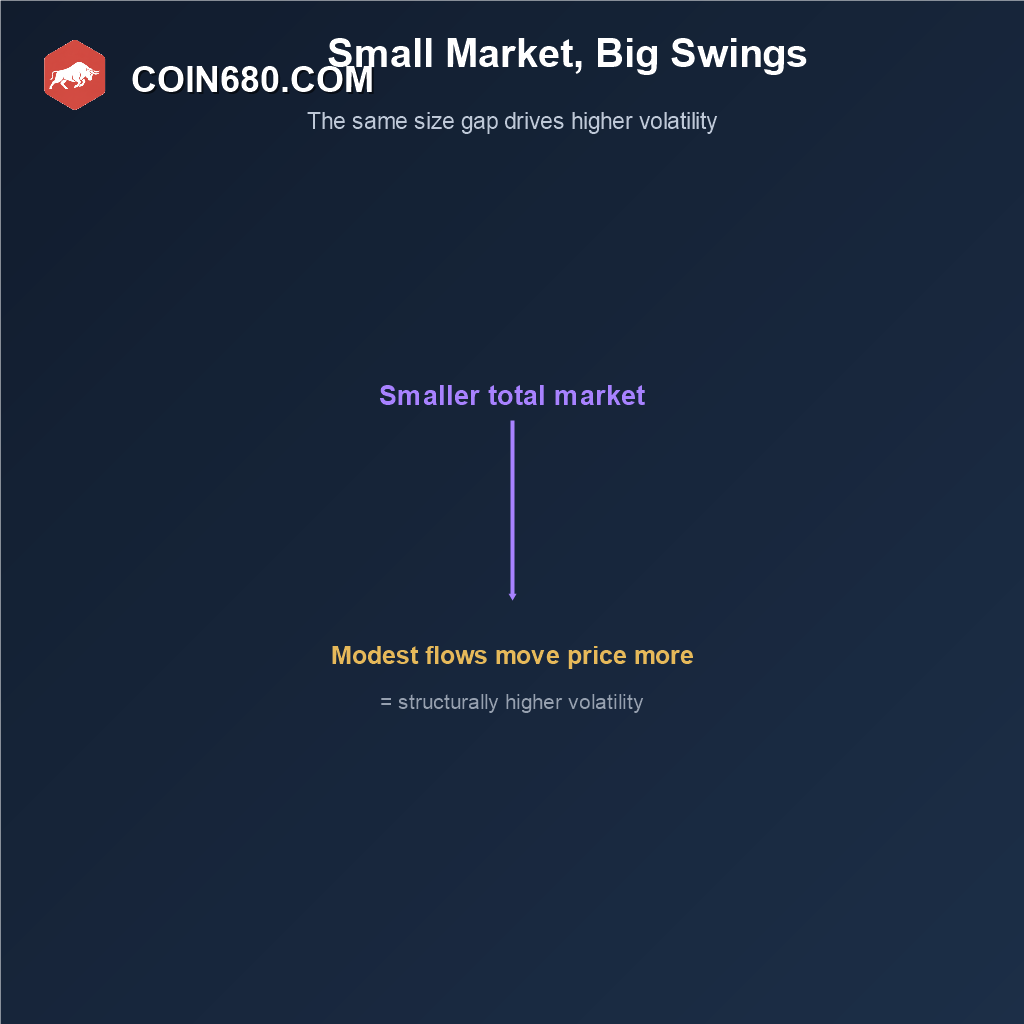
A market this much smaller than gold or global equities is also inherently more susceptible to large percentage swings from relatively modest dollar flows in or out, part of why Bitcoin’s volatility remains structurally higher than assets many times its size. The same smallness that fuels the growth thesis is mechanically connected to the volatility discussed throughout this chapter, not two separate, unrelated facts.
Frequently Asked Questions
How does Bitcoin’s market cap compare to gold’s?
Bitcoin’s total market capitalization sits at roughly a low single-digit percentage of gold’s global market value, which is estimated at over 20 trillion dollars.
Is Bitcoin’s market cap bigger than the stock market?
No, it remains considerably smaller than major equity indices alone, let alone the full global stock market, bond market, or real estate market combined.
Does a smaller market cap make Bitcoin riskier?
It is a contributing factor. A smaller total market is inherently more susceptible to large percentage price swings from relatively modest capital flows, part of why Bitcoin’s volatility remains structurally higher than much larger asset classes.
Why do some investors see the size gap as bullish?
Because it implies significant theoretical room for Bitcoin’s value to grow if it continues capturing a larger share of capital currently allocated to gold, bonds, or broader portfolios, a framework covered in long-term valuation models throughout this Academy.
This content is for general education and is not financial advice. Market capitalization figures change constantly and comparisons carry no guarantee about future growth. Always research independently before investing.
This scale comparison connects to how institutions actually access Bitcoin exposure. Continue with how institutions custody Bitcoin, revisit whether Bitcoin is risk-on or risk-off, or return to the full Bitcoin Academy.