
What Is Global Liquidity, and Why Do Bitcoin Investors Watch It?
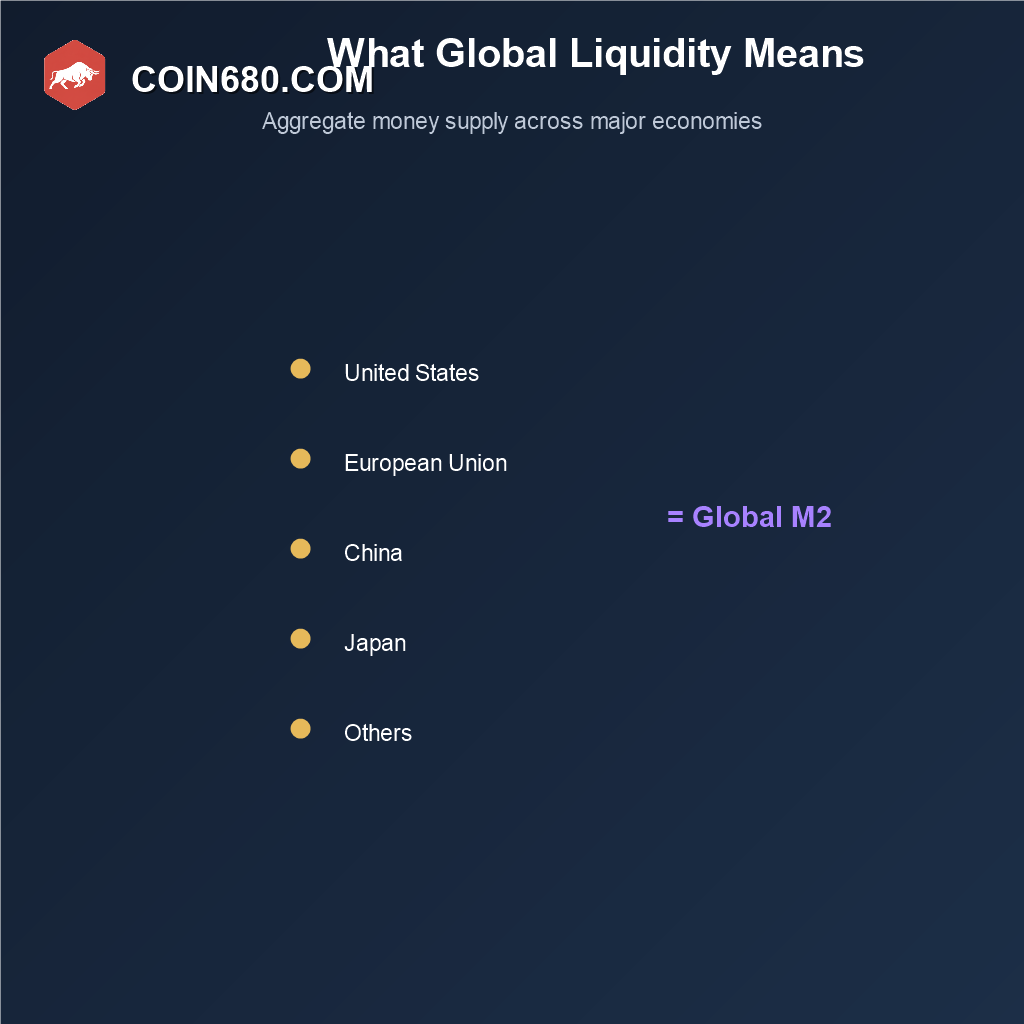
Global liquidity sounds like an abstract macroeconomics term, but the concept behind it is simple: how much money, in aggregate, is sloshing around the world’s major economies at any given time. Bitcoin investors watch it closely because the relationship, while imperfect, is one of the stronger macro links this chapter covers.
What Global Liquidity Actually Measures
Global liquidity is typically approximated by tracking M2, the money supply, across the world’s largest economies combined, capturing cash, checking deposits, and easily accessible savings all at once. When central banks expand the money supply through lower rates or asset purchases, global liquidity rises, and when they tighten policy, it contracts.
The Historical Relationship With Bitcoin
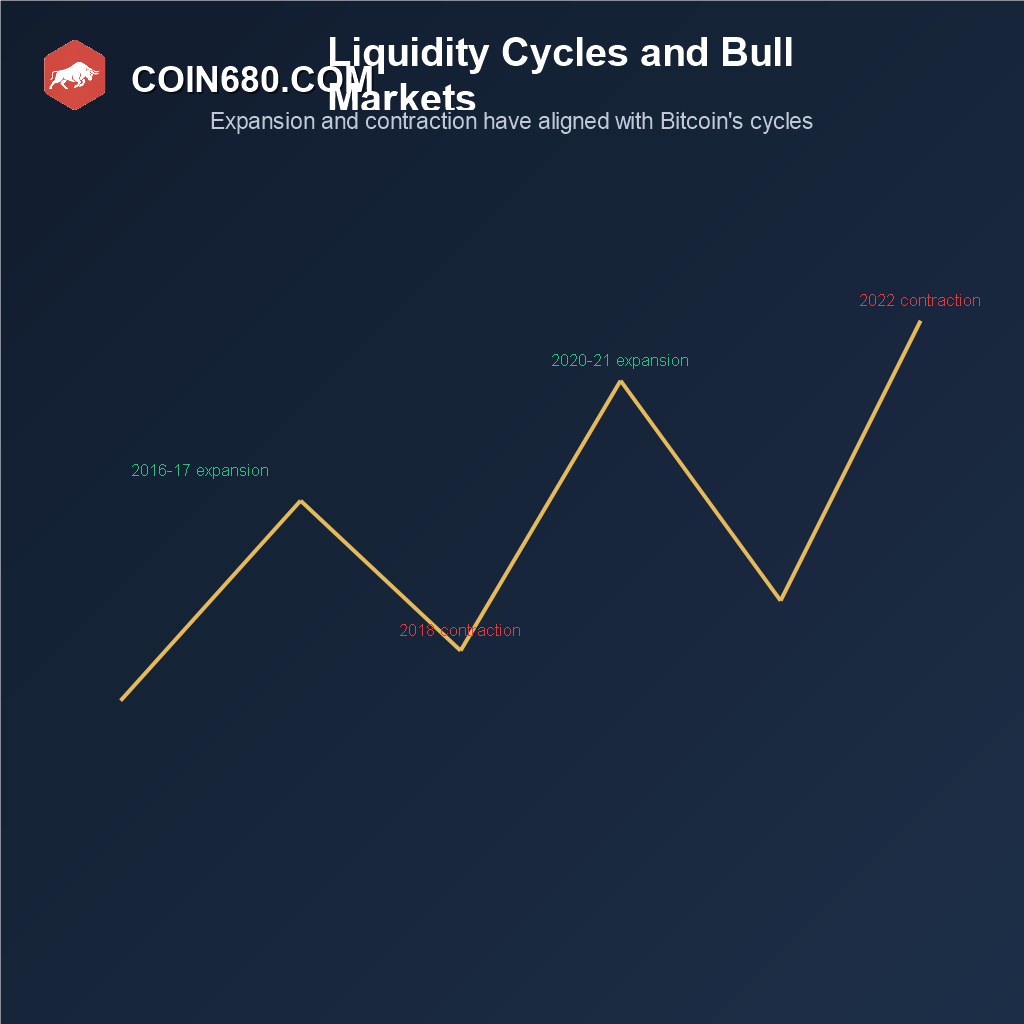
Research measuring the long-term relationship between Bitcoin’s price and global M2 has found a very high statistical correlation, though shorter rolling windows have shown that relationship strengthening and weakening at different points rather than staying perfectly constant. Historically, periods of rapid liquidity expansion, notably 2016 through 2017 and 2020 through 2021, aligned closely with major Bitcoin bull markets, while liquidity contractions in 2018 and 2022 aligned with sharp corrections.
The Lag Effect Worth Knowing
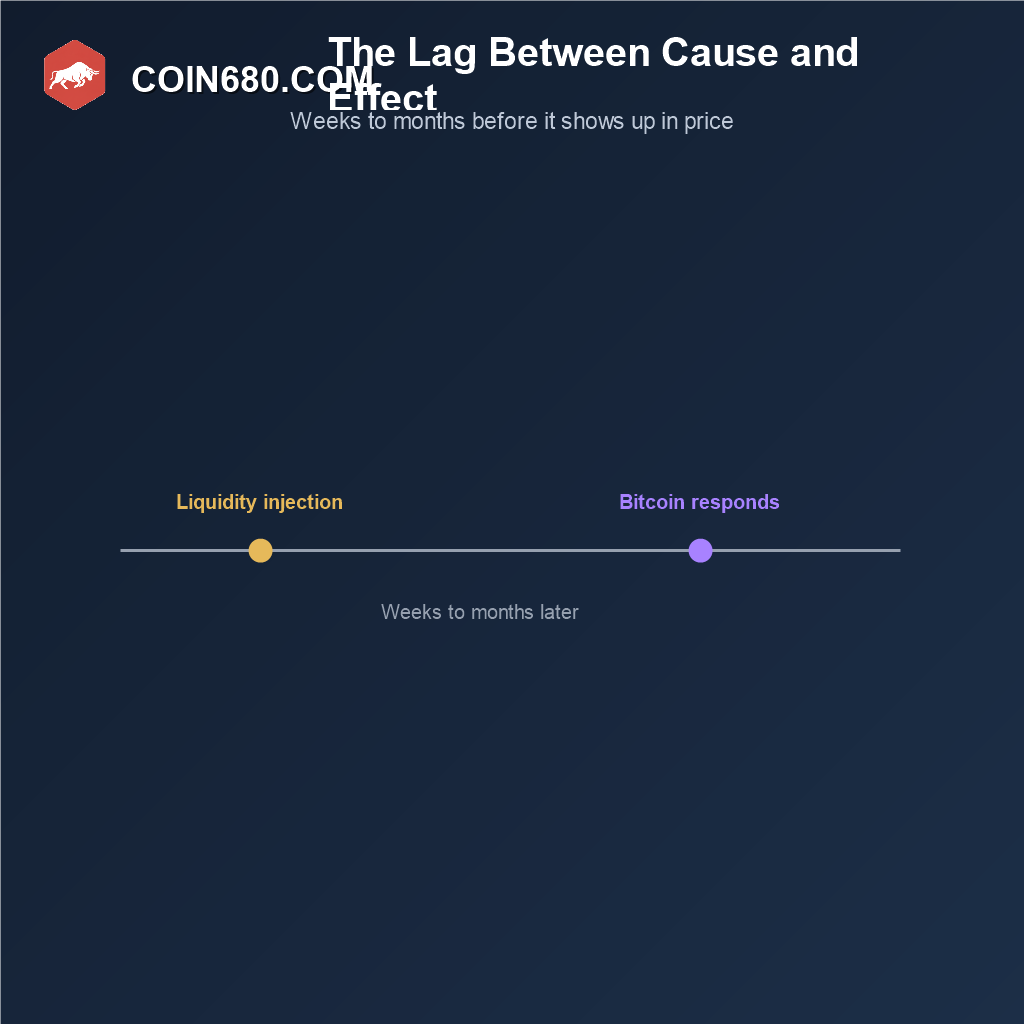
Liquidity injections do not translate into crypto market moves instantly, they tend to filter through with a delay of weeks to months as newly available capital works its way into riskier assets. In some past cycles, Bitcoin has actually moved ahead of the liquidity data itself rather than lagging behind it, suggesting the market sometimes prices in expected liquidity conditions before the official data confirms them, a genuinely two-way and imperfectly timed relationship rather than a simple cause-and-effect signal.
Frequently Asked Questions
What does global liquidity actually mean?
It generally refers to the aggregate money supply, commonly measured through M2, across the world’s major economies combined, reflecting how much capital is broadly available in the financial system.
Does rising global liquidity guarantee Bitcoin will rise too?
Not with certainty, but historically, periods of rapid liquidity expansion have aligned closely with major Bitcoin bull markets, while contractions have aligned with sharp corrections, a strong but imperfect relationship.
Does Bitcoin react to liquidity changes immediately?
Not usually. There is often a lag of weeks to months between a liquidity shift and its full effect showing up in crypto markets, and in some cycles Bitcoin has moved ahead of the data instead of behind it.
Is global liquidity a perfectly reliable predictor of Bitcoin’s price?
No single metric is, and the strength of the liquidity-Bitcoin relationship has varied across different time windows, so it works best alongside the other macro and on-chain tools covered throughout this Academy.
This content is for educational purposes only and is not financial advice. Macro liquidity relationships shift over time and offer no guarantee of future price behavior. Always research independently before investing.
Global liquidity ties together several threads from earlier in this chapter. Continue with whether Bitcoin is risk-on or risk-off, revisit how interest rates affect Bitcoin, or return to the full Bitcoin Academy.