
Spot ETF vs Futures ETF: What’s the Difference?
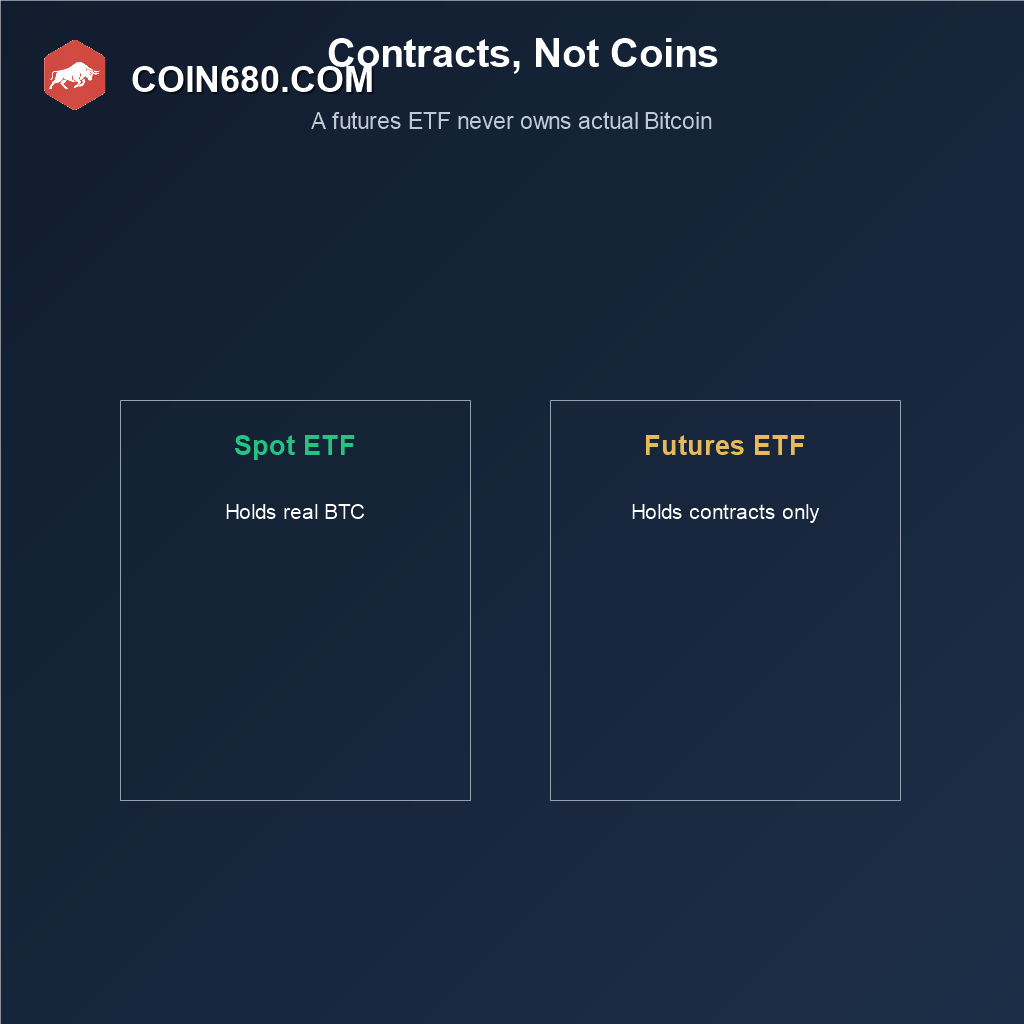
Before spot Bitcoin ETFs existed, futures-based Bitcoin ETFs were the only regulated fund option available, and they still trade today. The difference between the two is not a minor technicality, it directly affects how closely an investor’s return actually matches bitcoin’s real price.
What a Futures ETF Actually Holds
A futures-based Bitcoin ETF holds futures contracts, agreements to buy or sell bitcoin at a set price on a future date, rather than owning any actual bitcoin. That structural choice was originally a workaround, futures-based products cleared a regulatory bar that spot products could not clear until years later, covered in the previous lesson.
Why Futures ETFs Often Lag Bitcoin’s Real Price
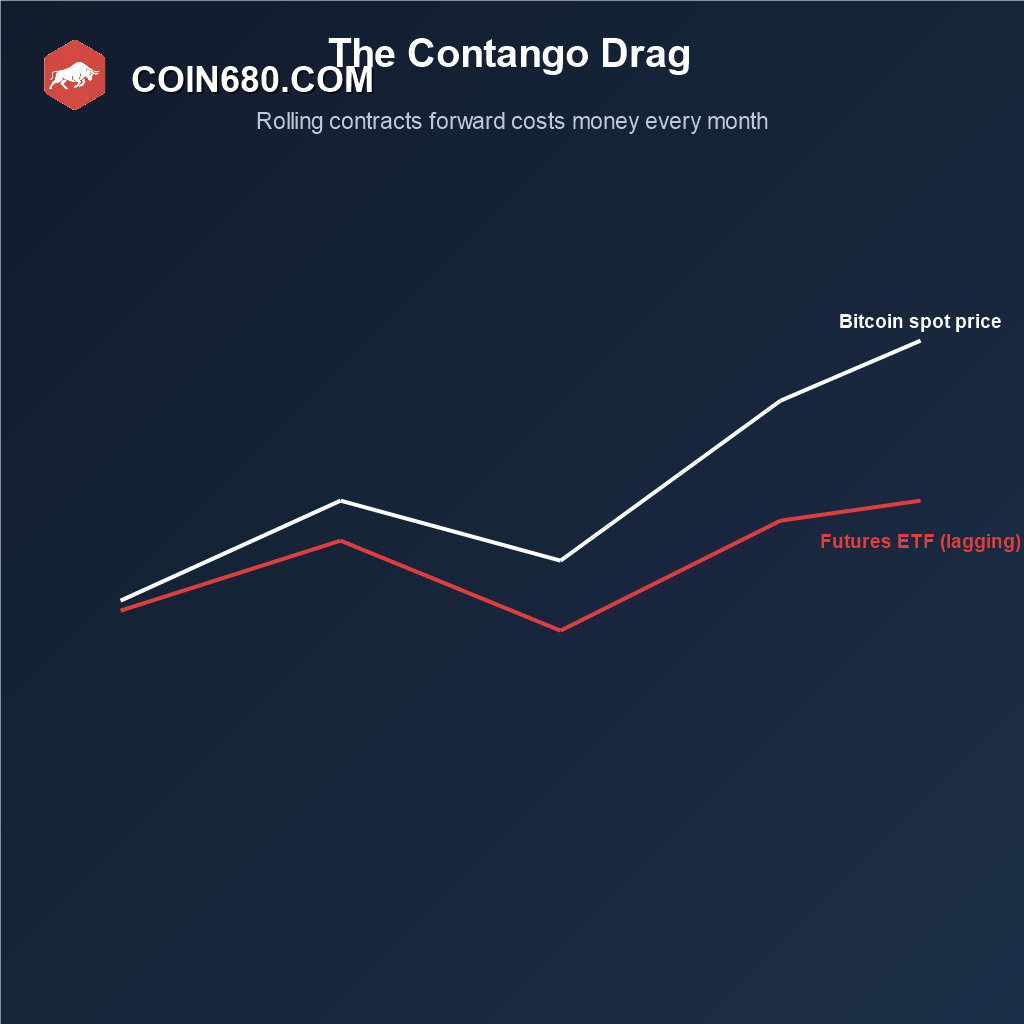
Futures contracts expire and must be rolled forward into new ones every month, and when the futures market is in contango, meaning longer-dated contracts trade above the current spot price, the fund is structurally forced to sell cheaper expiring contracts and buy pricier new ones every cycle. That ongoing cost creates a persistent drag, meaning a futures ETF’s performance can diverge meaningfully from bitcoin’s actual price over time, even though both are supposedly tracking the same asset.
Why Some Institutions Still Prefer Futures Exposure
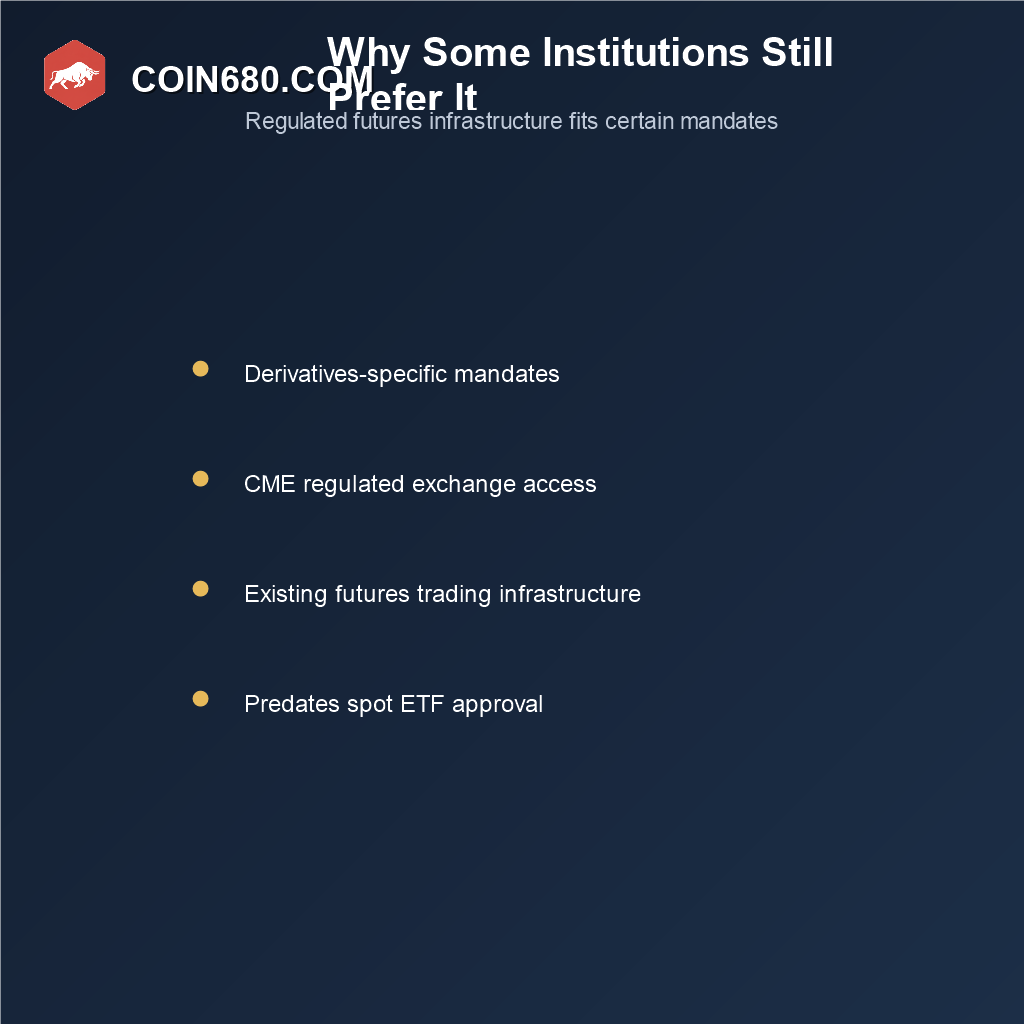
Certain institutional mandates are built specifically around derivatives and futures markets rather than direct spot commodity holdings, making a futures ETF a more natural fit despite its tracking drawback. Regulated futures exchanges like CME also offer institutional-grade infrastructure some funds and mandates specifically require, a structural preference that predates and persists alongside the newer spot ETF option.
Frequently Asked Questions
Which is a more accurate way to track Bitcoin’s price, spot or futures ETFs?
Spot ETFs, since they hold actual bitcoin directly. Futures ETFs can diverge from bitcoin’s real price over time due to the cost of rolling expiring contracts forward every month.
Why did futures ETFs exist before spot ETFs?
Futures-based products cleared a different regulatory bar than direct spot bitcoin holdings, allowing them to launch years before spot Bitcoin ETFs received approval.
What is contango, and why does it hurt futures ETF returns?
Contango is when longer-dated futures contracts trade above the current spot price. It forces a futures fund to sell cheaper expiring contracts and buy pricier new ones every rollover, creating a persistent cost drag on returns.
Do any investors still prefer futures ETFs over spot ETFs?
Yes, some institutional mandates are specifically built around derivatives and futures markets, making a futures ETF a better structural fit despite the tracking drawback compared to a spot ETF.
This article is for educational purposes only and is not financial advice. ETF structures carry different fees, risks, and tracking behavior, and no specific outcome is guaranteed. Always research independently before investing.
This comparison continues into how ETFs stack up against direct ownership. Continue with buying Bitcoin directly vs an ETF, revisit how spot ETFs work, or return to the full Bitcoin Academy.