
Does Bitcoin’s Correlation With Other Assets Break Down During a Crisis?
A diversifying asset is supposed to earn its keep exactly when things get bad, holding steady or moving independently while everything else falls. Bitcoin’s actual record during real stress events complicates that pitch more than the “digital gold” framing usually admits.
The Calm-Period Pattern
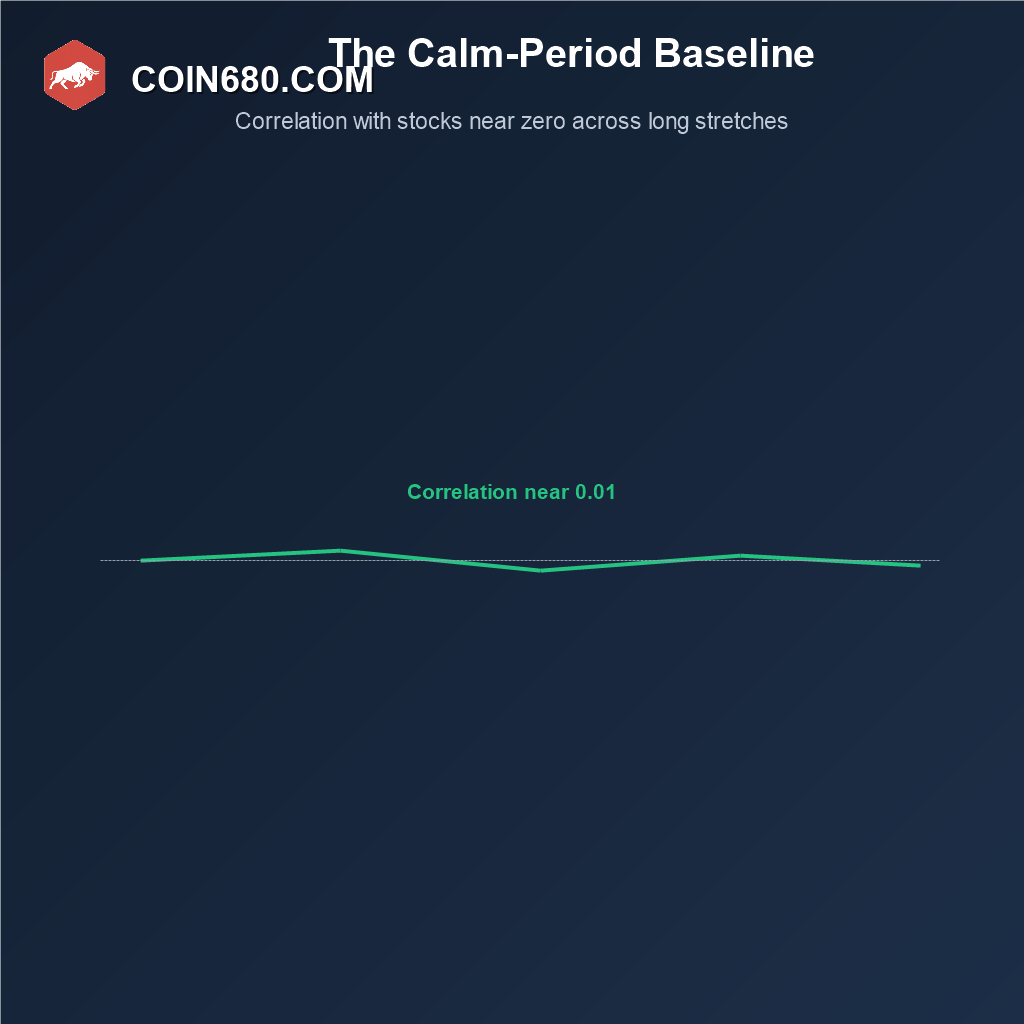
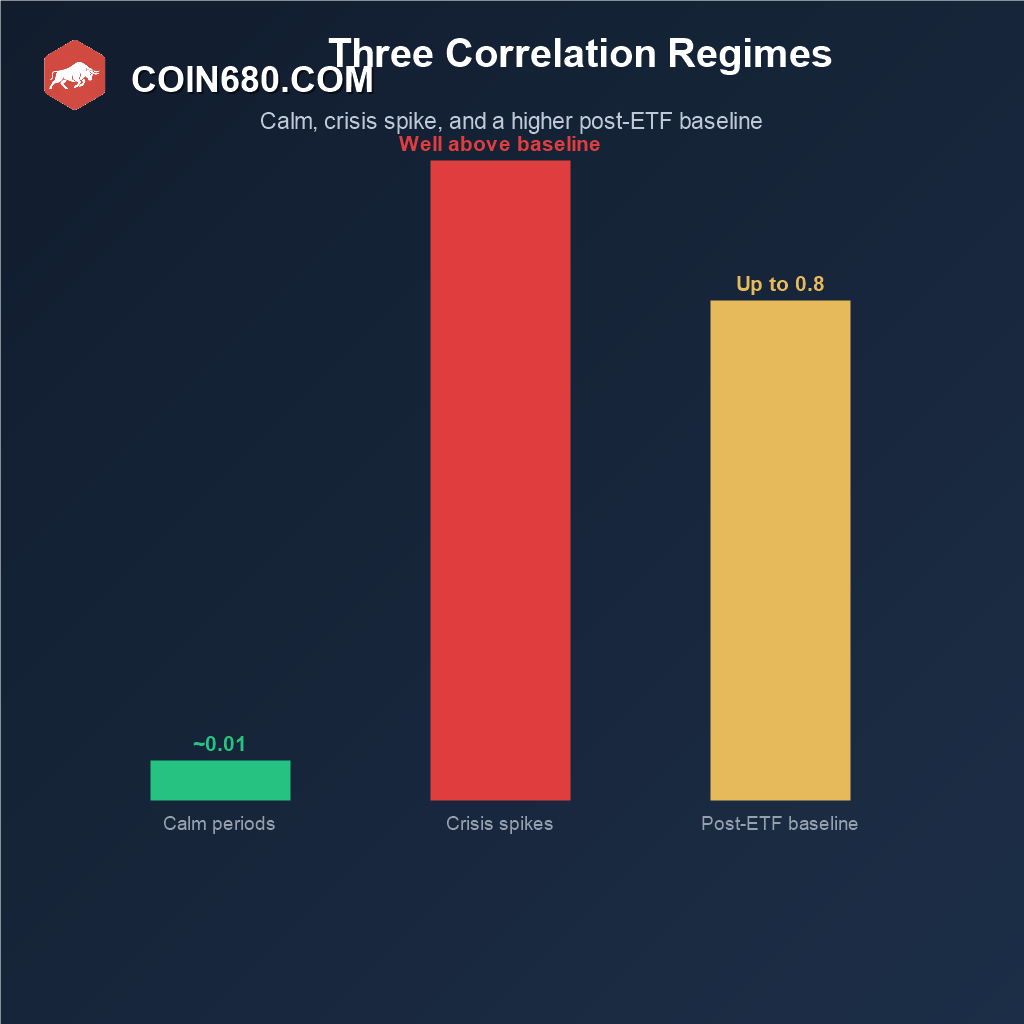
For long stretches, Bitcoin’s correlation with the S&P 500 has hovered near zero, close to 0.01 in some measured windows, the kind of genuinely independent behavior that made the safe-haven and portfolio-diversifier pitch credible in the first place. That low baseline correlation is real and has shown up repeatedly across calmer market periods.
What Happens When Stress Actually Hits
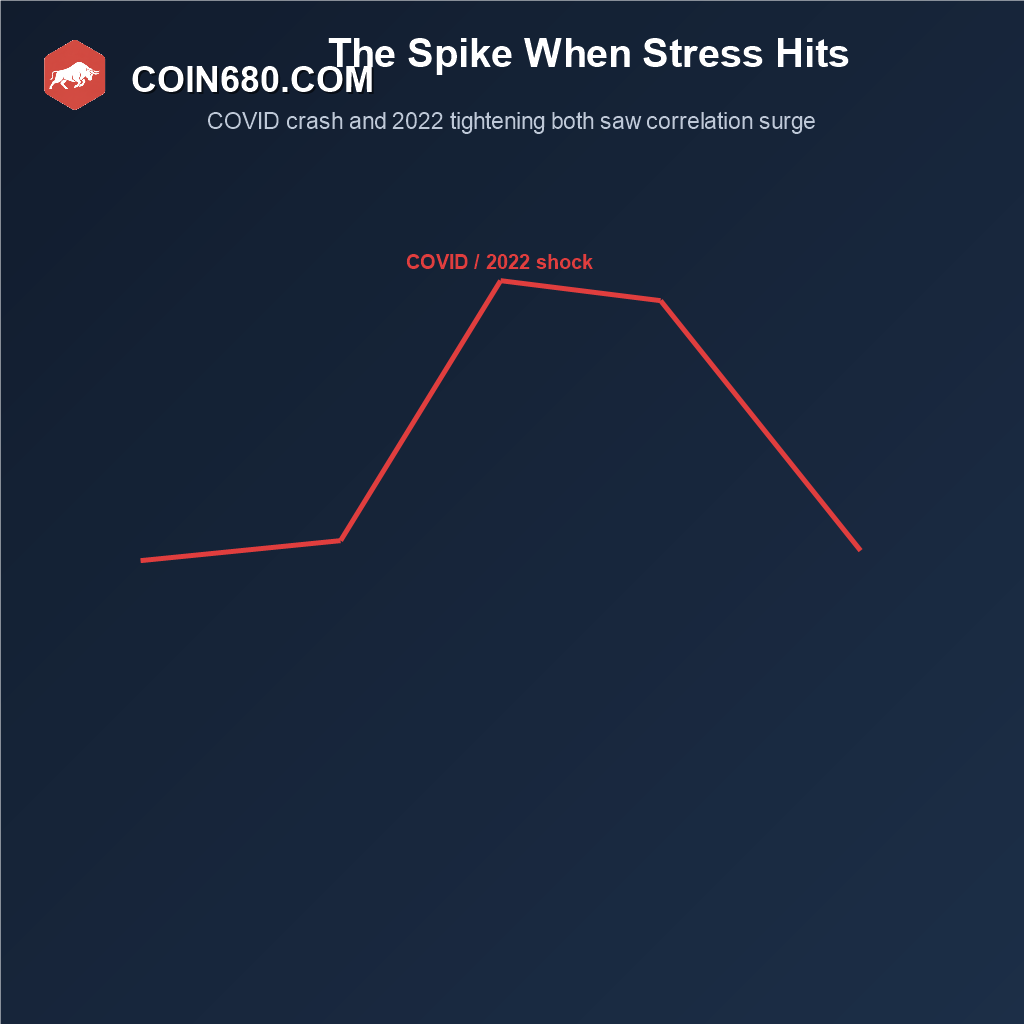
The pattern reverses during genuine macro stress. During the March 2020 COVID crash and the 2022 monetary tightening cycle, Bitcoin’s 60-day rolling correlation with the S&P 500 spiked well above its calm-period baseline, undermining its safe-haven properties at precisely the moment they were supposed to matter most. A diversifier that quietly decouples during ordinary times but suddenly tracks the crash during a real one is providing less protection than its average correlation figure implies.
Why the Post-ETF Era Looks Different Again
Since spot Bitcoin ETFs and broader index inclusion, Bitcoin’s correlation with major equity indices has increased sharply in absolute terms too, sometimes climbing above 0.8, as pension funds, asset managers, and corporate treasuries added exposure through the same institutional flows that move during risk-on and risk-off shifts in equities. That structural shift means today’s baseline correlation itself sits higher than the near-zero figures from Bitcoin’s earlier, more retail-dominated history.
What This Means for Crisis-Period Expectations
The honest takeaway is that Bitcoin’s correlation is regime-dependent rather than a fixed number: low in calm periods, spiking during acute stress, and structurally higher overall since institutional capital arrived. Treating Bitcoin as a reliable crash hedge based on long-run average correlation figures risks a nasty surprise during the next genuine crisis, exactly when a real hedge is needed most.
Frequently Asked Questions
Does Bitcoin’s correlation with stocks stay constant over time?
No, it tends to sit low during calmer periods but has spiked sharply during acute stress events like the March 2020 crash and the 2022 tightening cycle, and has trended structurally higher overall since institutional adoption increased.
Does this mean Bitcoin failed as a safe haven during COVID?
Its correlation with equities rose significantly during that crash rather than staying independent, behavior more consistent with a risk asset than a dependable hedge during that specific stress event.
Why has Bitcoin’s baseline correlation with stocks risen since ETFs launched?
Institutional flows through ETFs and other regulated products tie Bitcoin more closely to the same broad risk sentiment that moves equities, raising the everyday correlation baseline compared to Bitcoin’s earlier, more retail-driven history.
Should investors rely on Bitcoin as a crisis hedge?
The historical pattern of correlation spiking during genuine stress argues against relying on it as a dependable crisis hedge, even though it has shown low correlation during calmer periods.
This content is for educational purposes only and is not financial advice. Correlation regimes shift over time and offer no guarantee of behavior during a future crisis. Always research independently before investing.
This regime-dependent behavior connects to Bitcoin’s broader macro positioning. Revisit Bitcoin’s diversification effect, continue with Bitcoin’s total addressable market thesis, or return to the full Bitcoin Academy.