
How Does Adding Bitcoin to a Traditional Portfolio Affect Diversification?
A small slice of a genuinely volatile asset sounds like it should make a portfolio riskier, not safer. The actual math of diversification, and a growing body of research on Bitcoin specifically, tells a more nuanced story.
The Core Diversification Argument
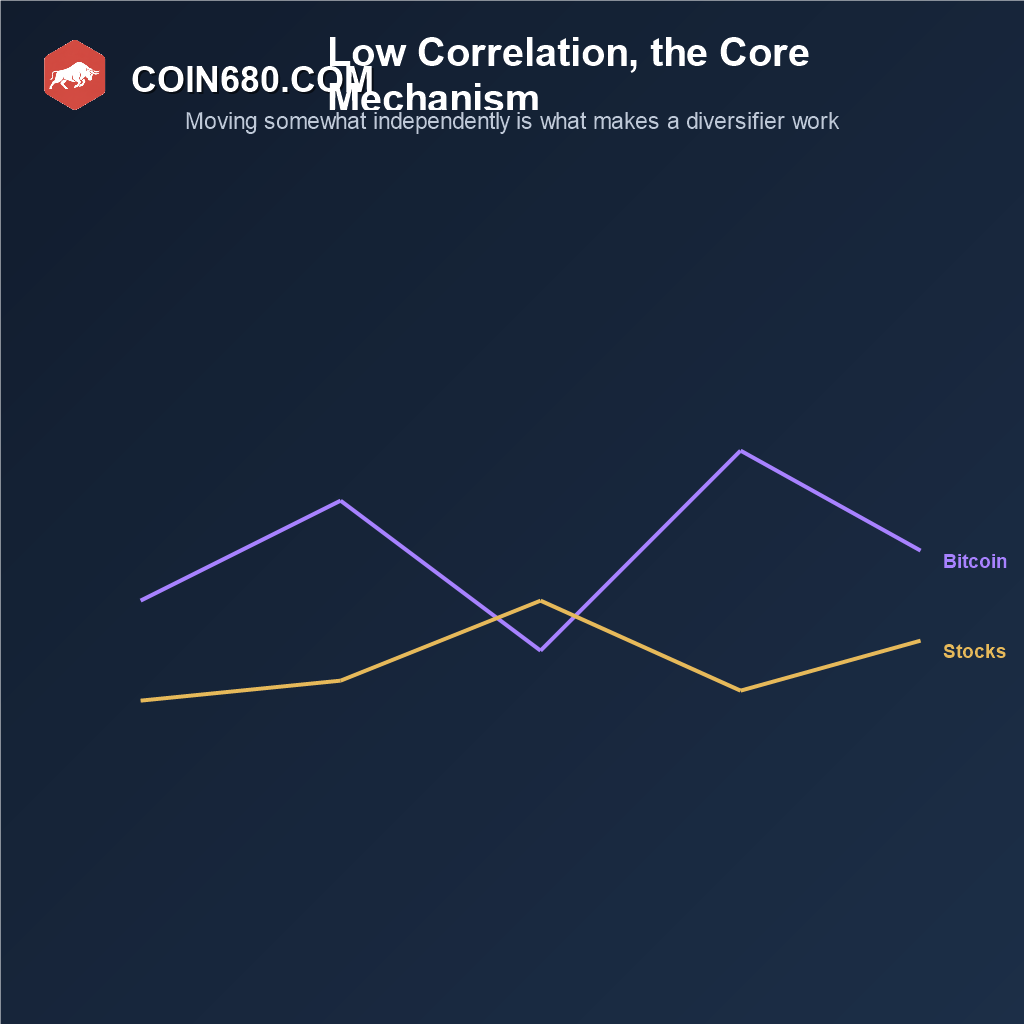
Bitcoin exhibited consistently low correlation with traditional asset classes across the multi-year stretch researchers have studied most closely, which is exactly the property that makes an asset useful as a diversifier, moving somewhat independently of the rest of a portfolio rather than in lockstep with it. Low correlation, not high individual returns alone, is the actual mechanism behind diversification’s risk-reducing effect.
What the Return Data Shows
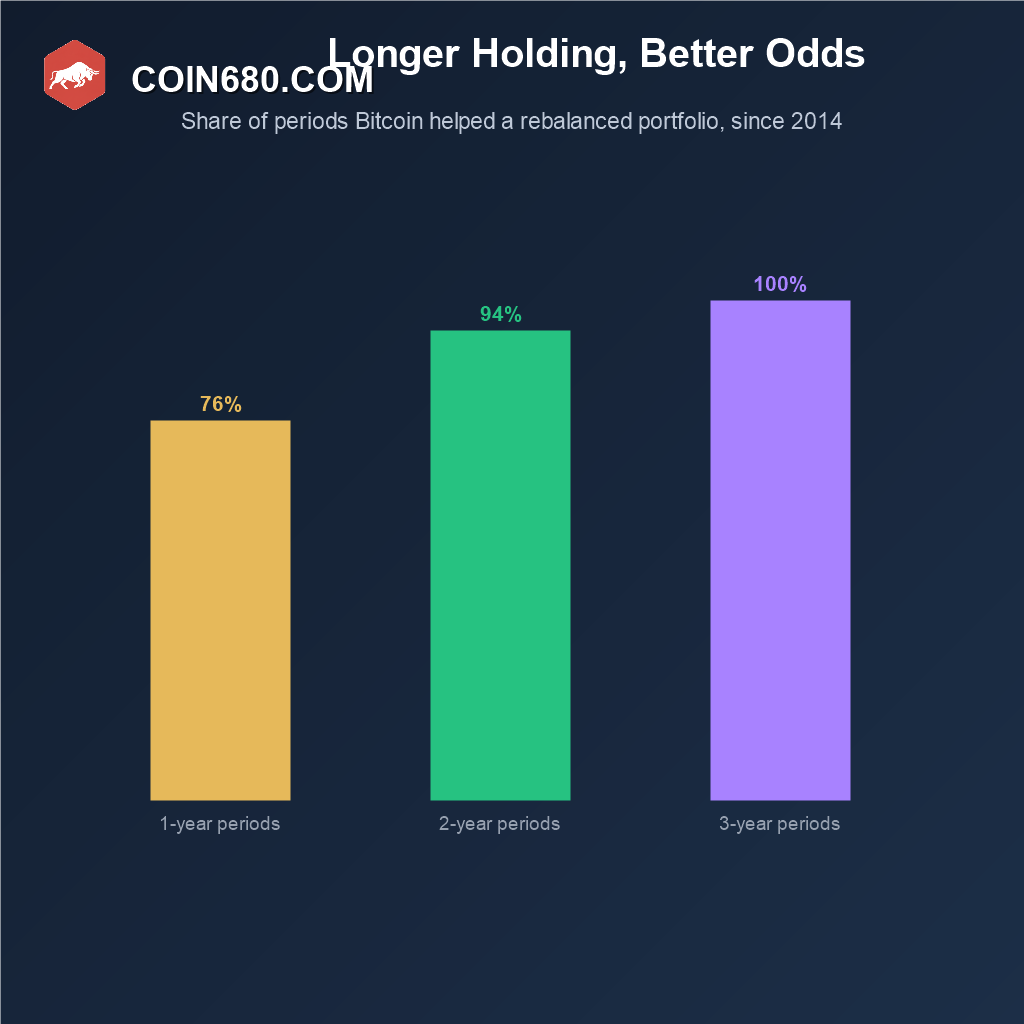
Assuming quarterly rebalancing, Bitcoin would have contributed positively to a diversified portfolio’s returns in 76% of one-year periods since 2014, rising to 94% of two-year periods and 100% of three-year periods. Longer holding periods have made a bigger difference to whether the allocation paid off than most people assume, a genuinely useful data point for anyone treating Bitcoin as a short-term trade rather than a longer-horizon position.
How Much Does a Small Allocation Actually Move the Needle
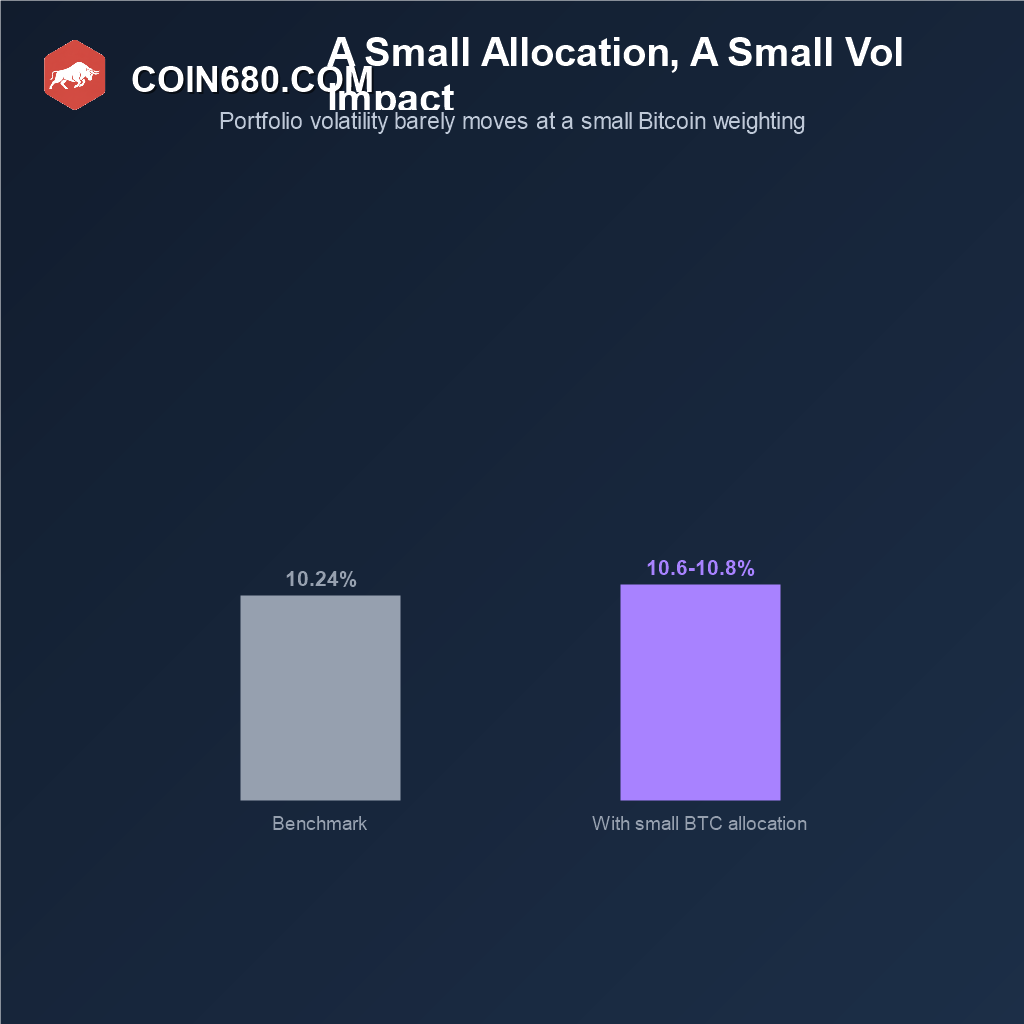
Even a relatively small position, in the range of 4-5% of total portfolio value, has been shown to meaningfully affect diversification benefits without moving overall portfolio volatility nearly as much as Bitcoin’s own standalone volatility might suggest. In one study, adding Bitcoin to a diversified mix left annualized portfolio volatility between roughly 10.6% and 10.8%, only marginally above a 10.24% benchmark, because Bitcoin’s own volatility does not translate linearly into portfolio-level volatility at small allocation sizes.
The Important Caveat
Bitcoin’s correlation with equities has been rising, not falling, in more recent periods, particularly since spot ETFs pulled in more institutional flows tied to broader risk sentiment. That trend suggests Bitcoin’s effectiveness as an uncorrelated diversifier during a genuine systemic equity shock is diminishing over time, even while its historical multi-year diversification track record remains strong. Past low correlation is not a permanent guarantee.
Frequently Asked Questions
Does adding Bitcoin always make a portfolio riskier overall?
Not necessarily. Because of its historically low correlation with traditional assets, a small allocation has been shown to improve risk-adjusted return without proportionally increasing overall portfolio volatility.
How large should a diversifying Bitcoin allocation be?
Research commonly points to a range around 4-5% of total portfolio value as where diversification benefits have been strongest without introducing outsized volatility, though this is a general research finding, not personalized advice.
Does a longer holding period improve the odds Bitcoin helps a portfolio?
Based on historical data since 2014, yes, the share of periods where Bitcoin contributed positively to a rebalanced portfolio rose substantially from one-year to three-year holding windows.
Is Bitcoin’s low correlation with stocks guaranteed to continue?
No, correlation with equities has been trending higher in recent years, particularly during periods driven by institutional risk sentiment, which weakens the diversification case somewhat compared to Bitcoin’s earlier history.
Educational content only, this is not financial advice. Historical diversification benefits do not guarantee similar future portfolio outcomes. Always research independently before investing.
Diversification benefits depend heavily on how correlation behaves under stress. Continue with whether correlation breaks down during a crisis, revisit the Sharpe ratio, or return to the full Bitcoin Academy.