
What Is Bitcoin Volatility, and Has It Actually Declined Over Time?
Bitcoin’s reputation for wild price swings is well earned by its early history, but that history is no longer the whole story. Measured properly, Bitcoin today is genuinely calmer than it used to be, even if it remains more volatile than most traditional assets.
How Much Volatility Has Actually Fallen
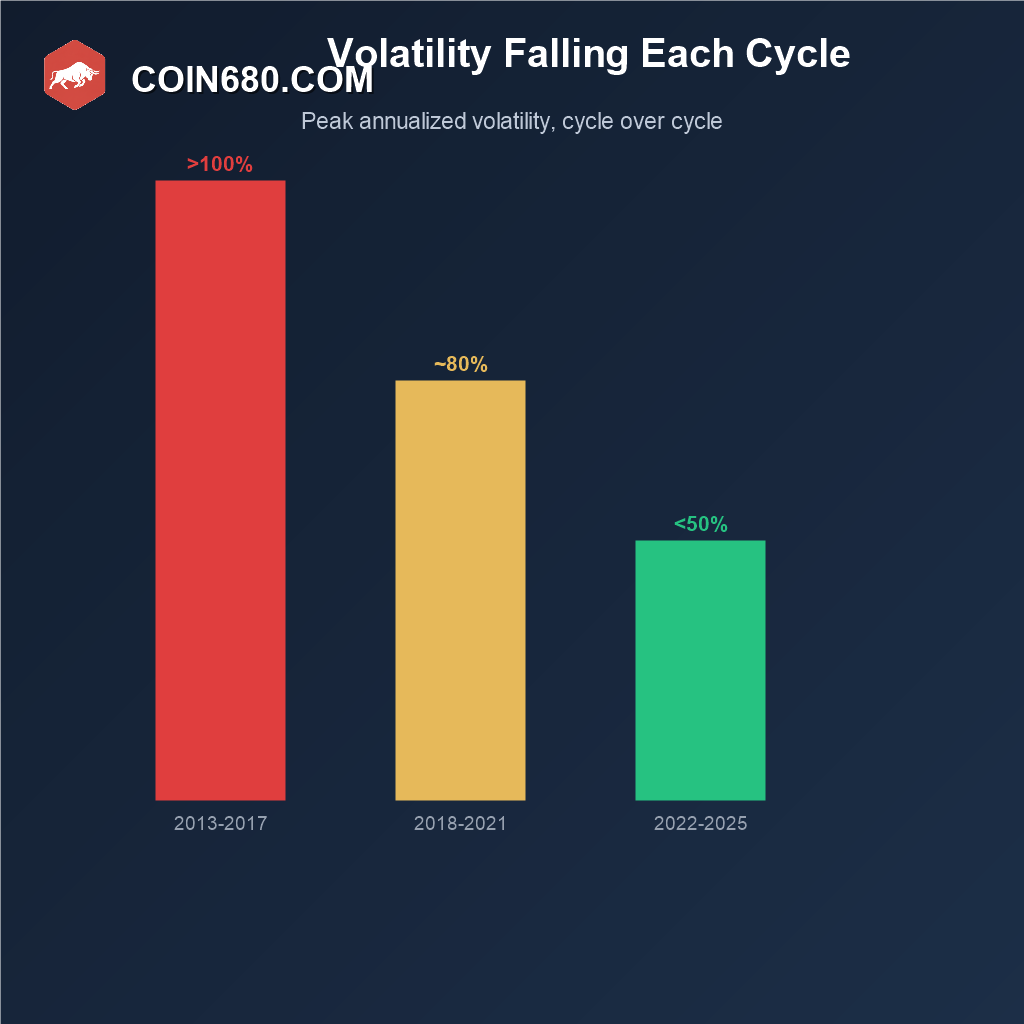
Early Bitcoin routinely posted annualized volatility above 100%, and each successive halving cycle since has produced lower peak volatility and shallower drawdowns than the one before. The 60-day historical volatility figure has stayed below 50% since the start of 2023, a sharp contrast to 2022 when it regularly exceeded 100%, and one-year rolling volatility settled below 50% for the first time since tracking began back in 2011.
Bitcoin Next to Individual Stocks
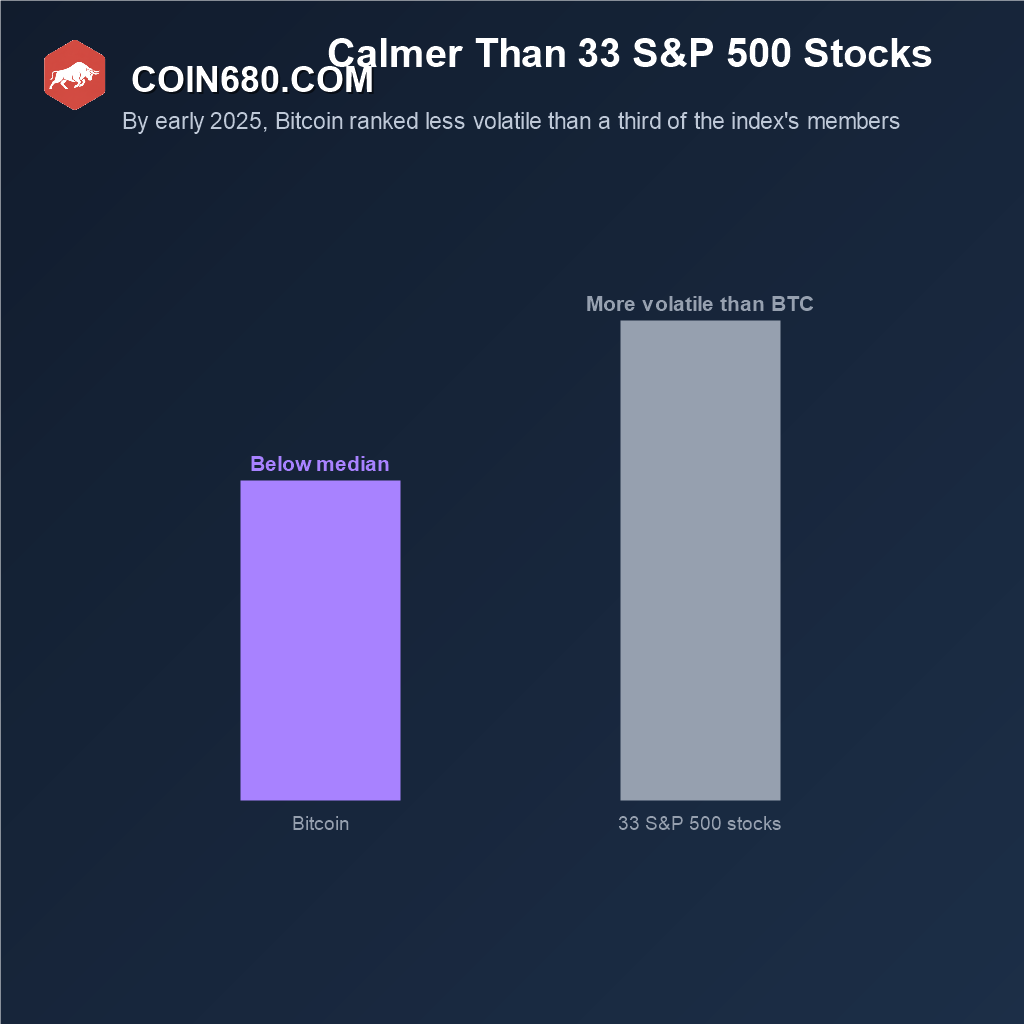
By early 2025, Bitcoin was actually less volatile than 33 individual S&P 500 stocks, a genuinely counterintuitive fact given its reputation. That does not mean Bitcoin is now calmer than the stock market as a whole, the S&P 500 index itself smooths out individual-stock swings through diversification, but it does mean the gap between “crypto-volatile” and “stock-volatile” has narrowed further than most people assume.
Why This Is Happening
The decline tracks Bitcoin’s maturing market structure: deeper liquidity, a broader base of institutional participants less prone to panic-driven swings, and the arrival of regulated products like spot ETFs that bring in steadier, longer-horizon capital. None of this makes Bitcoin low-volatility in any absolute sense, it remains meaningfully more volatile than stocks or gold, but the multi-cycle downward trend is a real, measurable pattern rather than a hopeful narrative.

Frequently Asked Questions
Is Bitcoin still more volatile than the stock market overall?
Yes, on a broad index basis, though it has become less volatile than a meaningful number of individual S&P 500 stocks, a narrower gap than Bitcoin’s reputation usually suggests.
Why has Bitcoin’s volatility declined over successive cycles?
Deeper market liquidity, a larger and steadier institutional investor base, and regulated products like spot ETFs bringing in longer-horizon capital have all contributed to progressively lower peak volatility each cycle.
Does declining volatility mean Bitcoin is now a safe, stable asset?
No, it remains substantially more volatile than traditional assets like stocks and gold even after the decline. Falling volatility is a real trend, not evidence Bitcoin has become low-risk.
Will Bitcoin’s volatility keep declining every cycle?
The multi-cycle trend has been consistently downward so far, but that is a historical pattern, not a guarantee, and a single sharp shock can still spike volatility well above recent lows.
Educational content only, this is not financial advice. Historical volatility trends do not guarantee future price stability. Always research independently before investing.
Understanding volatility sets up how risk-adjusted return is actually measured. Continue with the Sharpe ratio, Bitcoin’s diversification effect, or return to the full Bitcoin Academy.