
What Is the Bitcoin Basis Trade? Cash and Carry Explained
Some of the largest institutional players in Bitcoin are not betting on price direction at all. The basis trade, also called cash-and-carry arbitrage, is a strategy built to profit regardless of whether bitcoin goes up or down, and it closes out this chapter as the most mechanically advanced concept covered so far.
The Core Mechanics
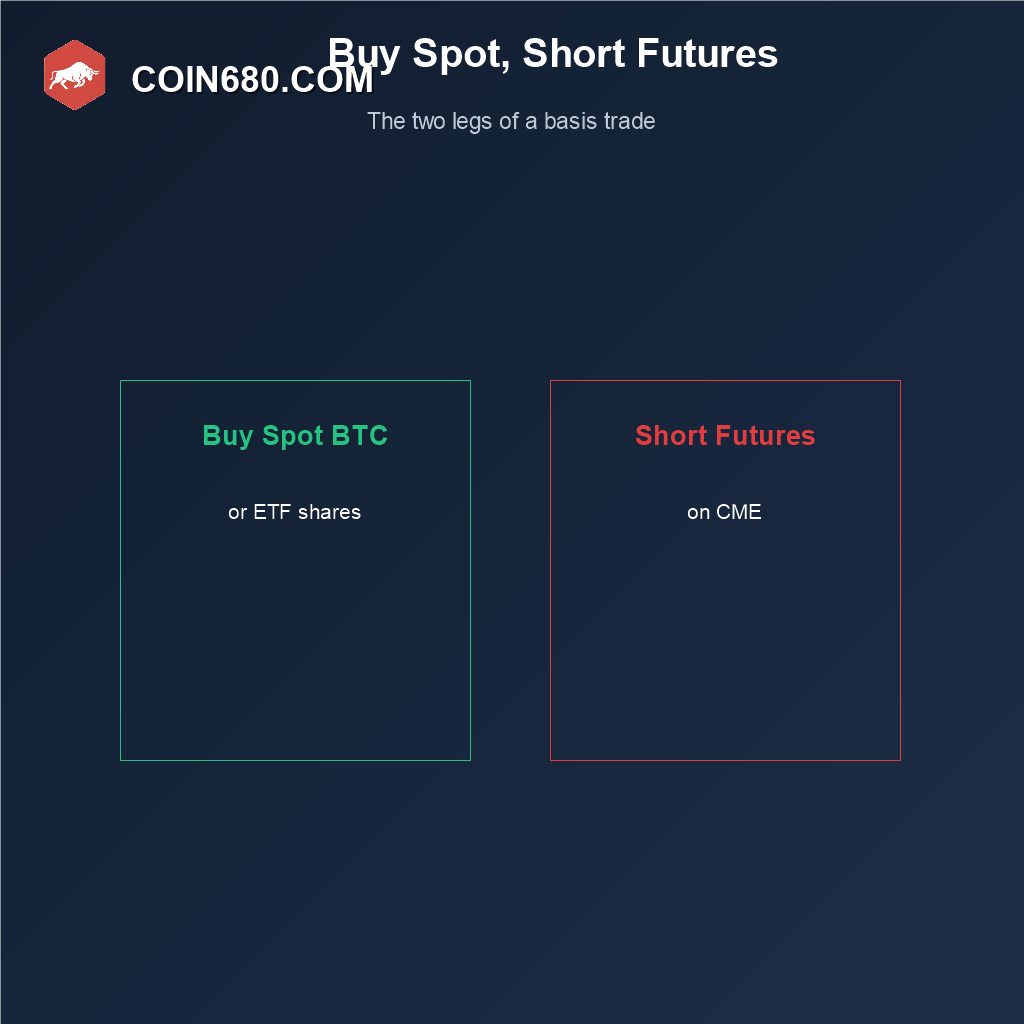
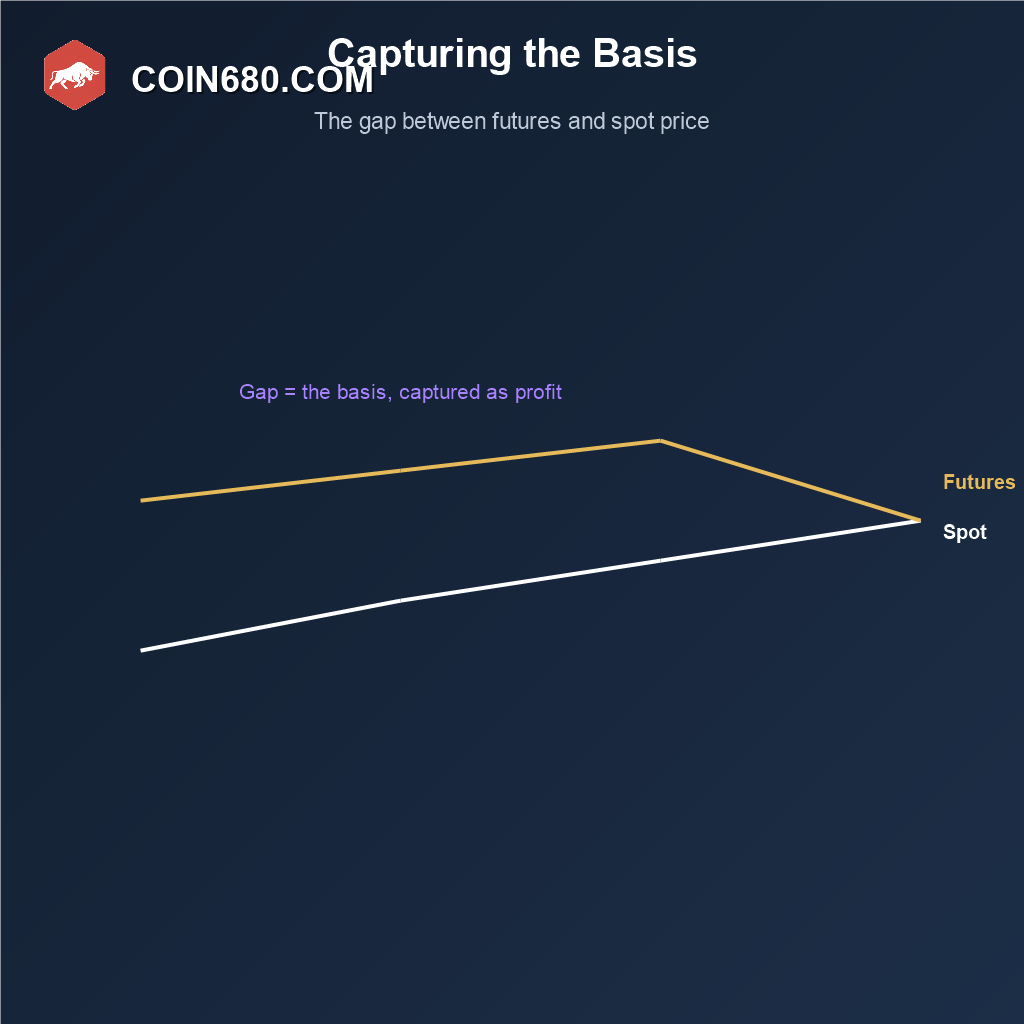
The trade involves buying bitcoin, or bitcoin exposure through a spot ETF covered earlier in this chapter, in the spot market, while simultaneously selling an equivalent amount of bitcoin futures short, typically on a regulated exchange like CME. Because futures almost always trade at a premium to spot price in crypto markets, leveraged traders willing to pay extra for exposure without holding the underlying asset, that price gap, the basis, is what the trade is designed to capture as profit when the futures contract eventually expires.
Why It Became a Dominant Institutional Strategy
The strategy became the dominant institutional play in crypto specifically after spot Bitcoin ETFs launched, since hedge funds could use ETF shares as the simple, liquid spot leg of the trade paired against a CME futures short. Reported annualized yields for large multi-strategy hedge funds running this trade have ranged from roughly five percent up to more than twenty percent, competitive enough that some of the largest names in institutional finance have disclosed sizable ETF positions alongside matching futures shorts.
The Real Friction Behind the Strategy
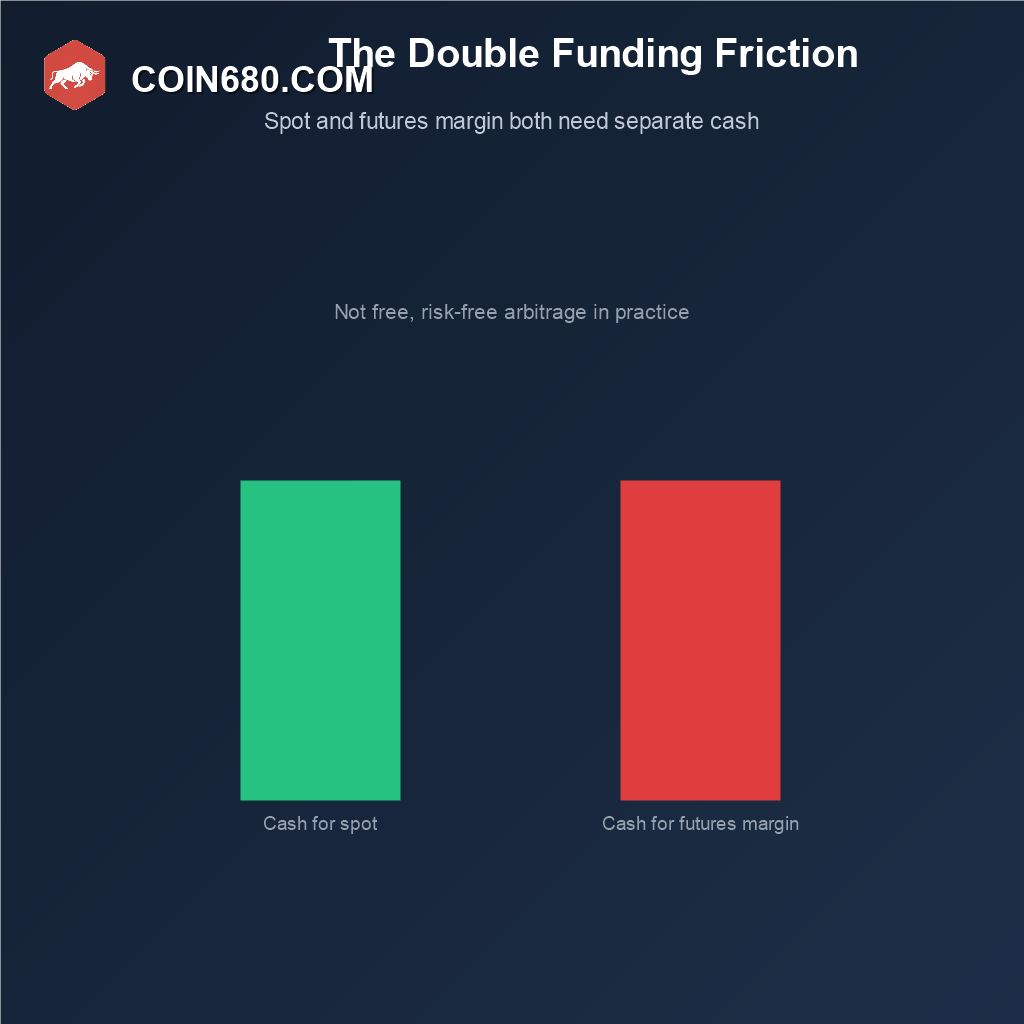
The trade is not pure, risk-free arbitrage in practice, since CME does not allow spot bitcoin itself to be posted as collateral for the futures leg, forcing traders to fund both the spot purchase and the futures margin separately in cash. That double funding requirement, along with the operational cost of managing both legs and rolling futures contracts, is what keeps the basis trade a specialized institutional strategy rather than something easily replicated by an individual retail investor.
Frequently Asked Questions
Does the basis trade bet on Bitcoin’s price going up or down?
Neither directly, it is designed to profit from the price gap between the spot and futures markets regardless of which direction bitcoin’s price actually moves.
Why do Bitcoin futures usually trade above the spot price?
Because leveraged traders are often willing to pay a premium for exposure through futures rather than holding the underlying asset directly, creating the persistent basis the trade is built to capture.
What made the basis trade so popular with hedge funds?
The launch of spot Bitcoin ETFs gave funds a simple, liquid spot leg to pair against a CME futures short, and reported annualized yields competitive with or above traditional fixed income drew significant institutional participation.
Is the basis trade risk-free arbitrage?
Not entirely, since CME requires separate cash funding for the futures margin rather than accepting spot bitcoin as collateral, adding real operational cost and funding risk beyond a simple, frictionless arbitrage.
This content is for general education and is not financial advice. Basis trading involves real operational and market risk and no return is guaranteed. Always research independently and consider professional guidance before attempting complex strategies.
This closes out the Economics and Macro chapter’s first twenty lessons. Revisit El Salvador’s Bitcoin experiment, where this chapter began, or explore the full Bitcoin Academy.