
What Is the Sharpe Ratio, and How Does Bitcoin Score on Risk-Adjusted Return?
A high return means little on its own if it came from taking on wild, unpredictable risk to get there. The Sharpe ratio is the standard tool for asking the more useful question: how much return did an asset actually deliver for each unit of risk taken.
What the Sharpe Ratio Actually Measures
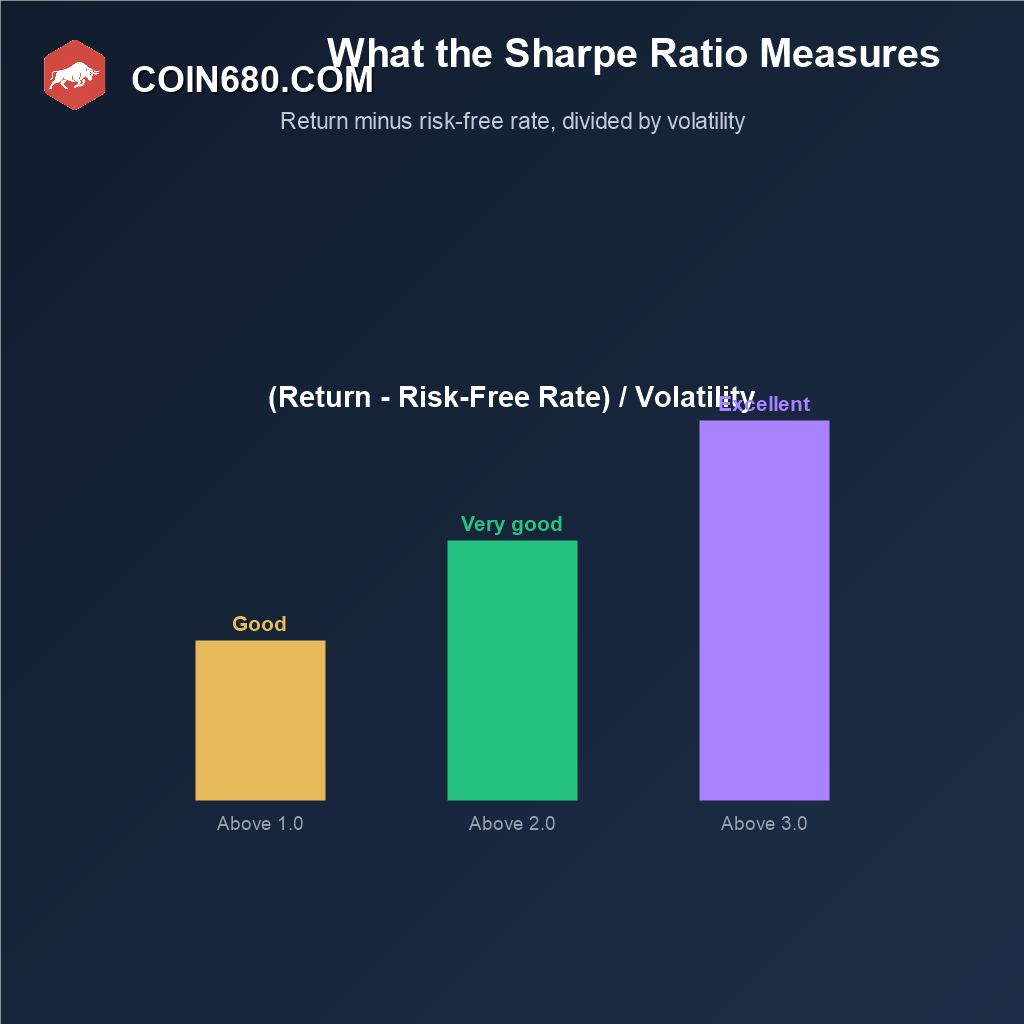
Developed by Nobel laureate William F. Sharpe, the ratio is calculated as an asset’s return minus the risk-free rate, divided by its volatility. A positive ratio means investors were rewarded for the volatility they took on, a negative ratio means they were not. As a rough guide, a ratio above 1.0 is generally considered good, above 2.0 very good, and above 3.0 excellent.
How Bitcoin Has Actually Scored
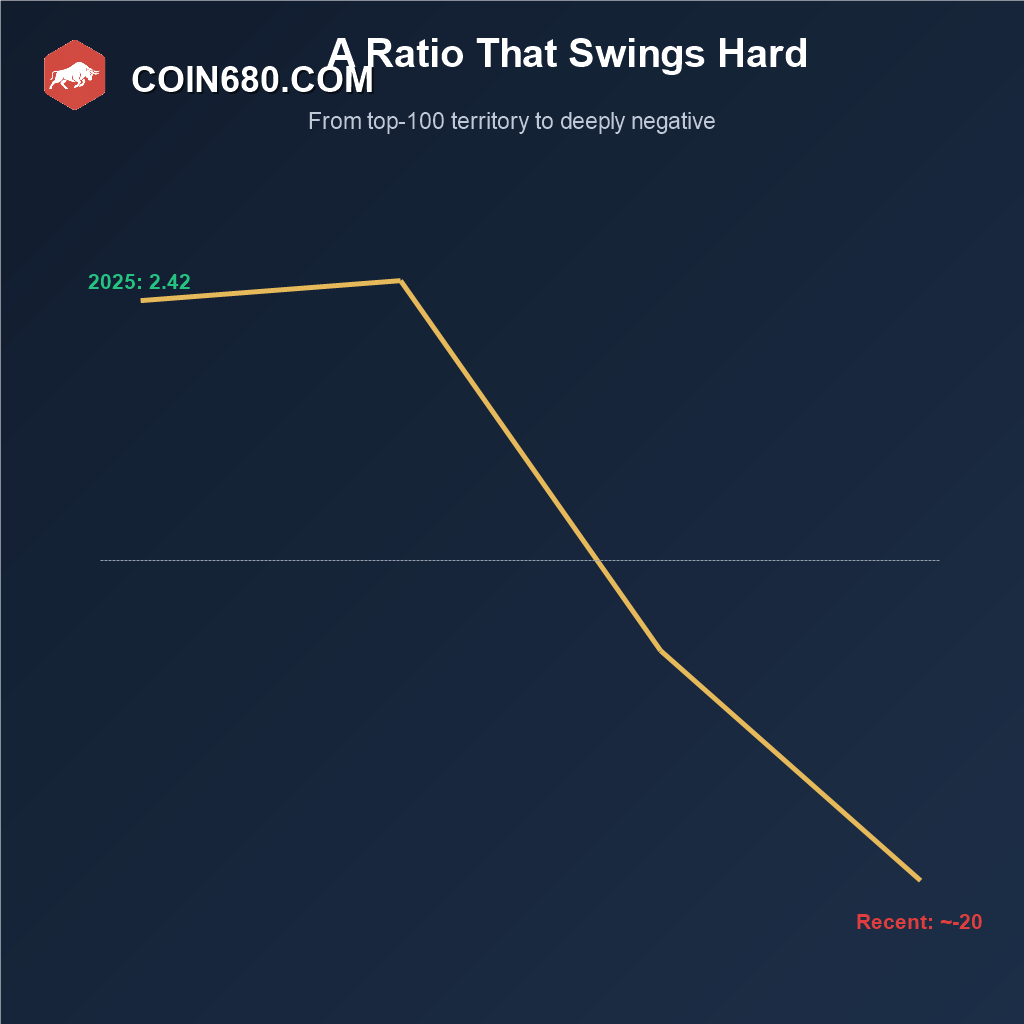
Bitcoin’s Sharpe ratio swings hard rather than sitting at one stable level. In 2025, its 12-month Sharpe ratio reached 2.42, placing it among the top 100 global assets by risk-adjusted return for that stretch. More recently, after a 28% price decline, its 365-day Sharpe ratio plunged to nearly negative 20, a genuinely poor risk-adjusted result for that period. The same asset, on the same metric, in different windows, tells two completely different stories.
Why This Matters for Position Sizing
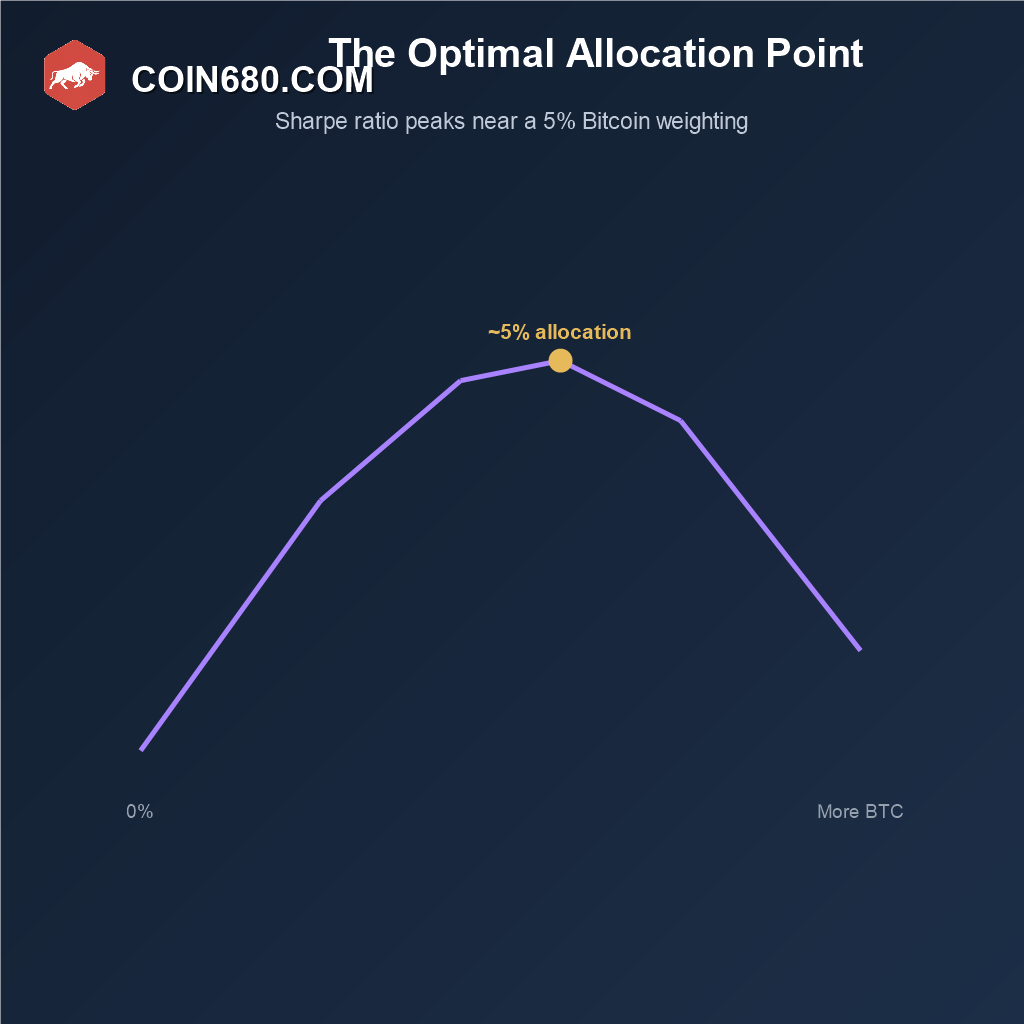
The Sharpe ratio is most useful for comparing Bitcoin against other assets or strategies rather than reading in isolation. Research from Grayscale found that a Bitcoin allocation of roughly 5% tends to optimize the Sharpe ratio of a traditional 60/40 portfolio, beyond which added volatility starts outweighing the extra return. That is a very different conclusion than either “Bitcoin has no place in a portfolio” or “more Bitcoin is always better.”
Frequently Asked Questions
What counts as a good Sharpe ratio?
As a general guide, above 1.0 is considered good, above 2.0 very good, and above 3.0 excellent, though the ratio should always be read as one input rather than a single verdict on an asset.
Has Bitcoin ever had a negative Sharpe ratio?
Yes, during periods of sharp price decline its 365-day Sharpe ratio has fallen to roughly negative 20, showing that volatility without corresponding return actively punishes risk-adjusted performance.
What allocation size tends to optimize Sharpe ratio in a mixed portfolio?
Research from Grayscale points to roughly 5% Bitcoin allocation as the point that optimizes the Sharpe ratio of a traditional 60/40 stock-bond portfolio, though this is a research finding, not a personalized recommendation.
Is a single Sharpe ratio reading enough to judge Bitcoin as an investment?
No, since the ratio varies significantly by time window, a single reading from one period can be misleading. Comparing it across multiple periods and against other assets gives a fuller picture.
This content is for educational purposes only and is not financial advice. Risk-adjusted return metrics describe historical performance and carry no guarantee about future results. Always research independently before investing.
Risk-adjusted return ties directly into how Bitcoin fits inside a broader portfolio. Continue with Bitcoin’s diversification effect, revisit Bitcoin’s volatility trend, or return to the full Bitcoin Academy.