
How Do Institutions Actually Custody Bitcoin?
A pension fund or an asset manager holding hundreds of millions of dollars in bitcoin cannot rely on the same seed-phrase-in-a-drawer approach covered earlier in this Academy’s Wallets and Security chapter. Institutional custody is its own discipline, built around eliminating single points of failure at scale.
Cold Storage as the Foundation
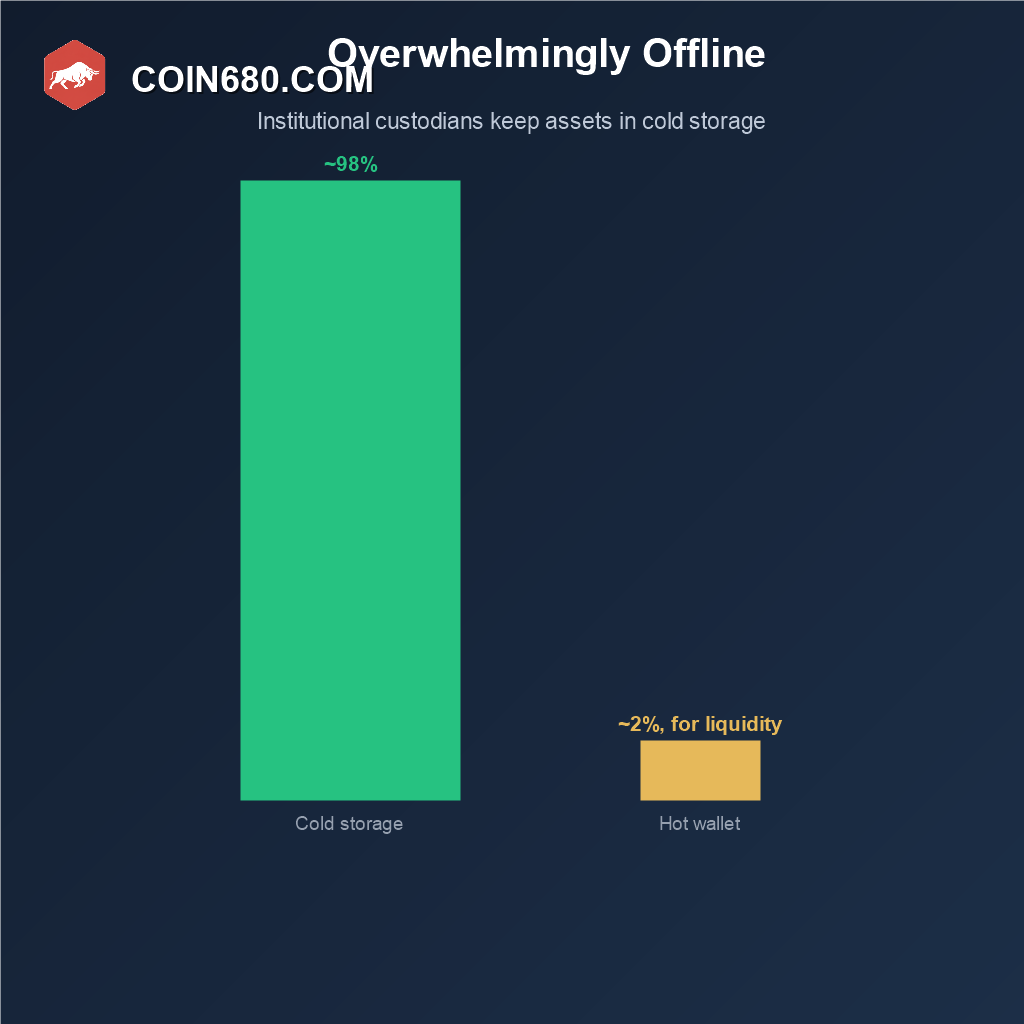
Institutional custodians overwhelmingly keep the large majority of client assets in cold storage, private keys generated and stored on devices that never touch the internet, with major custodians reporting figures around ninety-eight percent of holdings kept fully offline. That offline foundation mirrors the same core principle covered in this Academy’s individual wallet lessons, just executed with dramatically more operational rigor and physical security infrastructure.
Multisig and MPC: Two Competing Approaches
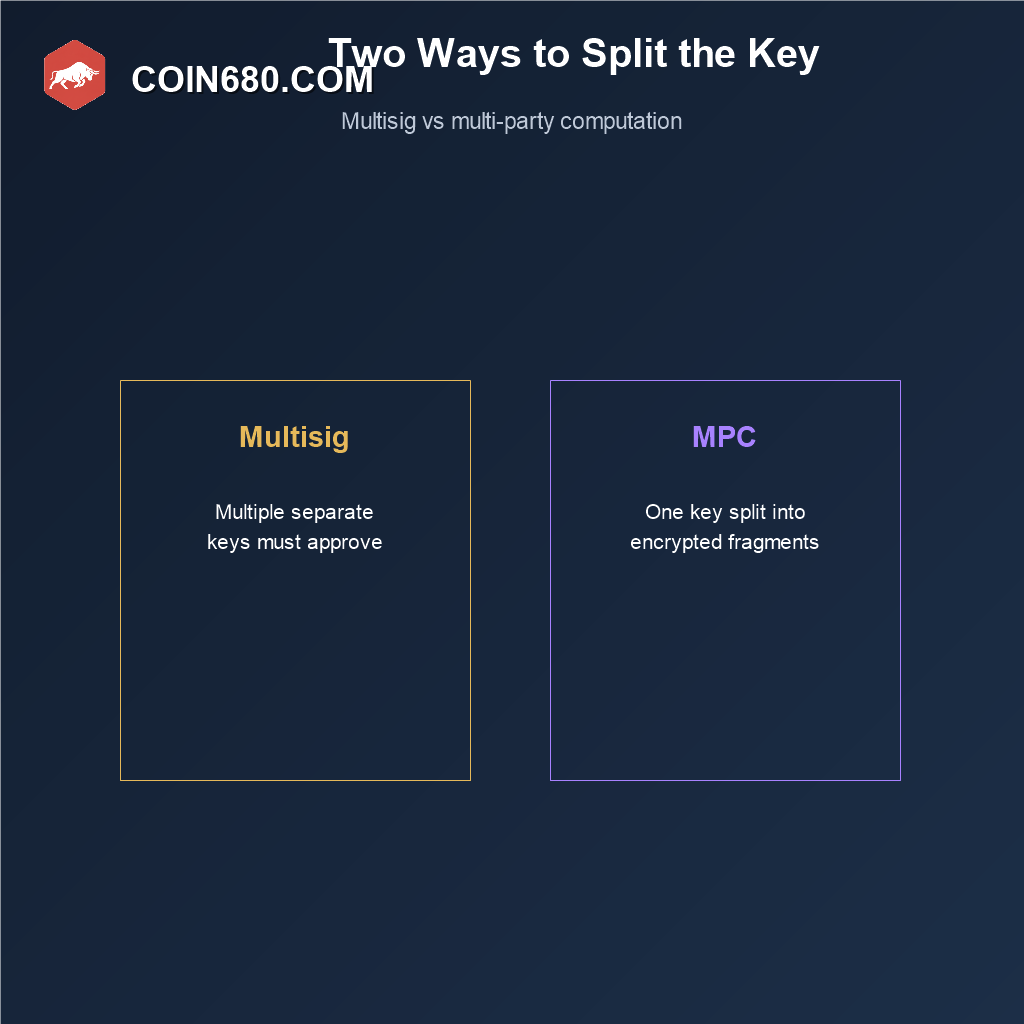
Multisignature setups require multiple separate private keys to approve any transaction, eliminating any single point of failure but coming with rigid, sometimes slower operational processes. Multi-party computation, a newer alternative, splits a single private key into encrypted fragments distributed across multiple parties or devices so no single party ever holds a complete key, offering more operational flexibility while achieving a similar security goal through a different technical structure.
Regulation and Independent Verification
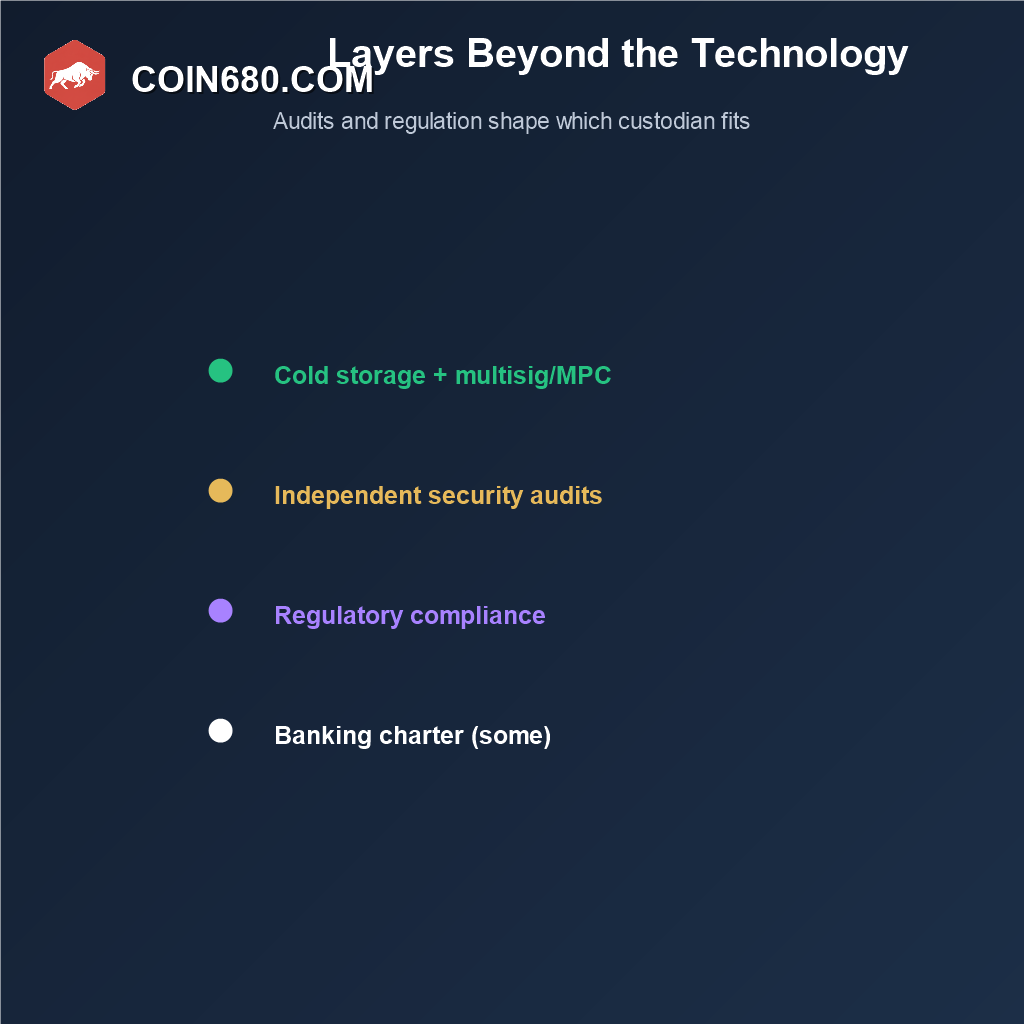
Beyond the pure technology, institutional custodians layer on independent security audits, regulatory compliance frameworks, and in some cases formal banking charters, with at least one major custodian achieving status as a federally chartered digital asset bank. That regulatory layer is often what actually determines whether a given custodian meets a specific institution’s mandate, sometimes mattering as much as the underlying cold storage and multisig or MPC technology itself.
Frequently Asked Questions
Do institutional custodians keep all client Bitcoin in cold storage?
The large majority, typically, with some major custodians reporting figures around ninety-eight percent of assets held fully offline, keeping a small operational portion in hot wallets for liquidity needs.
What is the difference between multisig and MPC custody?
Multisig requires multiple separate private keys to approve a transaction, while MPC splits a single key into encrypted fragments across multiple parties, achieving a similar no-single-point-of-failure goal through different technical means.
Why does regulatory status matter for institutional custody?
Many institutional mandates require a custodian to meet specific compliance or chartering standards, meaning regulatory status can matter as much as the underlying security technology for whether a fund can actually use a given custodian.
Is institutional custody fundamentally different from personal self-custody?
It shares the same core principle of offline key storage covered in this Academy’s Wallets chapter, but executes it with far more operational, physical, and regulatory infrastructure suited to holding assets on behalf of others at scale.
Educational content only, this is not financial advice. Custody arrangements carry operational and counterparty risk and no security setup is entirely risk-free. Always research independently before investing.
Institutional custody underpins the pension and sovereign fund coverage that follows. Continue with pension and sovereign wealth funds, revisit this Academy’s multisig wallet lesson, or return to the full Bitcoin Academy.