
Bitcoin vs Traditional Safe-Haven Assets
Gold, the US dollar, and government bonds have played the safe-haven role in traditional finance for decades, assets investors run toward when markets get scary. Bitcoin gets pitched as a modern addition to that list, but its actual crisis behavior tells a more complicated story.
What “Safe Haven” Actually Means
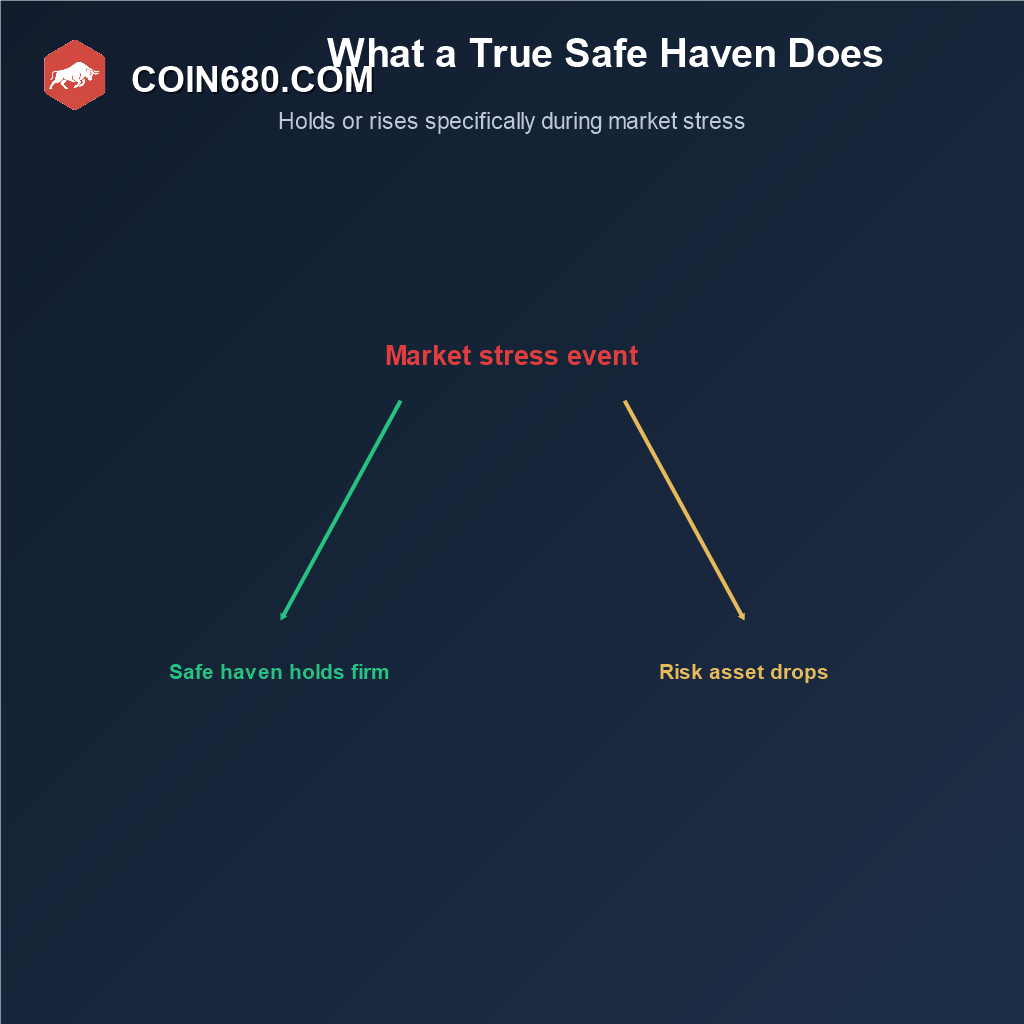
A true safe-haven asset is expected to hold value, or even rise, specifically during periods of market stress, decoupling from risk assets exactly when investors need that decoupling most. Gold has earned that reputation over a very long track record, while the US dollar and top-rated government bonds earn it through liquidity and perceived near-zero default risk.
How Bitcoin Has Actually Behaved in Recent Stress
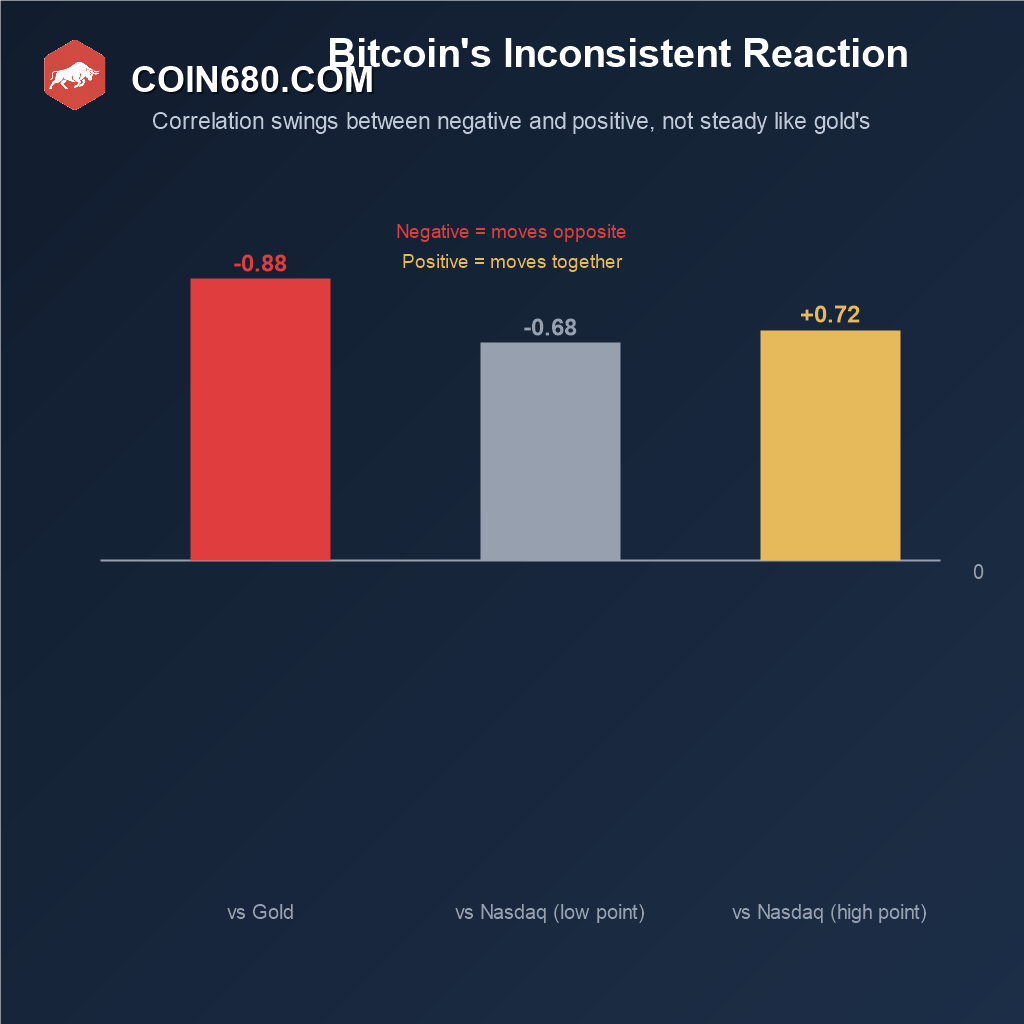
Bitcoin’s relationship with gold has swung dramatically rather than staying consistently protective, at one recent point their correlation dropped to roughly negative 0.88, meaning the two moved in opposite directions rather than together. Its relationship with equities has been even more volatile, swinging from a correlation of negative 0.68 to positive 0.72 with the Nasdaq within a span of just two weeks in one documented stretch, behavior far closer to a risk asset than a stable hedge.
Why the Comparison Still Gets Made
Bitcoin does share some structural traits with traditional safe havens, scarcity, portability, and resistance to a single government’s control among them, which is why the comparison persists despite the inconsistent short-term correlation data. The more defensible framing treats Bitcoin as a genuinely separate category rather than a direct substitute for gold or bonds, useful for different reasons and behaving differently depending on what is driving the broader market at any given moment.

Frequently Asked Questions
Does Bitcoin reliably rise during stock market crashes like gold does?
Not consistently. Its correlation with equities has swung sharply between negative and positive within short periods, behavior closer to a risk asset than a dependable safe haven during stress.
Is Bitcoin more correlated with gold or with stocks?
It has shifted between both at different times rather than tracking either consistently, which is a key reason many analysts treat it as its own distinct category instead of a substitute for either.
What traits does Bitcoin actually share with traditional safe havens?
Scarcity, portability, and resistance to control by any single government are structural traits it shares with gold, even though its short-term price behavior during stress has not consistently matched gold’s.
Should Bitcoin be treated as a direct substitute for gold in a portfolio?
Most current research suggests treating it as a distinct asset with its own risk and return profile rather than a direct substitute, given how inconsistently its safe-haven behavior has held up.
This article is for educational purposes only and is not financial advice. Correlation patterns shift over time and offer no guarantee of future behavior during market stress. Always research independently before investing.
This comparison continues in the market correlation lessons ahead. Continue with Bitcoin vs gold, Bitcoin’s correlation with stocks, or return to the full Bitcoin Academy.