
What Is an Institutional Bitcoin-Backed Loan, and How Does It Work?
Selling Bitcoin to raise cash triggers a taxable event and gives up future upside. Institutions increasingly avoid that trade-off entirely by borrowing against their Bitcoin instead of selling it, a practice that has moved from a niche product to genuine institutional scale.
The Basic Mechanics
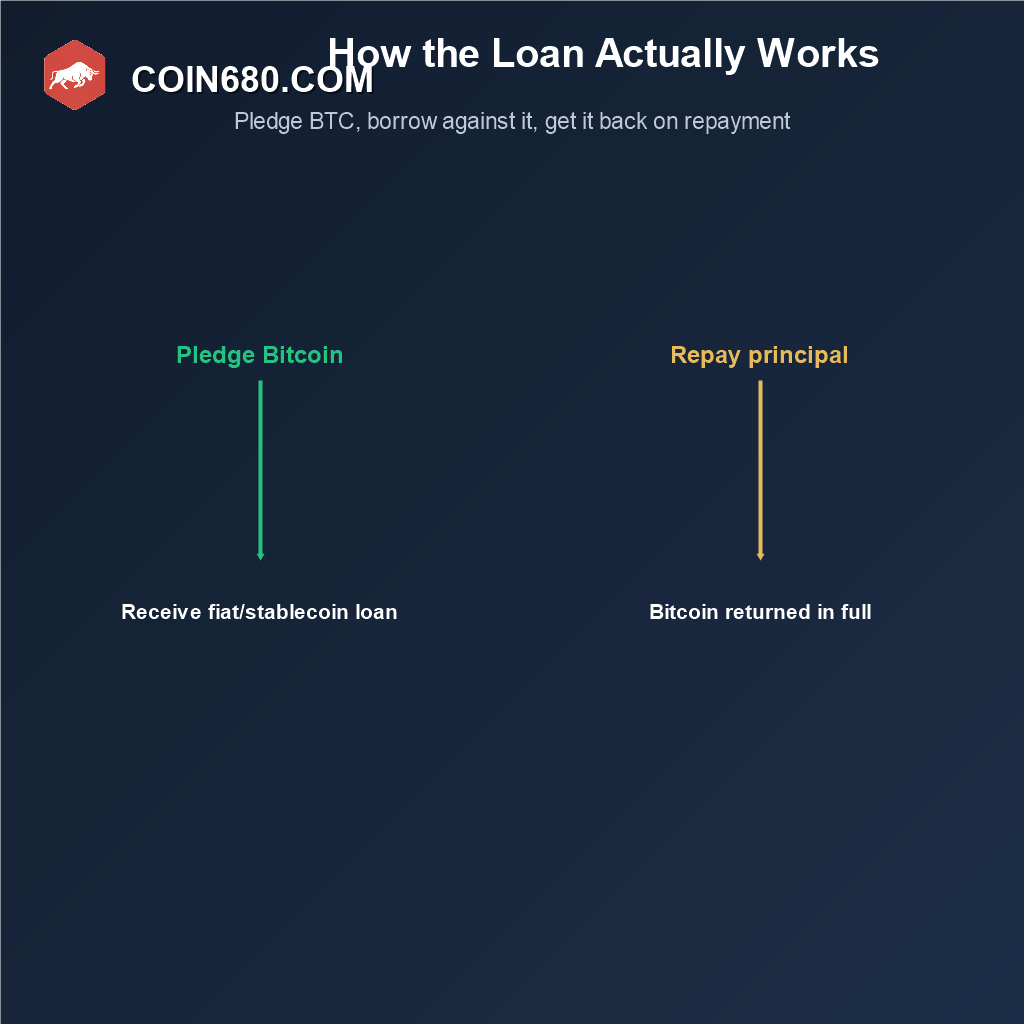
A borrower pledges bitcoin as collateral and receives a loan in fiat currency or stablecoins, structured to be over-collateralized so the value of the pledged bitcoin exceeds the amount borrowed. The lender holds the difference as a buffer against price swings, and once the borrower repays the principal, the pledged bitcoin is returned in full, all without the borrower ever having sold the underlying asset.
Why Treasury Teams Actually Use This
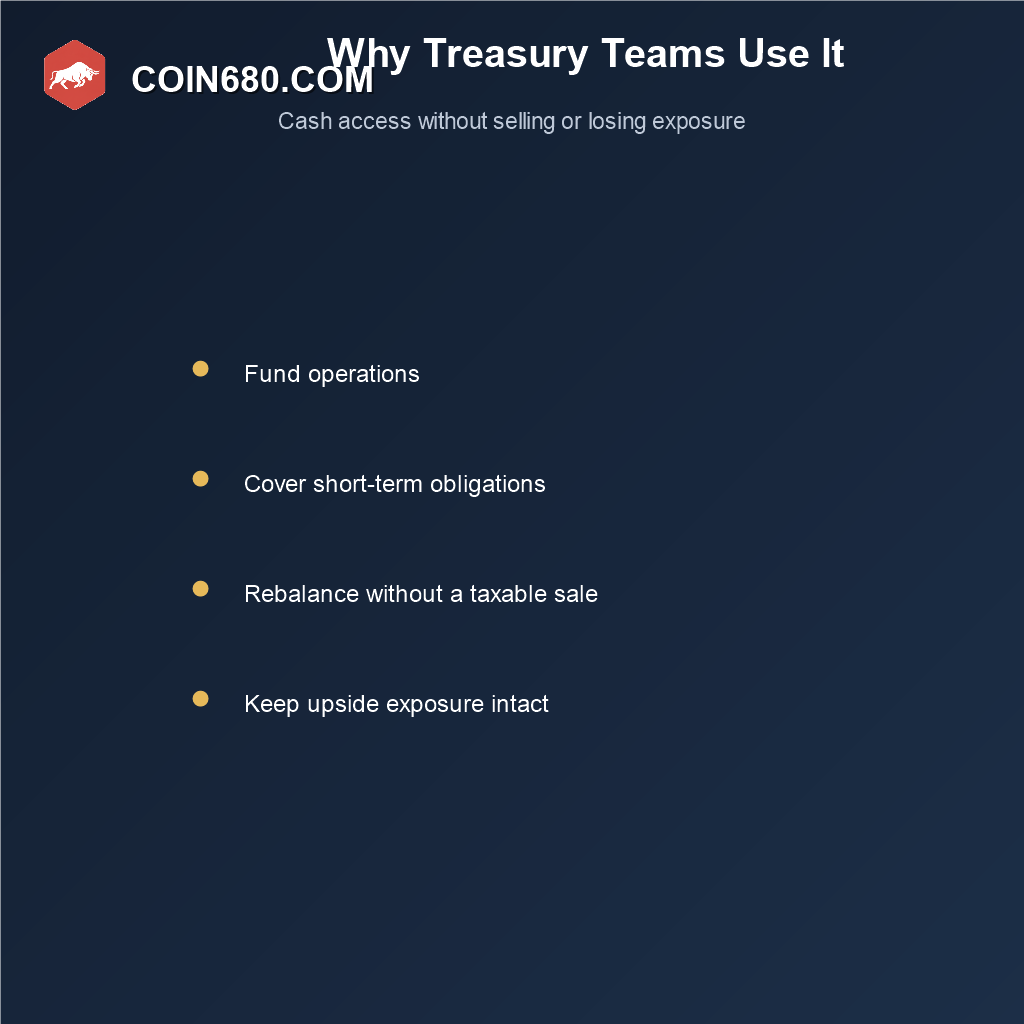
Borrowing against bitcoin lets a company fund operations, cover short-term obligations, or rebalance a portfolio without triggering a taxable sale or losing market exposure to further price appreciation. It has also become a way for bitcoin-heavy companies to finance capital expenditure while keeping their coins on the balance sheet, a genuinely different use case than the corporate treasury strategies covered earlier in this chapter.
A Real Example at Scale
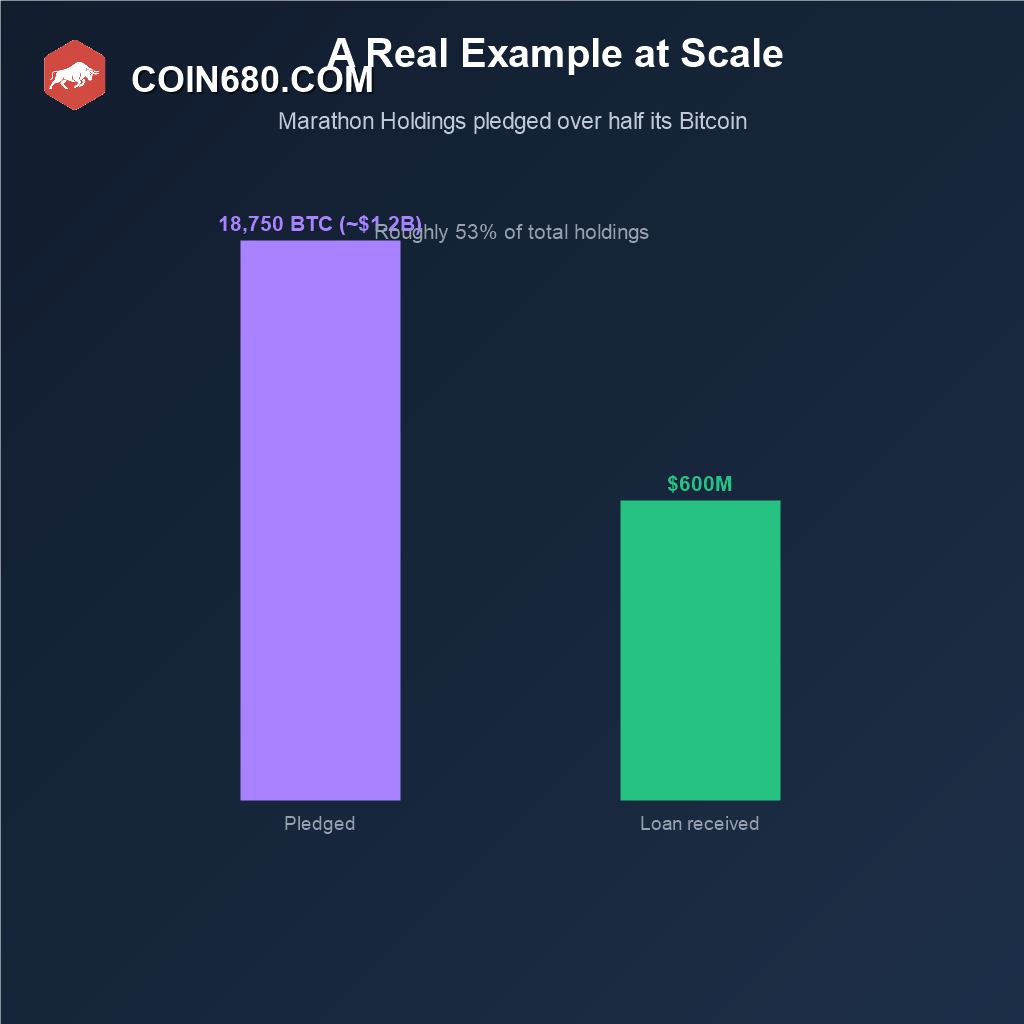
Mining company Marathon Holdings pledged 18,750 BTC, roughly 53% of its total bitcoin holdings at the time and worth approximately $1.2 billion, to secure $600 million across two term loans. That single transaction illustrates both the scale these facilities can now reach and how much of a company’s total holdings can end up tied up as collateral in a single financing decision.
The Risk That Comes With the Collateral
Because these loans are over-collateralized and priced against a volatile asset, a sharp enough drop in bitcoin’s value can trigger a margin call, and if the borrower cannot post more collateral, the lender sells part of the pledged bitcoin to protect the loan. Recent institutional agreements have added more detailed provisions covering margin calls, collateral custody, and liquidation terms as the market has matured, but the fundamental exposure to a falling price remains the core risk regardless of how sophisticated the paperwork gets.
Frequently Asked Questions
Why would a company borrow against Bitcoin instead of just selling it?
Borrowing avoids triggering a taxable sale and preserves exposure to further price appreciation, letting a company access cash while keeping its bitcoin position intact.
What does “over-collateralized” mean for a Bitcoin-backed loan?
It means the value of the bitcoin pledged as collateral exceeds the amount actually borrowed, giving the lender a buffer that can absorb some price decline before the loan becomes underwater.
What happens if Bitcoin’s price falls sharply during the loan term?
A large enough drop can trigger a margin call requiring more collateral, and if the borrower cannot post it, the lender may sell part of the pledged bitcoin to protect the loan.
How large can institutional Bitcoin-backed loans get?
Real examples have reached hundreds of millions of dollars, such as Marathon Holdings pledging roughly $1.2 billion worth of bitcoin, about 53% of its holdings, to secure $600 million in term loans.
This content is for educational purposes only and is not financial advice. Collateralized lending carries real liquidation risk and no outcome is guaranteed. Always research independently before borrowing against any asset.
Institutional lending is one more way large holders access liquidity without selling. Continue with Bitcoin ETF flows as a sentiment indicator, revisit why companies hold Bitcoin treasuries, or return to the full Bitcoin Academy.