
Why Is Bitcoin Adoption Often Stronger in Emerging Markets?
In wealthy, stable economies, Bitcoin adoption is often framed around speculation or portfolio diversification. In much of the developing world, the drivers are more practical, and often more urgent, than either of those.
Financial Inclusion for the Unbanked
A large share of people in emerging markets lack access to basic banking services, a bank account, a loan, a way to save that isn’t physical cash. Bitcoin offers a path around that barrier: anyone with a smartphone and internet access can participate, without needing approval from a traditional financial institution that may not have ever served their community.
Protection Against Currency Instability
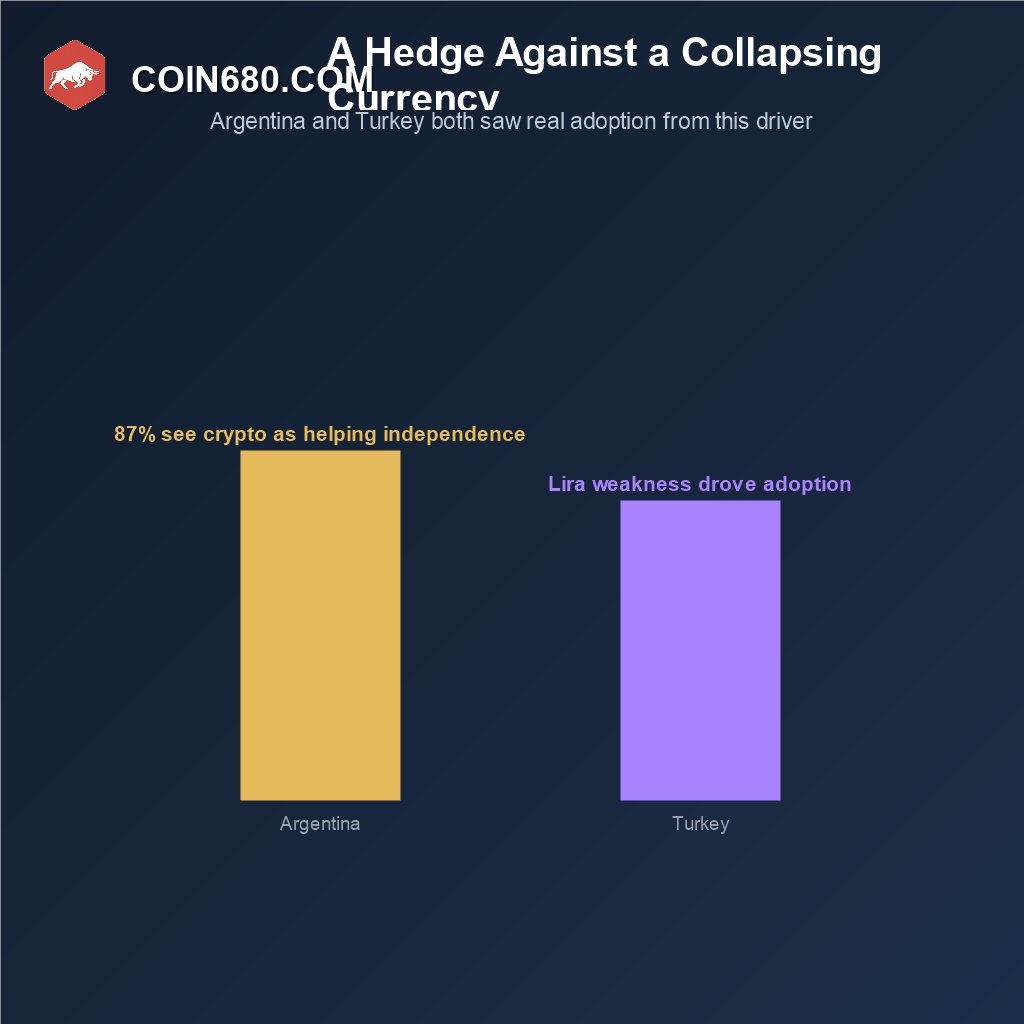
In countries where local currencies have suffered chronic inflation or sudden collapse, Bitcoin has functioned as a practical alternative store of value rather than a theoretical hedge. In Argentina, where inflation has repeatedly devastated purchasing power, 87% of residents surveyed believe crypto can improve their financial independence. Turkish citizens turned to Bitcoin for similar reasons during periods of lira weakness, treating it as a way to preserve value their own currency could not.
Remittances as a Third Major Driver
Covered in more depth in the previous lesson, cheaper and faster cross-border transfers matter enormously in economies where remittances from family working abroad make up a meaningful share of household income. The Philippines, with roughly 23.4% of its population reported using Bitcoin, illustrates just how significant this specific driver can be at a national scale.
Necessity, Not Novelty
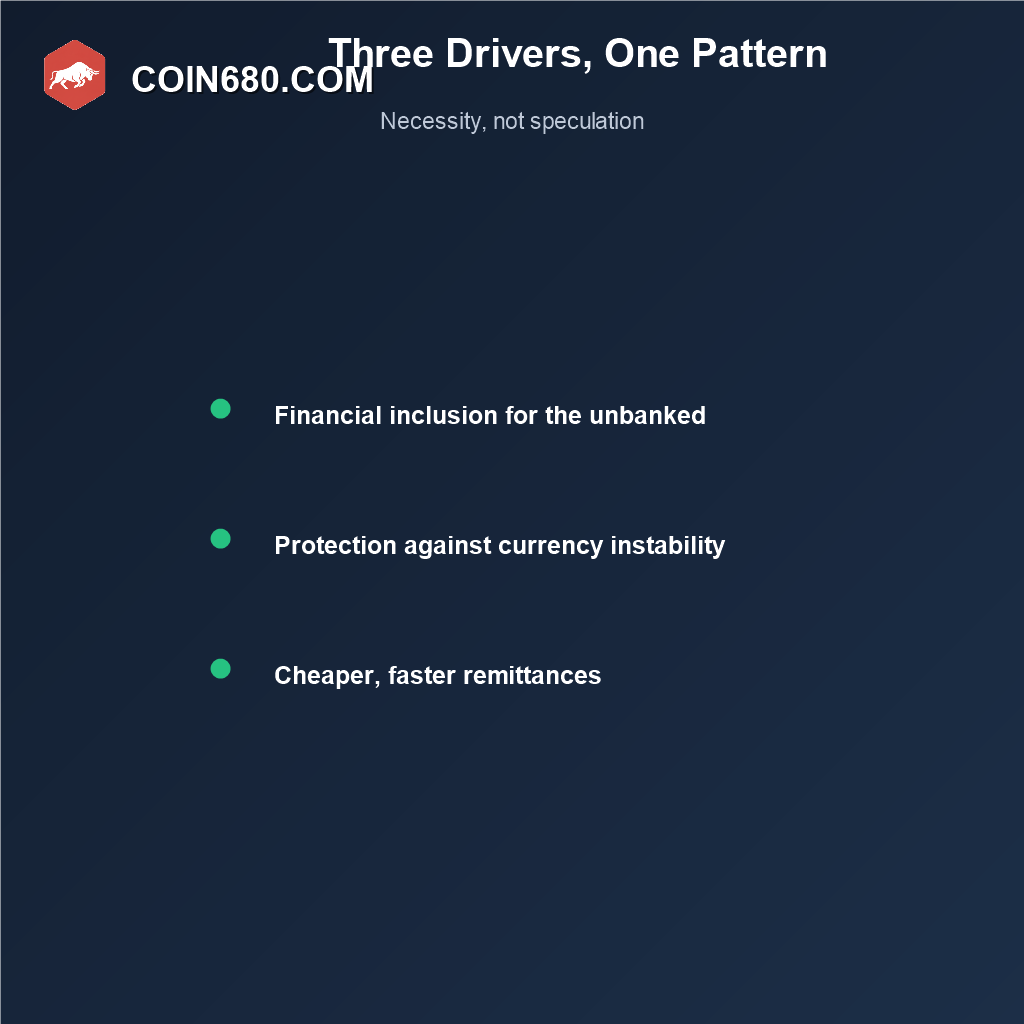
The throughline across all three drivers is that emerging-market Bitcoin adoption is generally driven by practical necessity rather than speculation, in clear contrast to developed markets where investment narratives tend to dominate the conversation. That distinction matters for understanding adoption data: high usage in a specific country often reflects a specific local financial pain point being solved, not simply enthusiasm for a speculative asset.
Frequently Asked Questions
Why is Bitcoin adoption often stronger in emerging markets than developed ones?
Adoption in emerging markets tends to be driven by practical necessity, financial inclusion, protection against currency instability, and cheaper remittances, rather than the speculation or portfolio diversification narratives that dominate in developed markets.
How does Bitcoin help people without access to traditional banking?
It allows anyone with a smartphone and internet access to store and transact value without needing approval from a traditional bank, which is especially significant in regions with large unbanked populations.
Which countries show strong currency-instability-driven Bitcoin adoption?
Argentina and Turkey are commonly cited examples, where chronic inflation or currency weakness has pushed a meaningful share of the population toward Bitcoin as an alternative store of value.
Is remittance use a major driver of emerging-market Bitcoin adoption?
Yes, in countries like the Philippines where remittances from workers abroad represent a significant share of household income, Bitcoin-based remittance services have seen especially high adoption.
This content is for educational purposes only and is not financial advice. Regional adoption patterns reflect specific historical contexts and can change over time. Always research independently before forming investment views.
Emerging-market adoption ties directly into the broader macro narrative around currency and debt. Continue with rising national debt and Bitcoin’s narrative, revisit Bitcoin’s role in remittances, or return to the full Bitcoin Academy.