
How Do Bitcoin ETF Flows Work as a Market Sentiment Indicator?
Since spot Bitcoin ETFs launched, their daily inflow and outflow numbers have become one of the most closely watched figures in crypto, treated by many as a real-time read on institutional conviction. Reading them correctly means understanding both what they represent and where that reading can go wrong.
What an Inflow or Outflow Actually Represents
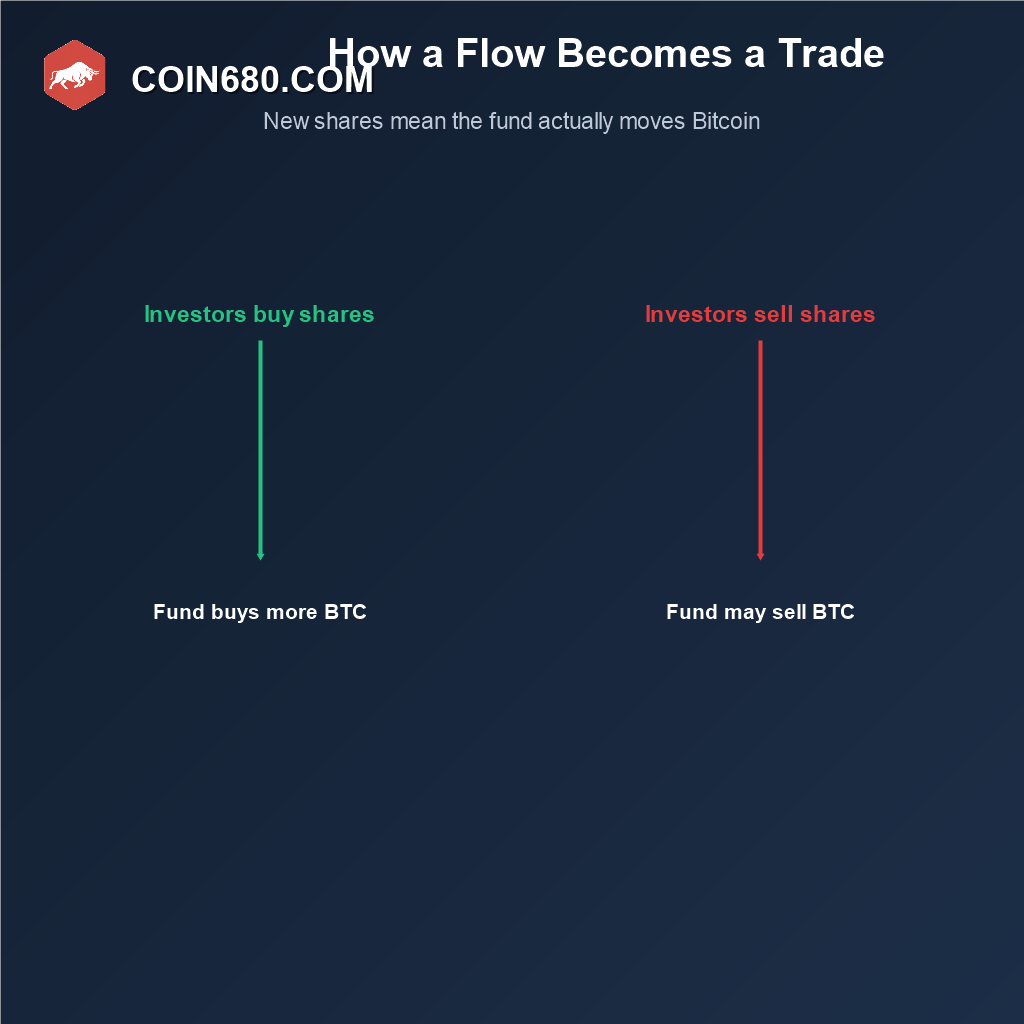
When investors buy ETF shares, new money enters the fund and the fund typically buys more bitcoin to back those shares, an inflow. When investors sell shares and capital leaves, the fund may need to sell bitcoin to meet redemptions, an outflow. Because most US spot ETFs hold real bitcoin rather than derivatives, these flows function as a reasonably direct proxy for institutional buying and selling pressure.
Why They’re Considered a Cleaner Signal Than Alternatives
ETF flows represent actual capital commitments from sophisticated investors, unlike on-chain data, which can be difficult to interpret without context, or social media sentiment, which is often noisy and prone to manipulation. A sustained run of daily inflows is generally read as growing institutional confidence, while a sustained run of outflows is read as caution or profit-taking.
The Contrarian Reading Worth Knowing
Some analysts argue the opposite interpretation deserves more weight than the obvious one: massive outflows can signal a buying opportunity, since investors tend to become excessively pessimistic near market troughs, while massive inflows can mark a market top, since investors tend to become excessively optimistic exactly when price has already run furthest. Under this view, ETF flow data measures investor emotional extremes as much as it measures genuine underlying market strength.

How to Actually Read the Data Without Overreacting
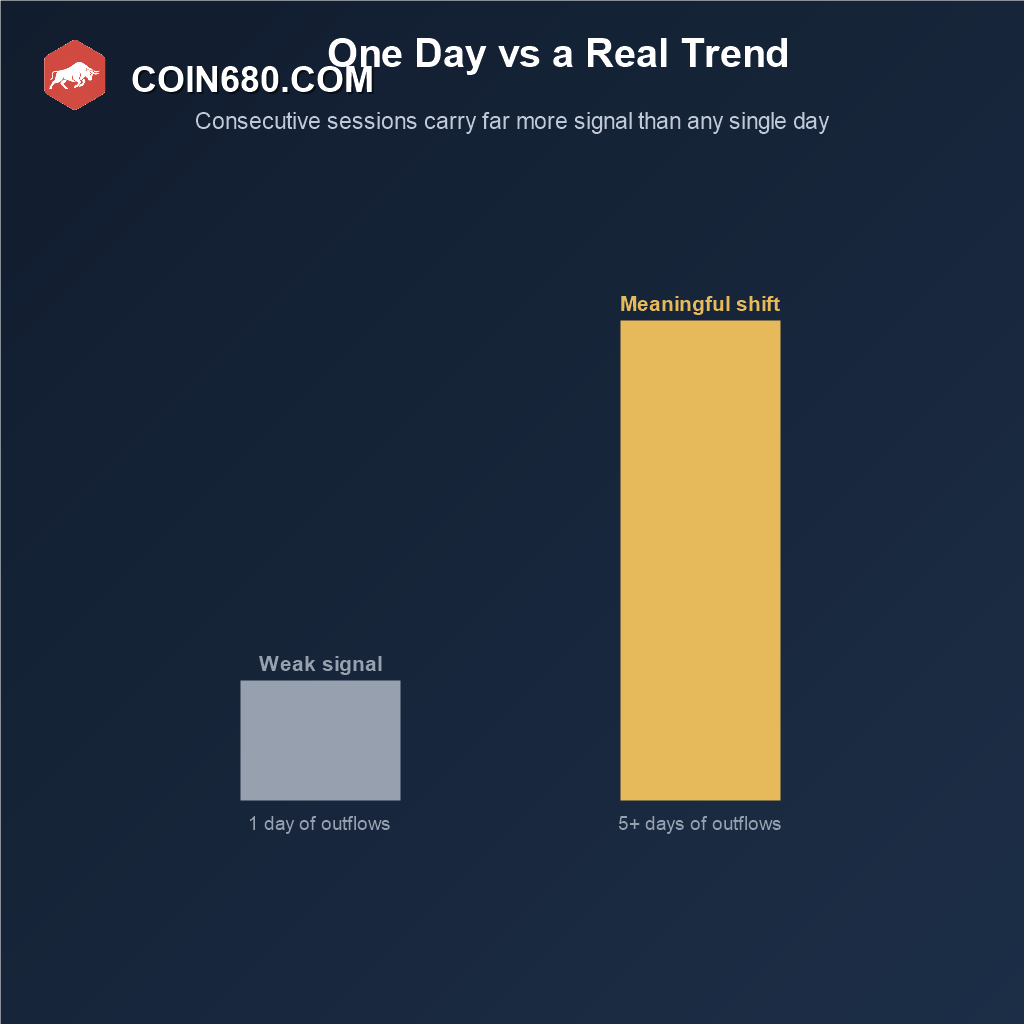
A single day’s flow number is easy to overweight and rarely means much on its own. Consecutive days of outflows, especially five or more sessions in a row, are considered a meaningfully stronger signal that institutional sentiment has genuinely shifted than any one day’s figure. Looking at the broader trend at the fund and category level, rather than reacting to each daily headline, produces a far more reliable read.
Frequently Asked Questions
Do Bitcoin ETF inflows always mean the price will rise?
Not necessarily. While inflows generally reflect institutional buying pressure, some analysts view unusually large inflows as a sign of excessive optimism that can precede a market top rather than a guaranteed continuation higher.
Should a single day of ETF outflows be treated as a bearish signal?
Generally no, a single day’s figure is easy to overweight. Multiple consecutive days of outflows, five or more sessions, are considered a meaningfully stronger and more reliable signal than any one day alone.
Why are ETF flows considered more reliable than on-chain or social sentiment data?
ETF flows reflect actual capital commitments from sophisticated investors, whereas on-chain data can be hard to interpret without context and social sentiment is often noisy or manipulated.
What is the contrarian view of ETF flow data?
Some analysts argue massive outflows can mark a buying opportunity while massive inflows can mark a market top, since flow data partly captures investor emotional extremes rather than pure underlying strength.
This content is for educational purposes only and is not financial advice. ETF flow data reflects historical capital movement and carries no guarantee about future price direction. Always research independently before trading.
ETF flows are one of several sentiment tools worth understanding alongside institutional access. Continue with Bitcoin’s role in remittances, revisit institutional Bitcoin-backed loans, or return to the full Bitcoin Academy.