El Salvador’s Bitcoin Legal Tender Experiment: What Happened?
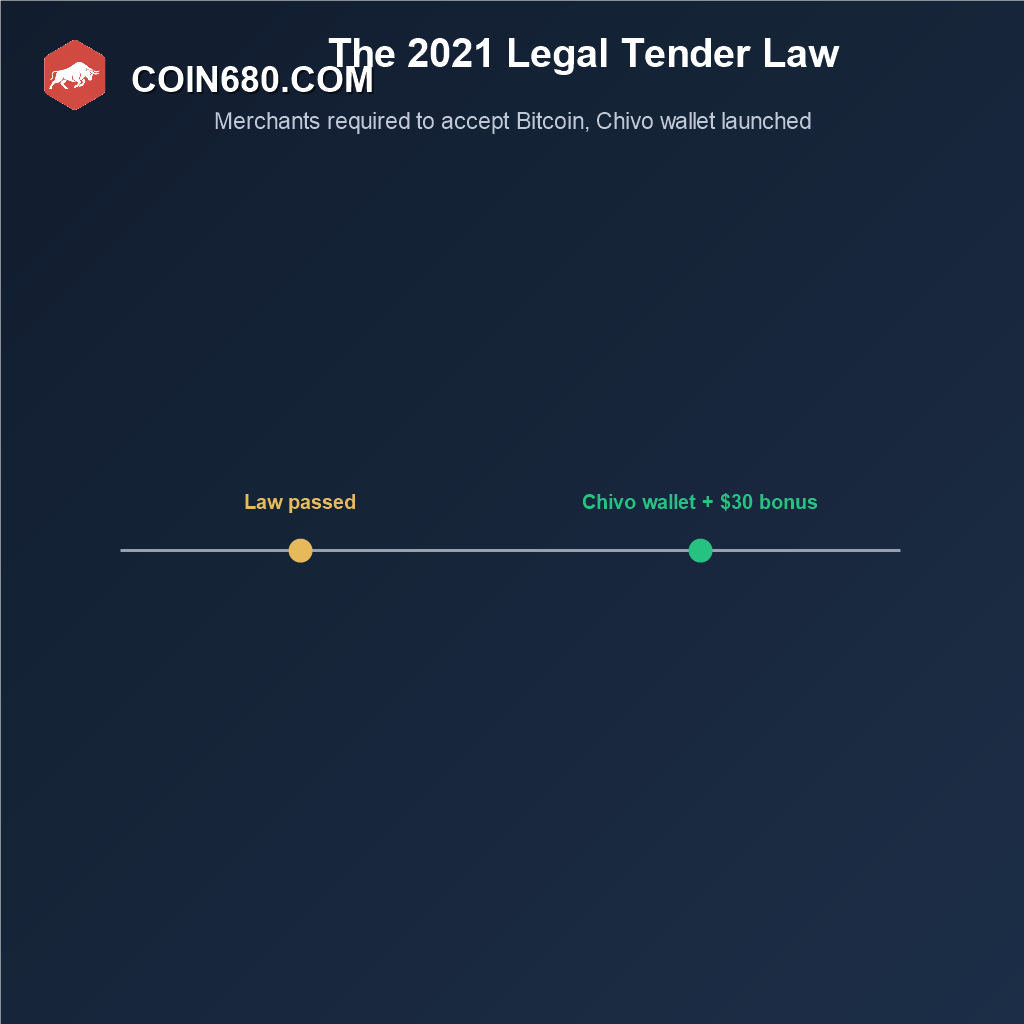
In 2021, El Salvador became the first country in the world to make Bitcoin legal tender, a genuinely unprecedented national experiment. By 2025, the government had rolled major parts of that law back. What actually happened in between is a case study every macro-focused Bitcoin investor should understand.
What the Law Actually Required
The 2021 law required merchants across the country to accept bitcoin as payment and allowed the government to collect taxes and fees in it, backed by a government-built mobile wallet called Chivo that offered new users a thirty dollar bitcoin bonus simply for downloading it. The stated goals were ambitious: banking a large unbanked population, cutting the cost of remittances sent home by Salvadorans working abroad, and attracting foreign investment to a small, historically struggling economy.
Why Public Adoption Never Really Took Hold
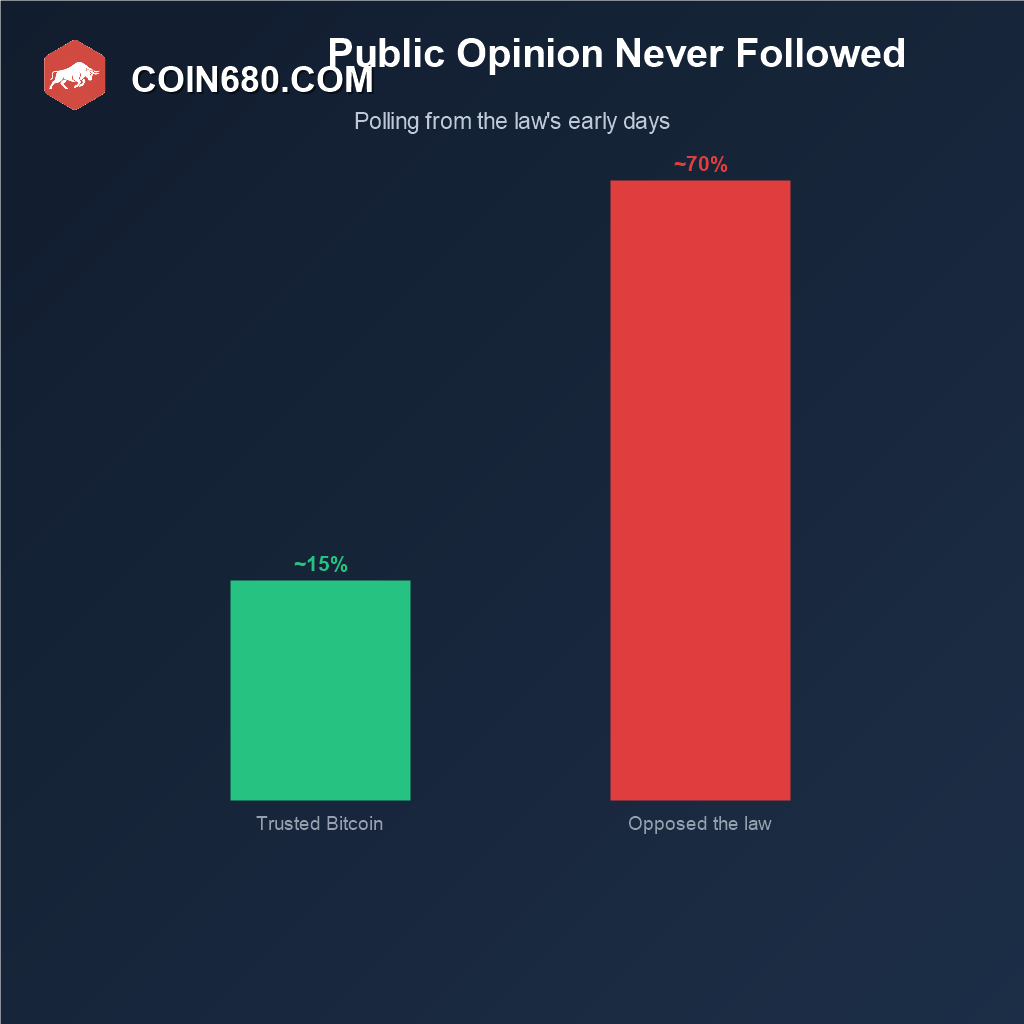
Public polling from the law’s early days showed only around fifteen percent of the population actually trusted bitcoin, while roughly seventy percent opposed the adoption law despite a sustained government media campaign promoting it. Bitcoin’s volatility made it an awkward everyday payment method, technical problems and multiple hacking incidents affecting the Chivo wallet further eroded public confidence, and an IMF review later found no clear evidence the policy had meaningfully improved financial inclusion for the unbanked population it was meant to serve.
The 2025 Rollback
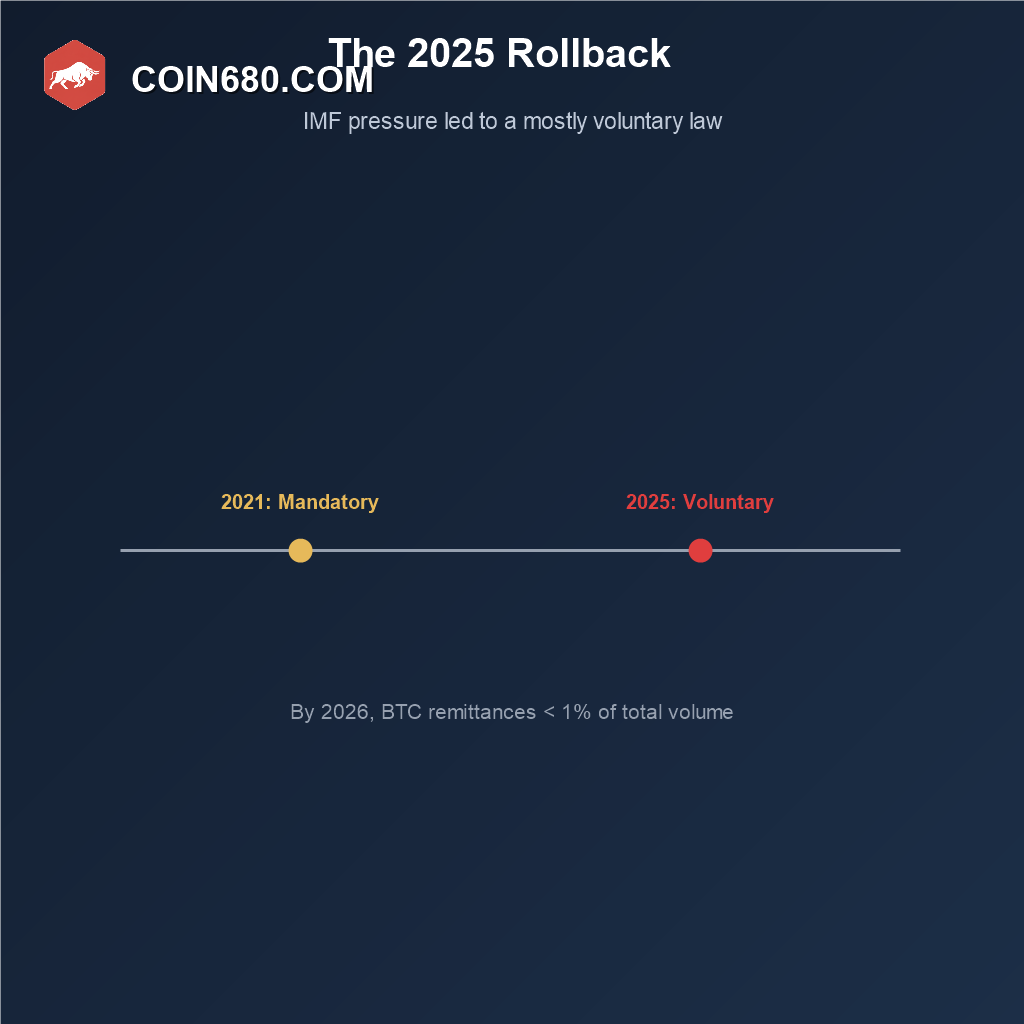
Under pressure from the International Monetary Fund as a condition tied to a 1.4 billion dollar financing facility, El Salvador amended its law in January 2025 to make bitcoin acceptance voluntary, required taxes to be paid in US dollars again, and limited the public sector’s involvement in bitcoin-related activity going forward. By the middle of 2026, bitcoin-settled remittances accounted for less than one percent of total remittance volume into the country, a clear real-world measure of how limited actual day-to-day adoption became despite the legal tender status.
Frequently Asked Questions
Is Bitcoin still legal tender in El Salvador?
Acceptance became voluntary rather than mandatory after a 2025 amendment, and taxes must again be paid in US dollars, rolling back the core requirements of the original 2021 law.
Why did El Salvador roll back its Bitcoin law?
Low public trust and adoption, Chivo wallet technical problems and hacking incidents, bitcoin’s volatility as a payment method, and pressure from the IMF tied to a major financing facility all contributed to the rollback.
Did Bitcoin actually help El Salvador’s unbanked population?
An IMF review found no clear evidence the policy meaningfully improved financial inclusion, one of the law’s original stated goals, despite the government-issued Chivo wallet and adoption incentives.
What is the biggest lesson from El Salvador’s experiment?
That legally mandating adoption does not guarantee genuine public usage, real remittance and payment volume settled in bitcoin remained a small fraction of the total even years into the policy, regardless of the legal tender status.
This content is for educational purposes only and is not financial or political advice. This case study reflects a specific national policy outcome and does not predict results elsewhere. Always research independently before forming investment views.
This national case study wraps up the institutional-adoption thread of this chapter. Revisit pension and sovereign wealth funds, continue with the Bitcoin basis trade, or return to the full Bitcoin Academy.