
A History of Institutional Bitcoin Adoption
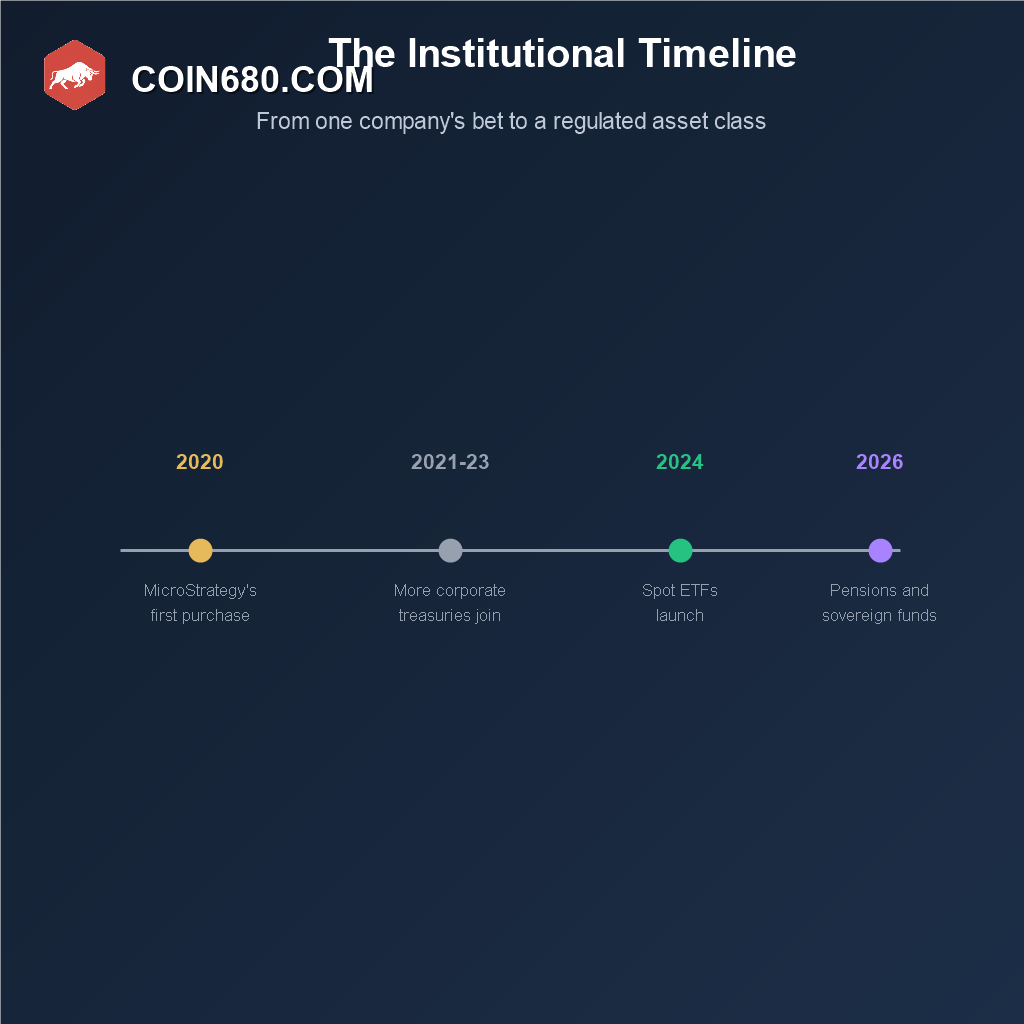
For its first decade, Bitcoin was overwhelmingly a retail phenomenon, individual buyers, early cypherpunks, and speculators. The shift toward institutions holding it on corporate balance sheets and in regulated funds is a comparatively recent chapter, and it changed the asset’s market structure in ways worth tracing.
The First Corporate Domino
In August 2020, MicroStrategy purchased roughly 21,454 bitcoin for about 250 million dollars and formally adopted Bitcoin as its primary treasury reserve asset, the first major public company to do so. What started as a single treasury experiment grew dramatically over the following years into a multi-billion dollar commitment that came to define the company’s identity and stock valuation, and became the reference case every other corporate treasury discussion since has been measured against.
From One Company to a Broader Trend
Other public companies followed at a measured pace rather than all at once, and by the middle of this decade, dozens of publicly listed companies had adopted some form of bitcoin treasury strategy, collectively holding a meaningful single-digit percentage of the entire circulating supply. That shift ran in parallel with a separate institutional track entirely, asset managers building regulated products designed to give traditional investors exposure without needing to custody bitcoin directly themselves.

The ETF Turning Point
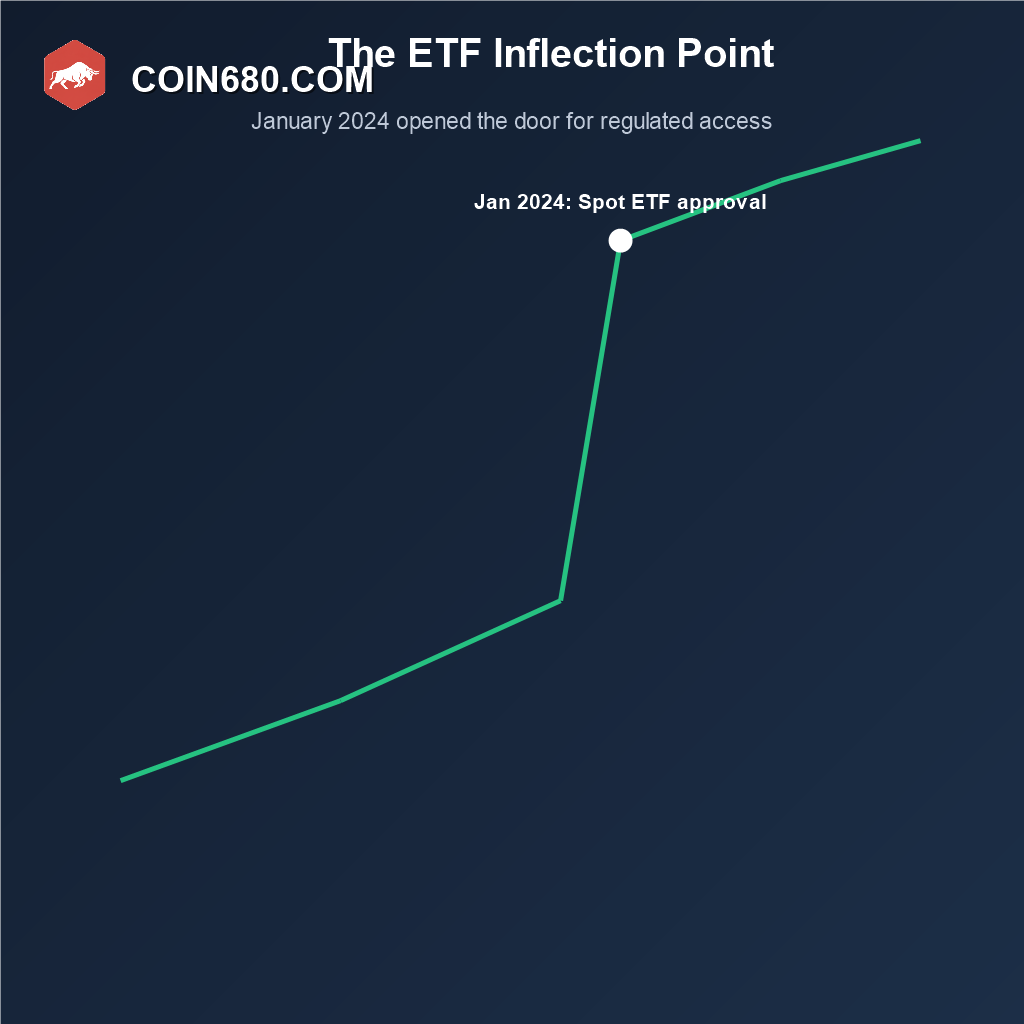
The approval and launch of spot Bitcoin ETFs in January 2024, covered in detail in the next lesson, removed a major structural barrier for institutions that could not or would not hold bitcoin directly for custody, compliance, or mandate reasons. That single regulatory shift opened the door for pension funds, sovereign wealth funds, and traditional asset managers to gain exposure through a familiar, regulated wrapper, accelerating institutional adoption faster than the corporate treasury trend alone had managed in its first several years.
Frequently Asked Questions
Which company started the corporate Bitcoin treasury trend?
MicroStrategy, which purchased its first bitcoin in August 2020 and adopted it as its primary treasury reserve asset, becoming the reference case for every corporate treasury strategy that followed.
How many public companies now hold Bitcoin on their balance sheet?
Dozens of publicly listed companies have adopted some form of bitcoin treasury strategy, collectively holding a meaningful share of total circulating supply, though the exact count changes as more companies join.
What was the biggest single turning point for institutional adoption?
The approval and launch of spot Bitcoin ETFs in January 2024, which gave institutions a regulated, familiar way to gain exposure without directly custodying bitcoin themselves.
Did institutional adoption happen gradually or all at once?
Gradually. It began with a single corporate treasury decision in 2020, built momentum through more corporate adopters over the following years, then accelerated sharply once regulated ETF products became available.
This content is for general education and is not financial advice. Historical adoption trends do not guarantee similar future growth. Always research independently before investing.
This institutional history sets up the next few lessons directly. Continue with why companies hold Bitcoin treasuries, how spot Bitcoin ETFs work, or return to the full Bitcoin Academy.