
What Is the Bid-Ask Spread?
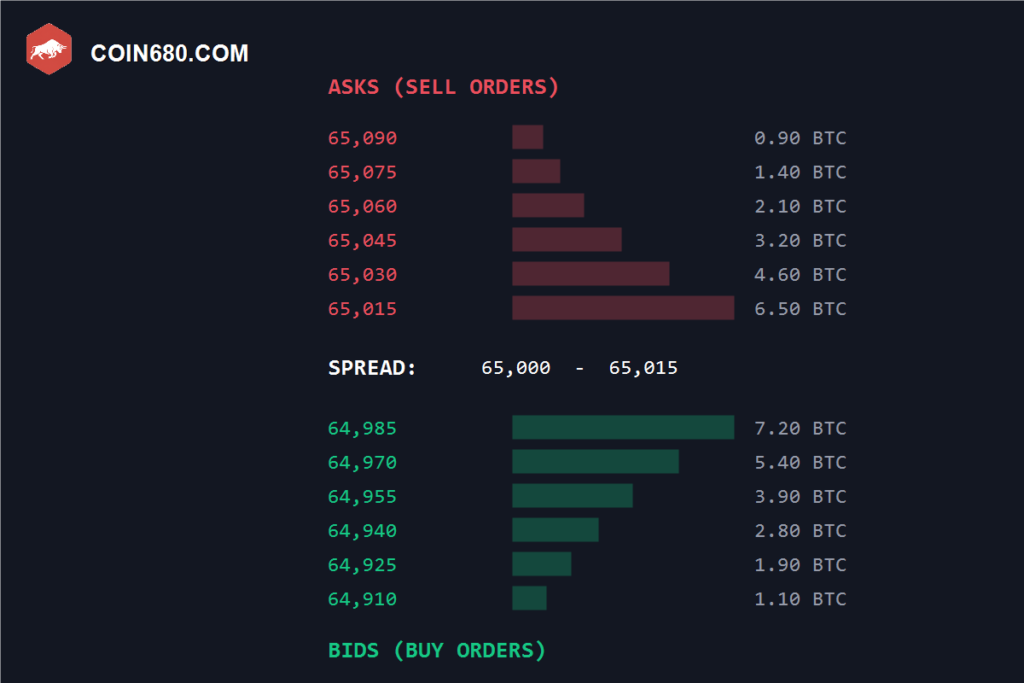
Even in a perfectly efficient market, buyers and sellers rarely agree on the exact same price at the exact same instant. That small, constant disagreement has a name.
What Is the Bid-Ask Spread?
The bid-ask spread is the difference between the highest price a buyer is currently willing to pay, the best bid, and the lowest price a seller is currently willing to accept, the best ask, for a given asset. This gap sits at the center of every order book, covered in more depth elsewhere in this Academy, representing an implicit cost of trading beyond any explicit fees charged.
Why Does a Spread Exist at All?
The spread exists because buyers naturally want to pay less and sellers naturally want to receive more, meaning their respective orders don’t perfectly overlap. If a buy order and sell order ever matched at the exact same price, a trade would execute immediately at that price, removing both orders from the book and effectively closing that specific gap.
What Determines Whether a Spread Is Wide or Narrow?
Liquidity, covered elsewhere in this Academy, is the primary driver, highly liquid markets with many active buyers and sellers tend to have narrow spreads, since competition between traders pushes bid and ask prices closer together. Less liquid markets, with fewer active participants, tend to have wider spreads, since there’s less competitive pressure narrowing that gap.
How Does the Spread Actually Cost You Money?
If you buy at the ask price and immediately sold back at the bid price, you’d lose the spread amount even with zero price movement and no explicit trading fees, purely from crossing that gap in both directions. This makes the spread a genuine, if often overlooked, cost of trading, particularly relevant for frequent traders or those trading less liquid assets.
What Affects Spread Width in Practice?
- Trading volume and liquidity of the specific asset and trading pair.
- Overall market volatility, since spreads often widen during periods of high uncertainty.
- Time of day and market activity levels, with spreads sometimes widening during lower-activity periods.
- The specific exchange’s overall liquidity compared to competing platforms.
Frequently Asked Questions
Does Bitcoin typically have a wide or narrow spread?
On major, highly liquid exchanges, Bitcoin’s spread is typically quite narrow given its high trading volume, though smaller or less liquid platforms can show noticeably wider spreads.
Is the spread the same as a trading fee?
No, the spread is an implicit cost from the gap between bid and ask prices, separate from any explicit maker-taker fees the exchange itself charges.
Can the spread change quickly during volatile periods?
Yes, spreads often widen noticeably during high volatility or major news events, reflecting increased uncertainty among market participants.
Want to understand how to read a candlestick chart, the most common way price action is visualized? Continue learning in the Bitcoin Academy.
Disclaimer: The content provided on this page is for informational and educational purposes only and does not constitute financial or investment advice. Cryptocurrency markets are highly volatile and involve significant risk of loss. Always do your own research and consult a licensed financial advisor before making any investment decisions.