
What Is Quantitative Easing, and How Does It Affect Bitcoin?
“The Fed printed money and Bitcoin went up” is the kind of oversimplified line that gets repeated constantly in crypto commentary. The actual mechanism connecting quantitative easing to Bitcoin’s price is real, but it works less directly than that shorthand suggests.
What Quantitative Easing Actually Does
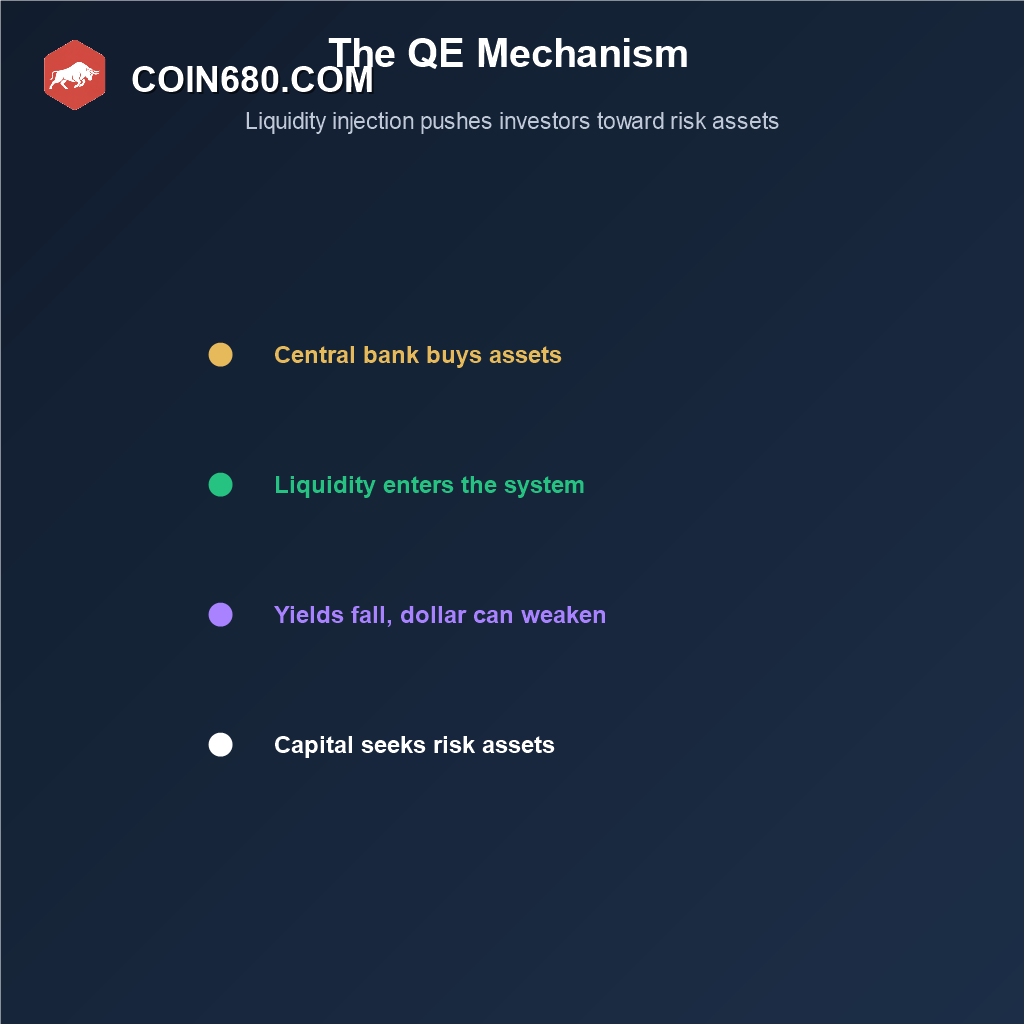
Quantitative easing is when a central bank buys large quantities of financial assets, typically government bonds, injecting new liquidity directly into the financial system. That added liquidity tends to lower yields on safer assets and can weaken the currency doing the buying, both of which push investors toward risk assets in search of better returns elsewhere.
The Historical Case That Established the Pattern
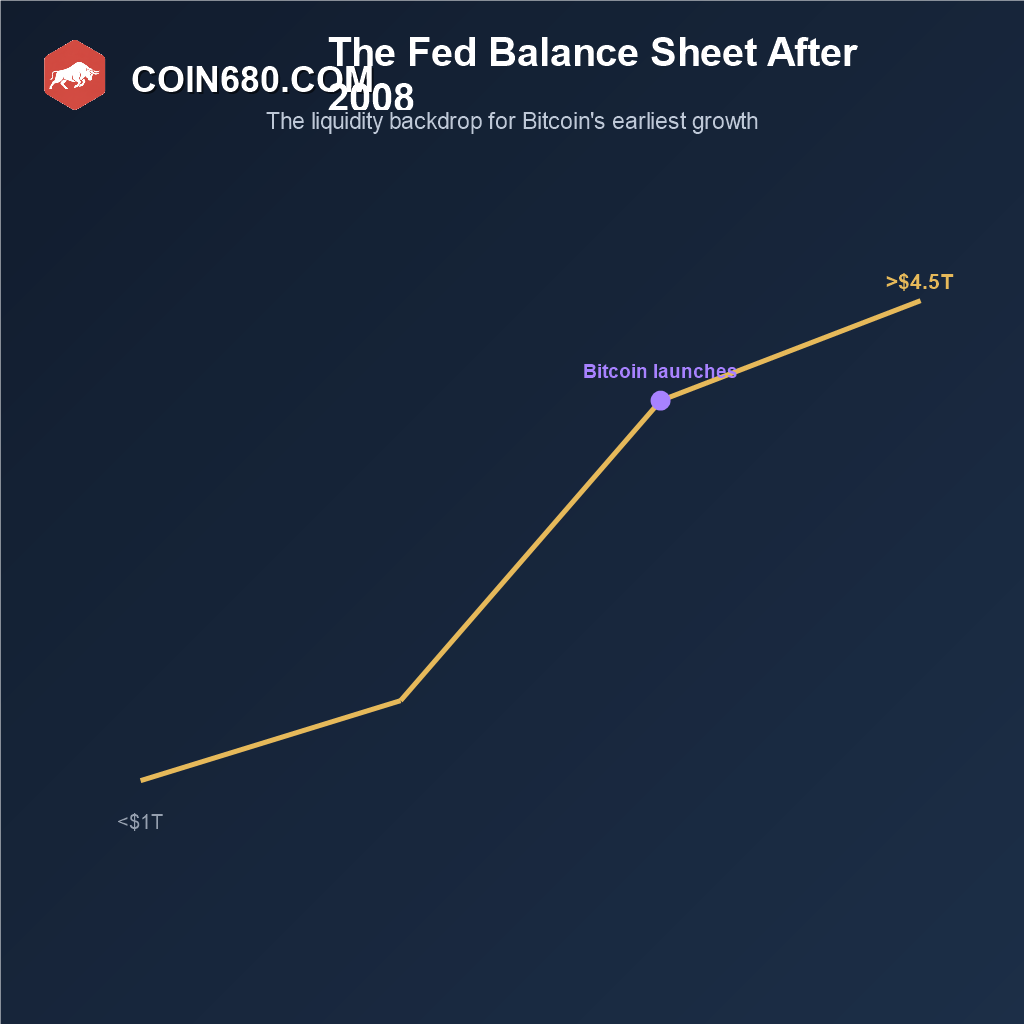
Following the 2008 financial crisis, the Federal Reserve purchased roughly $3.7 trillion in assets, expanding its balance sheet from under $1 trillion to more than $4.5 trillion. That flood of liquidity created the environment in which Bitcoin, launched in the years just after, grew from effectively worthless to over $1,000, a connection between Fed liquidity and Bitcoin’s price that has become one of the most closely documented patterns in crypto macro analysis since.
Why the Relationship Isn’t Purely Mechanical
Research studying the actual effects of QE on Bitcoin prices has found the impact varies over time, with a documented long-term positive effect specifically through the liquidity channel, but outcomes still depend heavily on concurrent inflation and growth conditions rather than QE acting in isolation. As currency becomes more abundant, assets with genuine scarcity and strong network effects, exactly the properties covered in earlier chapters of this Academy, tend to benefit most, but the size and timing of that benefit is not perfectly predictable.
What Actually Matters More Than the QE Announcement Itself
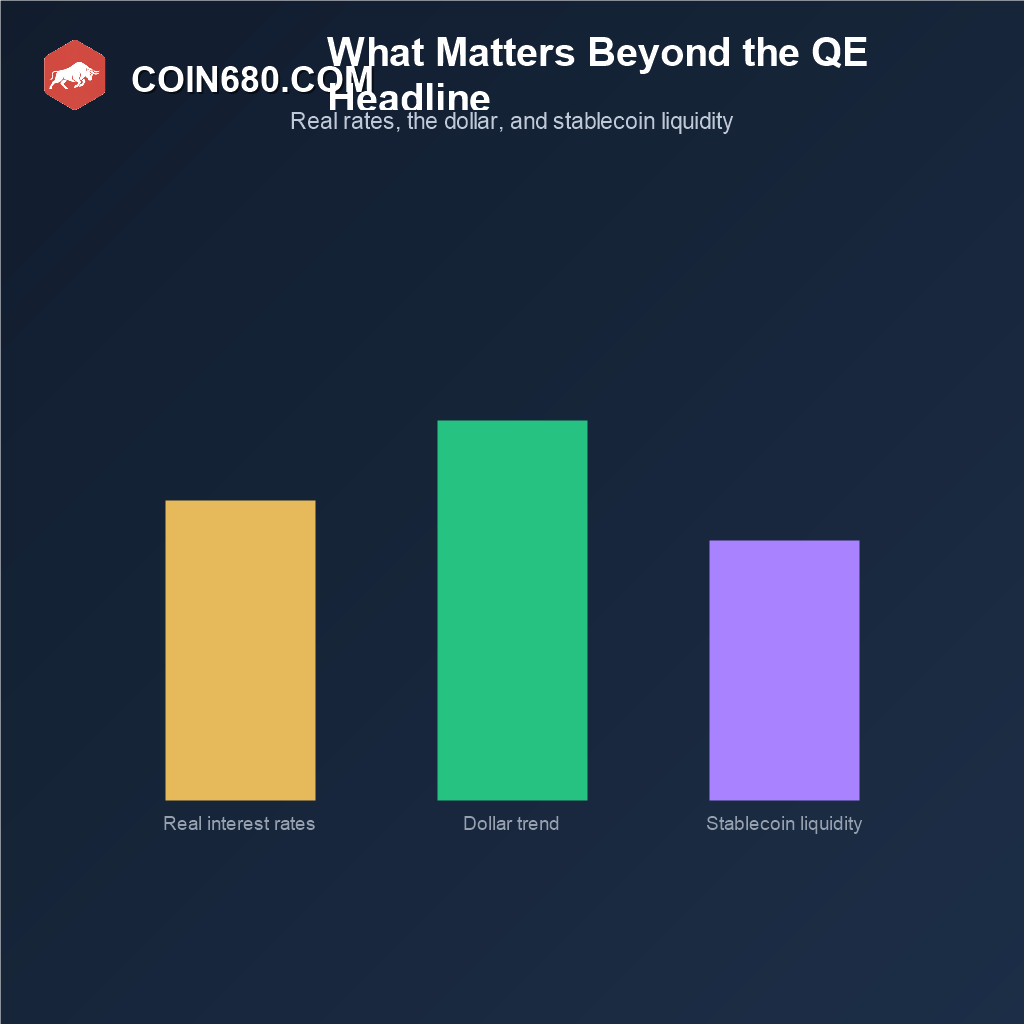
Crypto markets tend to react most directly to changes in real interest rates, the dollar’s broader trend, and stablecoin liquidity conditions, all of which QE influences but does not single-handedly determine. Reading QE announcements in isolation, without checking these related indicators, is a common oversimplification of a genuinely multi-factor relationship.
Frequently Asked Questions
Does quantitative easing always push Bitcoin’s price higher?
It tends to create favorable conditions through added liquidity and lower yields, but research shows the actual effect varies over time and depends on concurrent inflation and growth conditions, not a guaranteed one-to-one relationship.
What historical event best illustrates the QE-Bitcoin connection?
The Federal Reserve’s roughly $3.7 trillion in asset purchases following the 2008 financial crisis created the liquidity environment during which Bitcoin grew from effectively $0 to over $1,000 in its early years.
Is QE the only factor driving Bitcoin’s price during high-liquidity periods?
No, real interest rates, the US dollar’s broader trend, and stablecoin liquidity conditions all matter alongside QE itself, and crypto markets often react more directly to those related indicators.
Why do scarce assets tend to benefit from quantitative easing?
As currency becomes more abundant through QE, assets with genuine scarcity and strong network effects, properties Bitcoin was specifically designed around, tend to attract more capital seeking to preserve value.
This content is for educational purposes only and is not financial advice. Macro policy effects on asset prices vary by period and carry no guarantee of repeating in the future. Always research independently before investing.
Quantitative easing connects directly to the rate distinction covered next. Continue with nominal vs real interest rates, revisit CBDCs vs Bitcoin, or return to the full Bitcoin Academy.