What Is Bitcoin Mining Hardware? ASICs Explained
The laptop you’re reading this on could technically mine Bitcoin. It would also lose money doing it, hundreds of times slower than the machines actually competing for block rewards today.
Bitcoin mining hardware has gone through several generations, each dramatically more specialized and efficient than the last. In Bitcoin’s earliest days, ordinary computer processors (CPUs) could mine competitively. That didn’t last — miners discovered graphics cards (GPUs), designed for parallel processing, could compute hashes far faster than CPUs, and GPU mining took over.
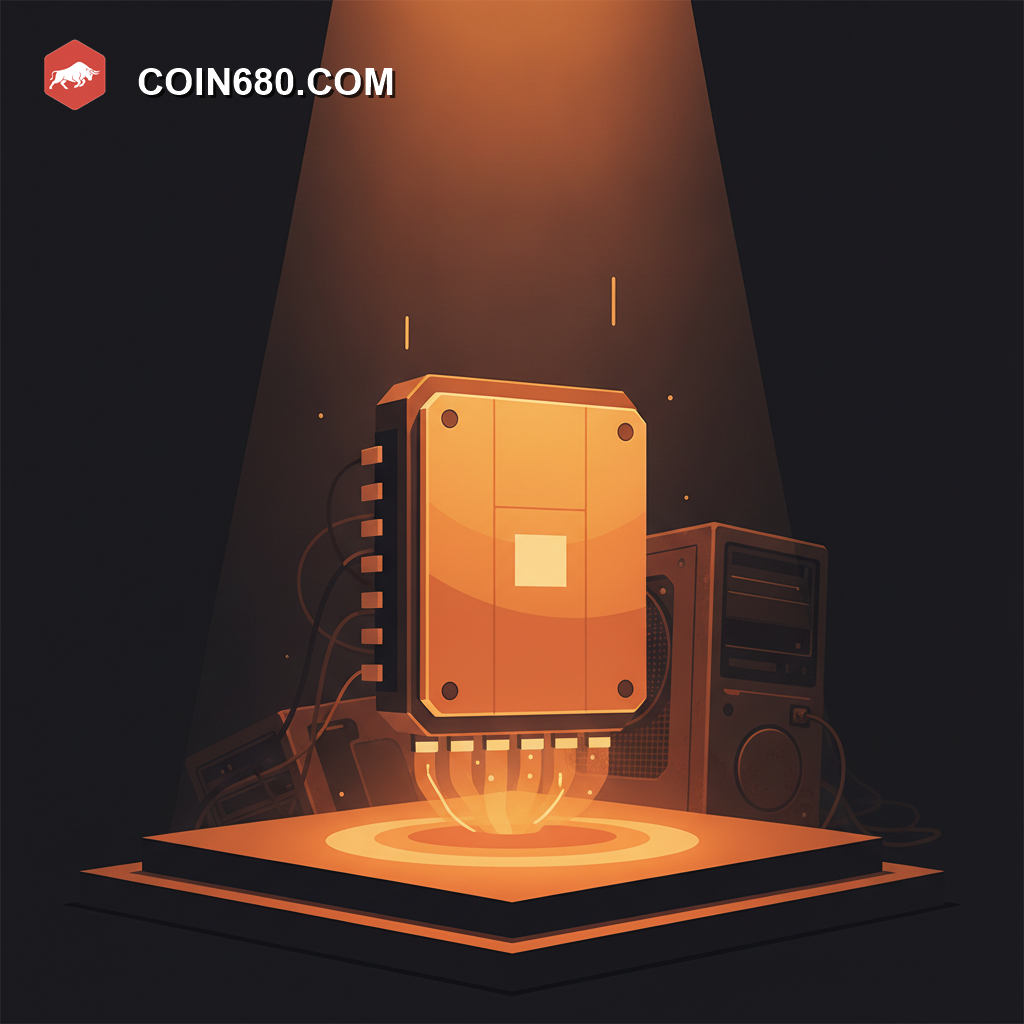
The real shift came with ASICs — Application-Specific Integrated Circuits. Unlike CPUs or GPUs, which are general-purpose chips capable of running any kind of software, an ASIC is a chip designed and manufactured to do exactly one job: compute Bitcoin’s specific hashing algorithm, as fast and efficiently as physically possible, and nothing else.
That specialization is a massive advantage. A modern Bitcoin ASIC can perform hundreds of trillions of hash calculations per second while consuming a fraction of the electricity per hash older hardware required. It’s also a disadvantage for casual miners: ASICs are so much more efficient that CPU and GPU mining of Bitcoin became completely unprofitable years ago.
This has real consequences for how mining is organized today. Because ASICs are expensive, specialized, and only useful for one purpose, mining has become a capital-intensive industry rather than a hobbyist activity — dominated by companies that can afford large fleets of machines and cheap electricity, typically in dedicated data centers.
It’s a genuine tradeoff worth understanding: the same specialization that makes ASICs so efficient at securing the network also raises the practical barrier to entry for mining, concentrating the activity among fewer, larger operators than Bitcoin’s early hobbyist-friendly years.
Curious how those large operators actually combine their efforts? Continue learning in the Bitcoin Academy.