
What Is Bitcoin Dominance?
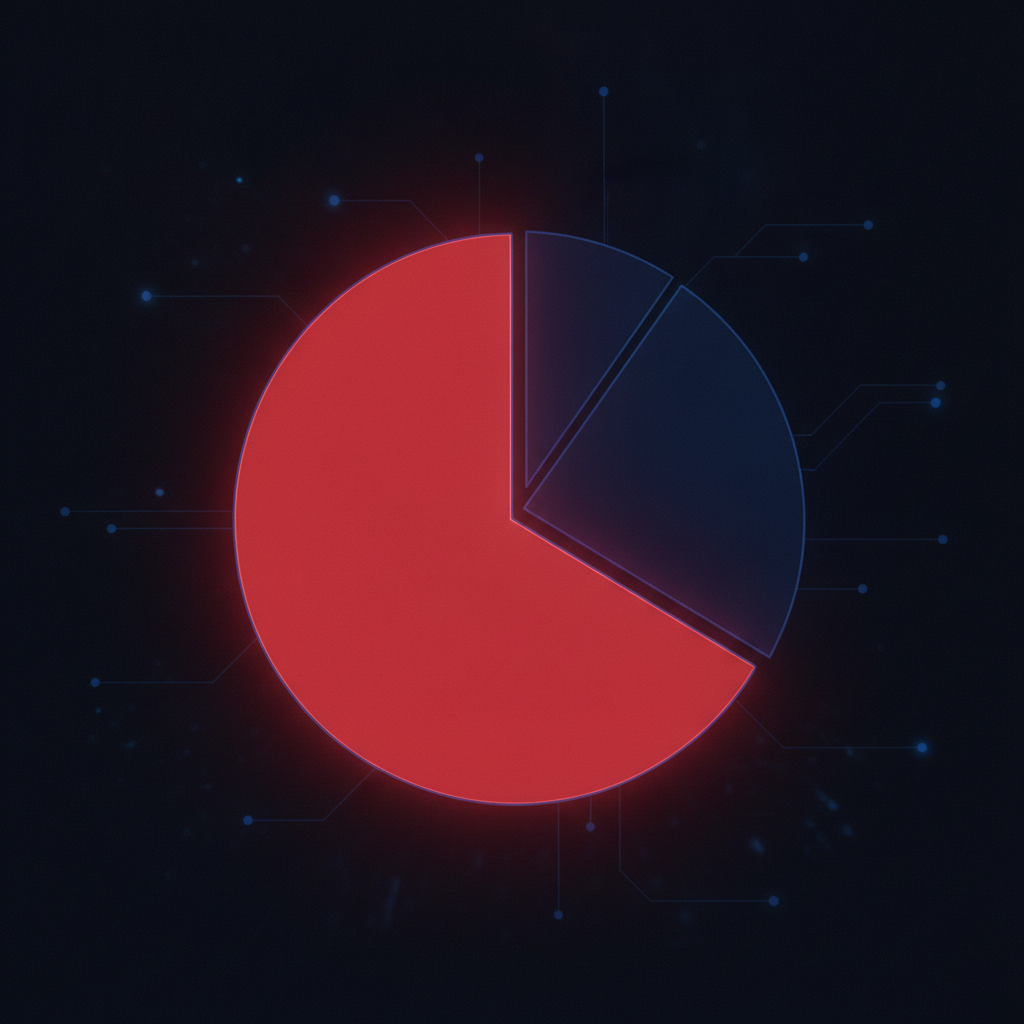
Bitcoin dominance measures Bitcoin’s market capitalization as a percentage of the entire cryptocurrency market’s combined value, a widely watched metric that reflects whether investor attention and capital are concentrated in Bitcoin or spreading into other cryptocurrencies. This lesson explains how to read and interpret this metric, with structured lessons from Coin680.
Table of Contents
- What Is Bitcoin Dominance? An In-Depth Overview
- Why Does Bitcoin Dominance Matter?
- Detailed Analysis of What Moves Bitcoin Dominance
- Step-by-Step Guide to Tracking Bitcoin Dominance Yourself
- Common Pitfalls When Interpreting Bitcoin Dominance
- Frequently Asked Questions About Bitcoin Dominance
- Continue Your Bitcoin Learning Journey with Coin680
What Is Bitcoin Dominance? An In-Depth Overview
Bitcoin dominance is calculated by dividing Bitcoin’s total market capitalization, its price multiplied by circulating supply, by the combined market capitalization of the entire cryptocurrency market, including all altcoins, discussed in an earlier Academy lesson on cryptocurrency as a broader category. The result, expressed as a percentage, indicates what share of total crypto market value Bitcoin represents at any given moment.
This metric has fluctuated significantly throughout crypto market history. In Bitcoin’s early years, before most other cryptocurrencies existed, its dominance was effectively 100%. As thousands of altcoins launched over subsequent years, dominance generally declined, though it has fluctuated considerably rather than following a single, consistent downward trend, often rising sharply during periods when investors favor Bitcoin’s relative stability over higher-risk altcoins.
Rising Bitcoin dominance is often interpreted as a sign that capital is flowing toward Bitcoin specifically, sometimes during periods of broader market uncertainty when investors favor Bitcoin’s longer track record and larger, more established market. Falling dominance is often associated with periods sometimes called “altcoin seasons,” when capital flows more heavily into alternative cryptocurrencies, often chasing higher potential returns alongside higher risk.
Understanding this metric provides useful context for reading the broader crypto market beyond Bitcoin’s price alone, a theme this Academy expands on considerably in its dedicated section covering the broader crypto market beyond Bitcoin specifically.
Why Does Bitcoin Dominance Matter?
Bitcoin dominance offers a useful lens for understanding broader market sentiment and capital flow patterns that a single asset’s price alone cannot fully capture.
- Indicates relative capital flow: shows whether Bitcoin or altcoins are attracting more market attention at a given time.
- Reflects risk appetite: rising dominance often coincides with more cautious market sentiment favoring Bitcoin’s relative stability.
- Helps contextualize altcoin performance: understanding dominance trends helps interpret whether altcoin price moves reflect broad market shifts or asset-specific factors.
- A widely referenced market indicator: commonly cited in crypto market analysis and discussion, worth understanding even if you don’t hold altcoins yourself.
Detailed Analysis of What Moves Bitcoin Dominance
Bitcoin-Specific Price Movements
If Bitcoin’s price rises faster than the broader altcoin market, its dominance increases even without any change in circulating supply, simply reflecting its larger relative market capitalization gain.
Altcoin Market Cycles
Periods of strong altcoin performance, sometimes called altcoin seasons, generally coincide with declining Bitcoin dominance, as capital flows more heavily toward alternative projects, often during periods of broader risk appetite in crypto markets.
New Cryptocurrency Launches and Market Structure Changes
The introduction of large new cryptocurrency projects, or major changes in how market capitalization is measured and reported, can also shift the calculated dominance figure independent of Bitcoin’s own price behavior.
| Dominance Trend | Common Interpretation |
|---|---|
| Rising Dominance | Capital favoring Bitcoin’s relative stability, often during uncertainty |
| Falling Dominance | Capital flowing into altcoins, sometimes called “altcoin season” |
| Stable Dominance | Relatively balanced capital flow between Bitcoin and altcoins |
Step-by-Step Guide to Tracking Bitcoin Dominance Yourself
- Find a reputable market data source that tracks Bitcoin dominance as a standard published metric.
- Observe the current percentage and compare it to recent historical trends rather than viewing it in isolation.
- Consider what’s driving the trend, whether Bitcoin-specific price action or broader altcoin market movement.
- Use dominance as one input among several, rather than a standalone signal for any specific decision.
- Revisit the metric periodically, since it can shift meaningfully over both short and long timeframes.
Common Pitfalls When Interpreting Bitcoin Dominance
Treating dominance as a precise predictive tool. It reflects current market structure and sentiment, not a guaranteed signal for future price direction.
Ignoring what’s actually driving a dominance change. Rising dominance from Bitcoin’s own price strength differs meaningfully from rising dominance due to broad altcoin weakness.
Assuming dominance trends are permanent. Historical data shows meaningful fluctuation over time rather than a single, fixed, ongoing direction.
Overlooking dominance entirely when analyzing the broader crypto market. It provides useful context that Bitcoin’s price alone does not fully capture.
Frequently Asked Questions About Bitcoin Dominance
What does Bitcoin dominance measure?
Bitcoin’s market capitalization as a percentage of the entire cryptocurrency market’s combined value.
What does rising Bitcoin dominance usually indicate?
Often that capital is flowing toward Bitcoin specifically, sometimes during periods of broader market caution or uncertainty.
What is an “altcoin season”?
A period when alternative cryptocurrencies broadly outperform Bitcoin, generally coinciding with declining Bitcoin dominance.
Is Bitcoin dominance a reliable predictor of future prices?
It offers useful market context but should not be treated as a guaranteed predictive signal on its own.
Continue Your Bitcoin Learning Journey with Coin680
With this market-wide metric introduced, it’s a natural point to look back at Bitcoin’s original technical foundation in more depth, starting with the whitepaper that started it all. Coin680’s Bitcoin Academy revisits that document closely next.
Disclaimer: The content provided on this page is for informational and educational purposes only and does not constitute financial or investment advice. Cryptocurrency markets are highly volatile and involve significant risk of loss. Always do your own research and consult a licensed financial advisor before making any investment decisions.
Keep Building Your Bitcoin Knowledge
Explore more beginner-friendly lessons in the Bitcoin Academy, covering the Bitcoin whitepaper, wallets and security, and buying and trading.