
What Is a Stop-Loss Order? How It Protects Your Position
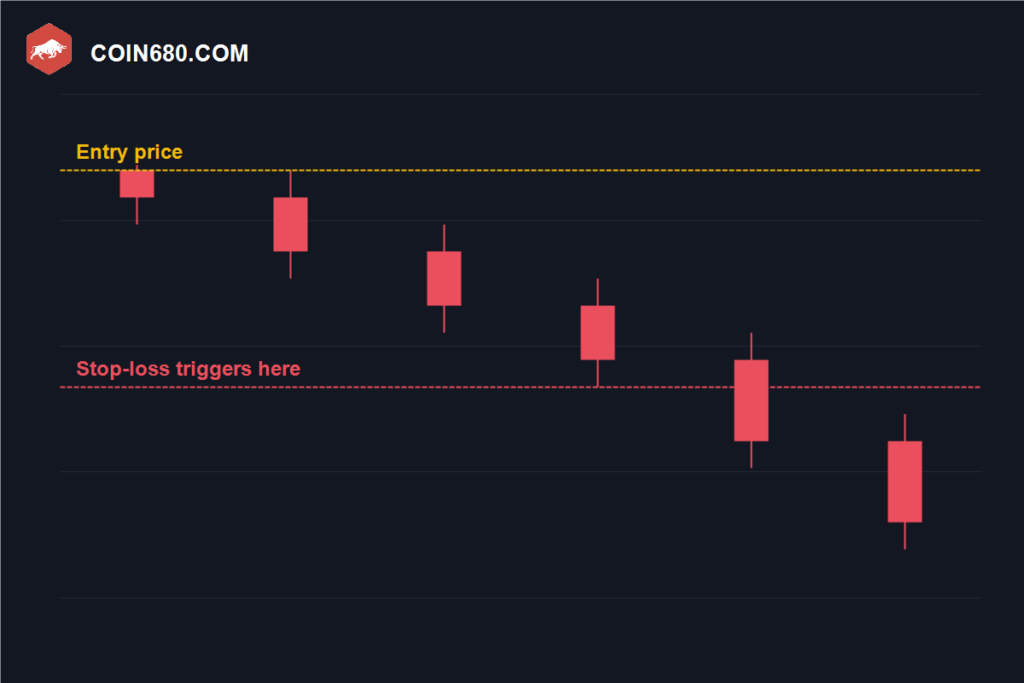
Not every trader can watch the market every second of every day. A stop-loss order acts as a safeguard for exactly the moments when they can’t.
What Is a Stop-Loss Order?
A stop-loss order automatically triggers a sell order once an asset’s price falls to a level you specify in advance, designed to limit losses on a position without requiring you to actively monitor the market. Once the stop price is reached, the order activates and typically executes as a market order at the next available price.
How Does a Stop-Loss Actually Protect a Position?
When you enter a position, you can set a stop-loss below your entry price at a level representing the maximum loss you’re willing to accept on that trade. If the price declines to that level, the stop-loss triggers automatically, closing the position before losses potentially deepen further, without requiring you to be watching the chart at that exact moment.
What Are the Practical Limitations of a Stop-Loss?
A standard stop-loss typically converts into a market order once triggered, meaning the actual execution price can differ from your specified stop price during fast-moving markets, a form of slippage covered in more depth elsewhere in this Academy. In an extremely sharp, sudden price drop, the executed price could end up meaningfully worse than the stop level you originally set.
Some platforms offer a stop-limit variant, which converts to a limit order rather than a market order once triggered, guaranteeing price but introducing the risk the order might not fill at all if the price moves too quickly past your limit.
How Should You Actually Set a Stop-Loss Level?
- Base it on your own risk tolerance, the maximum loss you’re genuinely comfortable accepting on a given position.
- Avoid setting it too tight, close to entry price, where normal price fluctuation might trigger it prematurely without a genuine trend reversal.
- Consider recent support levels as a reference point, rather than picking an arbitrary percentage.
- Understand whether your exchange offers standard stop-loss or stop-limit variants, and the tradeoffs of each.
Frequently Asked Questions
Is a stop-loss order guaranteed to execute at my exact specified price?
No, a standard stop-loss converts to a market order once triggered, meaning actual execution price can differ, particularly during fast, volatile price moves.
Can a stop-loss order be canceled or adjusted after being set?
Yes, as long as it hasn’t already triggered, most platforms allow you to modify or cancel a pending stop-loss order at any time.
Is using a stop-loss always a good idea?
It’s a widely used risk management tool, though the right approach depends on your specific strategy, some long-term holders intentionally choose not to use one at all.
Want to understand the opposite mechanism, a take-profit order, that locks in gains automatically? Continue learning in the Bitcoin Academy.
Disclaimer: The content provided on this page is for informational and educational purposes only and does not constitute financial or investment advice. Cryptocurrency markets are highly volatile and involve significant risk of loss. Always do your own research and consult a licensed financial advisor before making any investment decisions.