
The Terra/LUNA Collapse: A Case Study in Contagion
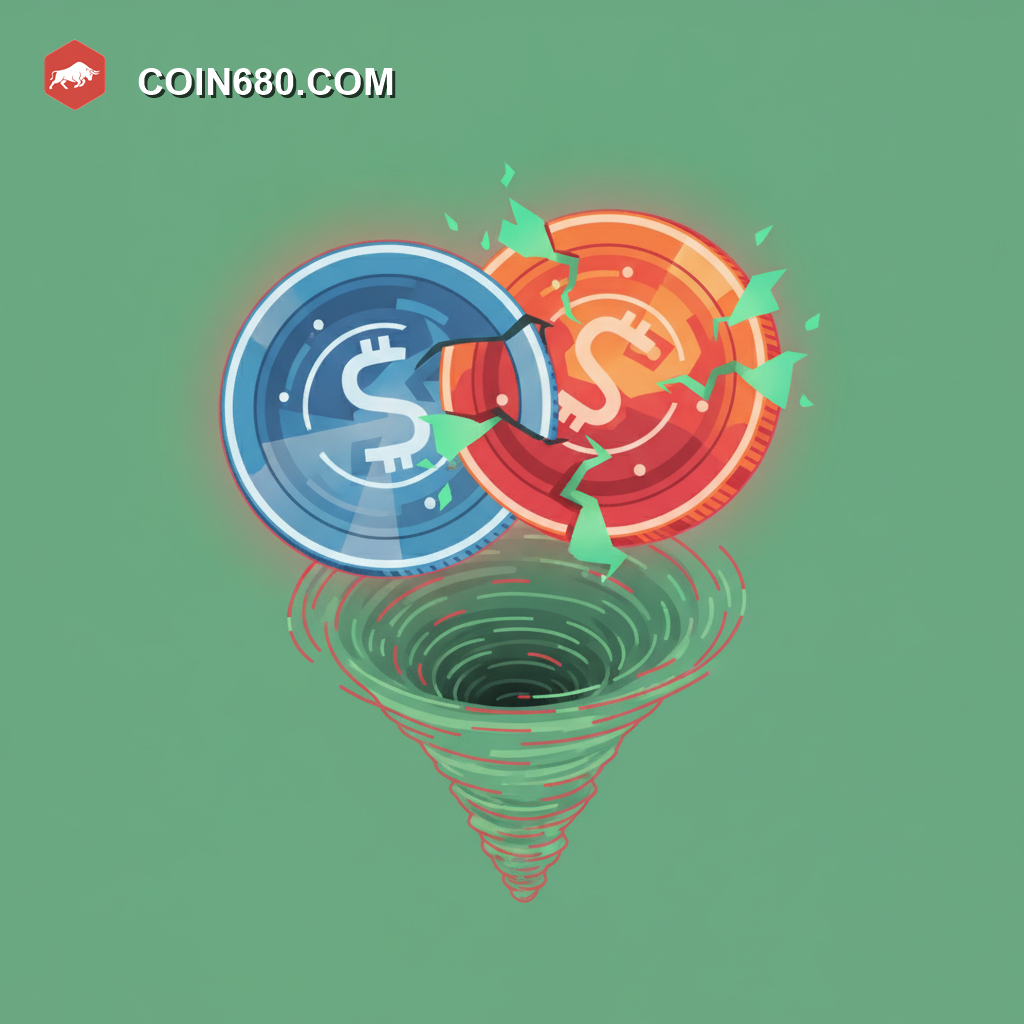
A cryptocurrency designed specifically to never lose its dollar peg lost essentially all its value within a single week — and dragged tens of billions of dollars in market value down with it across the broader crypto market.
TerraUSD (UST) was an algorithmic stablecoin, meaning it was designed to maintain a $1 value not by holding real dollar reserves, but through a mechanical relationship with a companion token called LUNA: users could always swap $1 worth of UST for $1 worth of LUNA and vice versa, meant to create arbitrage incentives keeping UST anchored near its dollar target.
In May 2022, that mechanism broke down catastrophically. A large withdrawal of UST from a major lending platform triggered selling pressure that pushed UST’s price slightly below its peg. As holders rushed to redeem UST for LUNA to profit from the discrepancy, the arbitrage mechanism pumped enormous new supply of LUNA into circulation, causing LUNA’s price to collapse in a self-reinforcing spiral.
Within about a week, both UST and LUNA had lost effectively all their value, wiping out roughly $40 billion in combined market value — one of the largest single collapses in crypto history up to that point.
The contagion spread well beyond Terra’s own ecosystem. Several crypto lending firms and hedge funds with significant exposure to Terra or LUNA suffered severe losses, with some later filing for bankruptcy, contributing to a broader wave of failures throughout 2022 that eventually included FTX later that same year.
Terra’s collapse became a defining case study in the specific fragility of algorithmic stablecoins that rely on a companion token’s market value rather than real, redeemable reserves — and it significantly accelerated regulatory interest in stablecoin oversight worldwide.
Want to understand how the FTX collapse later that same year connected to this broader wave of failures? Continue learning in the Bitcoin Academy.