
Coldcard Now Forces Dice Rolls Before It Will Generate a New Seed
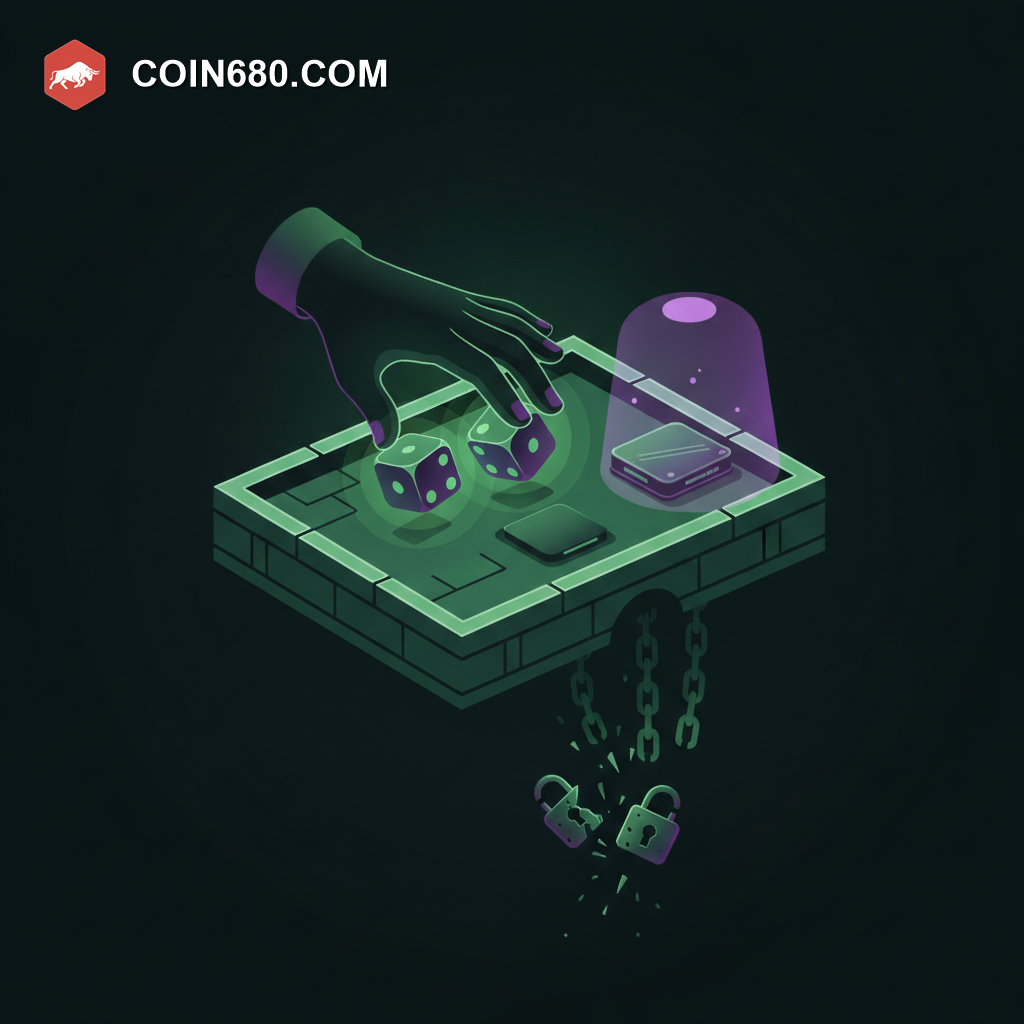
Coinkite has stopped trusting its own hardware to generate randomness alone. Following the wave of Coldcard thefts that drained roughly 1,816 BTC from thousands of addresses between late July and early August — a case coin680 has covered as investigators worked to trace the funds — the company has pushed firmware updates that require every newly generated seed on a Coldcard to include physical, human-sourced randomness. A device can no longer generate a wallet on its own; the owner now has to physically participate in making it unpredictable.
Here’s exactly what changed, and what it means if you own one of these devices.
1. New seeds now require one of three entropy methods
Firmware 5.6.1 for Mk4 and Mk5 devices, and 1.5.1Q for the Coldcard Q, will not finish generating a new seed unless the owner supplies extra entropy through one of three methods: at least 65 key presses entered with unpredictable timing, 50 rolls of a physical six-sided die, or 128 physical coin flips. Independent testing has shown the dice-roll path can produce up to roughly 256 bits of entropy when done thoroughly, far above the 128-bit target the device is designed to hit.
2. The requirement exists because the hardware RNG silently failed
The root cause traces back to a March 2021 firmware change. During a migration of Coldcard’s cryptographic library, a preprocessor guard checked only whether a particular configuration macro existed rather than what value it was set to, and as a result some devices silently fell back to a software pseudorandom number generator instead of the dedicated hardware random number generator meant to secure new seeds. Coinkite has said seeds generated on affected Mk4, Mk5, and Q firmware carried roughly 72 bits of effective entropy instead of the intended 128, while some affected Mk3 units were reportedly as low as 40 bits — weak enough to be brute-forced by an attacker with no physical access to the device at all.
3. Updating your firmware does not fix an old seed
This is the part Coinkite has repeated most forcefully in its own advisories: installing the patched firmware does nothing to protect a seed that was already generated on vulnerable software. Anyone who generated a wallet on an affected Coldcard without independently supplying at least 50 fair dice rolls or a strong BIP-39 passphrase should treat that seed as potentially exposed, generate an entirely new one on the updated firmware, and move funds over deliberately rather than continuing to use the old wallet.
4. Old dice-roll seeds are likely fine, but the bar is now higher
If a seed was originally created using 50 or more genuinely independent, unrecorded dice rolls, Coinkite and outside security researchers agree it is not considered at risk from this specific flaw, since the physical entropy would have compensated for whatever the hardware RNG failed to contribute. Bitcoin researcher and economist Saifedean Ammous was among those who publicly laid out the practical distinction for affected users in the days after the disclosure — who needs to move funds immediately, and who can reasonably wait.
The broader lesson spreading through the hardware wallet community is a blunt one: silicon-based randomness, no matter how well designed, can fail in ways a user has no way to detect from outside the device. Forcing a human into the loop with dice or coin flips is inconvenient, but it means an attacker now has to defeat both the hardware and a genuinely unpredictable physical process to compromise a new wallet.
Hardware wallets reduce but do not eliminate custody risk, and no security update guarantees against future vulnerabilities; this is not financial advice. To learn the fundamentals of secure seed generation and self-custody, visit the Bitcoin Academy.