
Bitcoin’s Block Size Wars: The Road to SegWit (2015-2017)
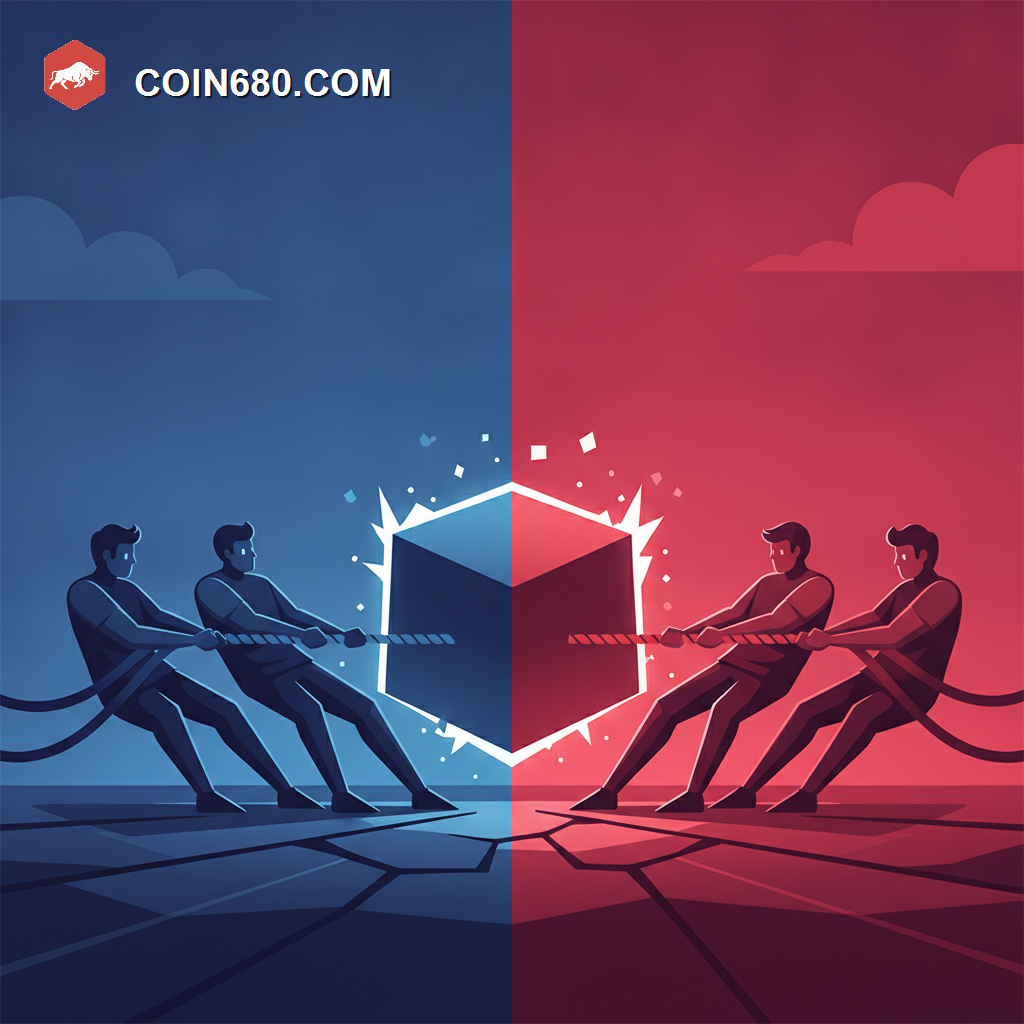
For nearly three years, Bitcoin’s developer community fought a bitter civil war over a single, seemingly technical question: how big should a block actually be?
What Were the Block Size Wars?
Between roughly 2015 and 2017, the Bitcoin community engaged in an extended, often acrimonious debate over how to scale the network to handle more transactions. One camp argued for simply increasing Bitcoin’s block size limit, allowing more transactions per block. The other camp favored more conservative scaling through technical improvements that increased effective capacity without changing the base block size, worried that larger blocks would make running a full node too resource-intensive for ordinary users, undermining decentralization.
The debate wasn’t purely technical , it involved competing visions for what Bitcoin should fundamentally be: a high-volume payments network optimized for cheap, fast transactions, or a maximally decentralized settlement layer where transaction throughput was secondary to preserving broad participation in running the network.
How Did the Conflict Escalate?
Multiple competing proposals emerged, each backed by different factions of miners, developers, and businesses, with public campaigns, contentious online debates, and at times personal attacks between prominent figures on each side. Several alternative client implementations were proposed and, in some cases, briefly threatened to split the network entirely.
The conflict came to a head in 2017 through parallel developments: activation of Segregated Witness (SegWit), a technical upgrade that effectively increased block capacity without a direct block size increase, alongside a separate hard fork that created Bitcoin Cash, a new cryptocurrency with a larger base block size, for those who believed direct block size increases were the correct path forward.
What Did SegWit Actually Change?
SegWit restructured how transaction data is stored, separating out (segregating) the digital signature data from the rest of the transaction. This adjustment freed up effective space within each block, increasing Bitcoin’s practical transaction capacity, while also fixing a longstanding technical bug called transaction malleability that had complicated the development of Layer 2 solutions like the Lightning Network.
SegWit’s activation in August 2017 is now widely viewed as the resolution point of the block size wars for the main Bitcoin chain , it offered a genuine capacity improvement without the more disruptive base block size increase, satisfying enough of the network’s stakeholders to end the standoff, at least for Bitcoin itself.
Lasting Effects of the Block Size Wars
- Bitcoin Cash exists as a permanent result of the faction that prioritized direct block size increases over SegWit’s approach, continuing as a separate cryptocurrency today.
- SegWit enabled the Lightning Network’s later development, since fixing transaction malleability was a technical prerequisite for reliable Layer 2 payment channels.
- The episode became a template for how contentious a governance decision on a decentralized network without a central authority can become, referenced in nearly every major blockchain scaling debate since.
Frequently Asked Questions
Why didn’t Bitcoin just increase its block size directly?
A significant portion of the community worried larger blocks would make running a full node more resource-intensive, potentially reducing the number of people able to participate in validating the network and undermining decentralization.
Is the block size debate still ongoing today?
The most intense phase resolved with SegWit’s 2017 activation and the Bitcoin Cash fork, though scaling remains an active area of ongoing technical development through Layer 2 solutions.
What’s the practical difference between Bitcoin and Bitcoin Cash today?
Bitcoin Cash uses a larger base block size and has taken a different technical development path, while Bitcoin has prioritized Layer 2 scaling solutions like the Lightning Network on top of a smaller base block size.
Want to understand how the Lightning Network actually builds on top of SegWit’s fix? Continue learning in the Bitcoin Academy.
Disclaimer: The content provided on this page is for informational and educational purposes only and does not constitute financial or investment advice. Cryptocurrency markets are highly volatile and involve significant risk of loss. Always do your own research and consult a licensed financial advisor before making any investment decisions.