
How to Recognize and Avoid Phishing Attacks in Crypto
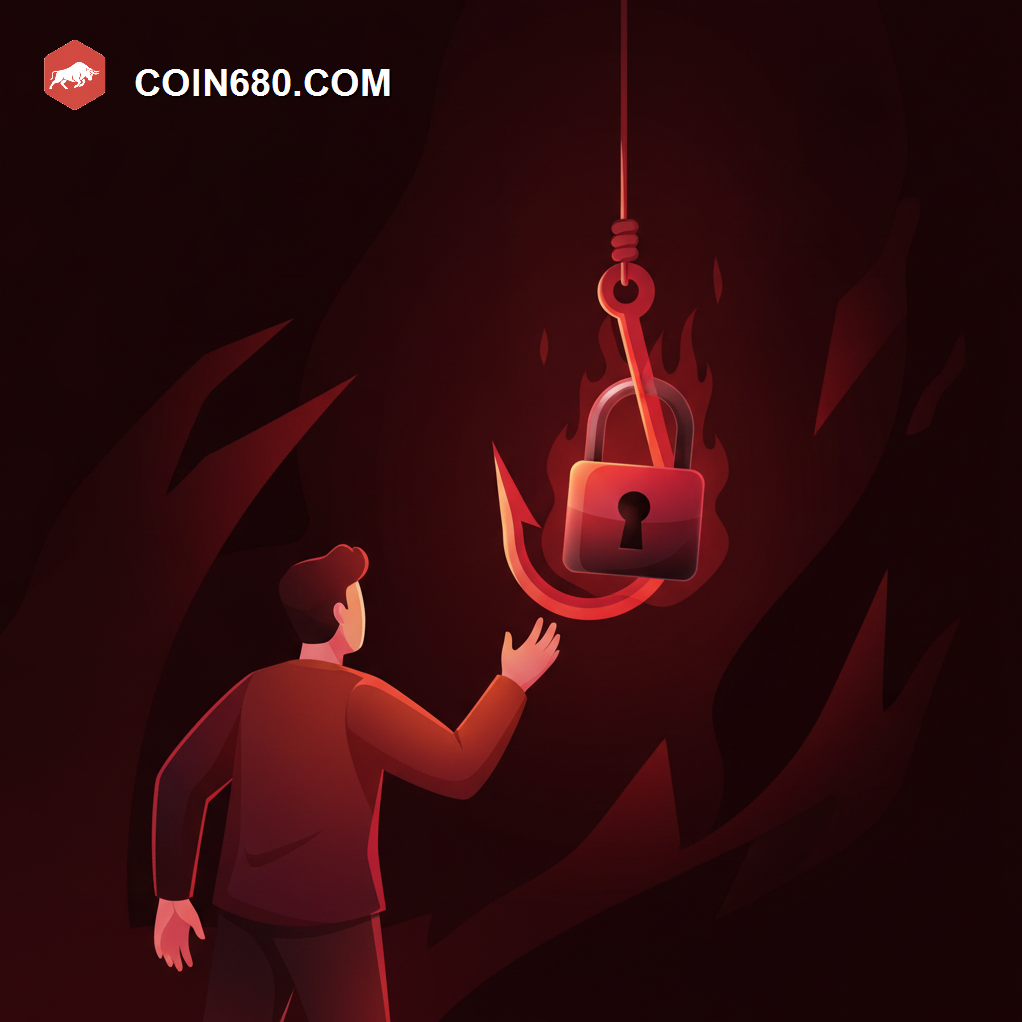
The most common way crypto actually gets stolen isn’t a sophisticated hack of the blockchain itself. It’s a fake login page that looks just real enough to fool you for a few critical seconds.
What Is Phishing in the Context of Crypto?
Phishing is an attack where someone impersonates a legitimate service, website, or contact to trick you into revealing sensitive information, like login credentials, a seed phrase, or a private key, or into taking an action that compromises your funds, such as approving a malicious transaction. In crypto specifically, phishing often targets exchange logins, wallet seed phrases, and transaction approvals.
What Do Common Crypto Phishing Attacks Actually Look Like?
Fake exchange login pages, built to look nearly identical to a real exchange’s website, capture your username and password the moment you enter them, often reached through a link in a fake email claiming urgent account activity. Fake wallet connection prompts on malicious websites can trick users into approving a transaction that drains funds, disguised as a routine wallet connection request. Impersonation messages on social media, posing as official support accounts, direct victims toward fake help pages or ask directly for sensitive information.
How Can You Spot a Phishing Attempt?
Carefully checking the actual URL of any site asking for login credentials or wallet connections, rather than trusting a link’s appearance alone, catches many phishing attempts, since fake domains often differ subtly from the real one. Unsolicited messages creating urgency, warning of account suspension or requiring immediate action, are a consistent red flag regardless of how official they appear.
Legitimate services also never ask for your seed phrase under any circumstance, a request for it, regardless of the stated reason, should be treated as an automatic sign of a scam.
Practical Steps to Reduce Phishing Risk
- Bookmark official sites directly rather than relying on search results or links from emails and messages.
- Verify URLs carefully before entering any credentials or connecting a wallet.
- Never approve a wallet transaction you don’t fully understand, even if a site prompts it as a routine step.
- Enable authenticator app-based two-factor authentication wherever available, rather than relying on SMS alone.
Frequently Asked Questions
Can phishing attacks steal funds from a hardware wallet?
Hardware wallets protect against remote key theft, but a phishing site could still trick you into manually approving a malicious transaction on the device itself, so careful transaction review remains important.
Are phishing emails always easy to identify?
No, sophisticated phishing attempts can closely mimic legitimate communications, which is why verifying through official channels directly, rather than trusting a message’s appearance alone, matters so much.
What should I do if I think I clicked a phishing link but didn’t enter any information?
Close the page immediately without entering anything, and consider running a security scan on your device as a precaution, since some phishing sites also attempt to deliver malware.
Want to understand two-factor authentication in more depth and why some methods are stronger than others? Continue learning in the Bitcoin Academy.
Disclaimer: The content provided on this page is for informational and educational purposes only and does not constitute financial or investment advice. Cryptocurrency markets are highly volatile and involve significant risk of loss. Always do your own research and consult a licensed financial advisor before making any investment decisions.