
What Happens When a Leveraged Position Gets Liquidated?
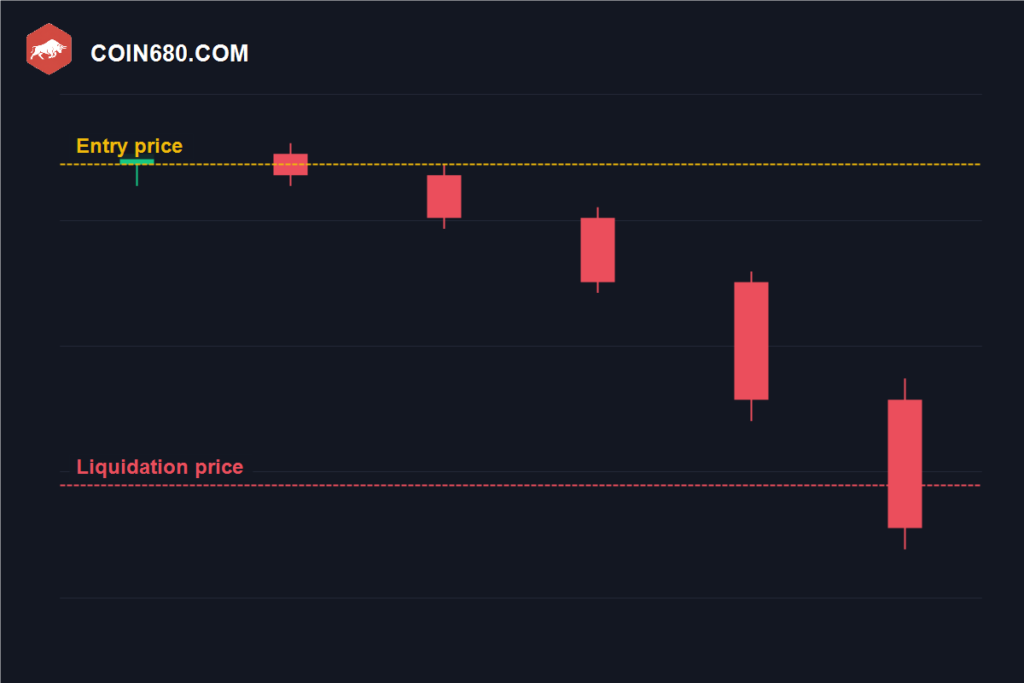
There’s a specific price at which a leveraged position doesn’t just lose value, it gets forcibly closed by the exchange itself, whether the trader wants it to or not.
What Happens When a Leveraged Position Gets Liquidated?
Liquidation occurs when a leveraged position’s losses erode the trader’s margin down to a critical threshold, at which point the exchange automatically closes the position to prevent losses from exceeding the trader’s deposited collateral. Once the liquidation price is reached, the position is closed regardless of the trader’s wishes, often near-instantly.
Why Does Liquidation Happen Automatically Rather Than Warning the Trader First?
Exchanges typically do provide some warning through margin call notifications as a position approaches the danger zone, but the final liquidation trigger itself happens automatically and immediately once the threshold is crossed. This automation exists to protect the exchange, and often other traders on the platform, from a position’s losses exceeding what the trader actually deposited as collateral.
How Is the Liquidation Price Actually Determined?
The liquidation price depends on your entry price, your leverage ratio, and the maintenance margin requirement set by the exchange, higher leverage places the liquidation price closer to your entry price, since less room exists before your margin is exhausted. This is precisely why higher leverage is considered meaningfully riskier, covered in more depth elsewhere in this Academy.
What Happens to Funds After Liquidation?
In a typical liquidation, the trader’s margin for that position is lost, used to cover the losses on the closed position. Depending on the exchange and specific circumstances, particularly in extreme, fast-moving market conditions, losses can occasionally exceed the deposited margin, a scenario some platforms address through insurance funds designed to cover such shortfalls.
How Can Traders Reduce Liquidation Risk?
- Use lower leverage, placing the liquidation price further from your entry.
- Maintain additional margin buffer beyond the strict minimum required.
- Set a stop-loss well before the liquidation price is reached, closing the position on your own terms first.
- Monitor open positions actively during periods of high volatility.
Frequently Asked Questions
Can liquidation happen even with a stop-loss set?
If a stop-loss is set at a level that triggers before the liquidation price is reached, it should close the position first, though extreme volatility and slippage can occasionally complicate this in fast markets.
Does liquidation only affect long positions?
No, both long and short leveraged positions can be liquidated, the mechanism applies whenever losses erode margin down to the critical threshold, regardless of position direction.
Is liquidation the same as a margin call?
No, a margin call is typically a warning that a position is approaching the danger zone, while liquidation is the actual automatic, forced closure of the position.
Want to understand how short selling actually lets traders profit from a price decline? Continue learning in the Bitcoin Academy.
Disclaimer: The content provided on this page is for informational and educational purposes only and does not constitute financial or investment advice. Cryptocurrency markets are highly volatile and involve significant risk of loss. Always do your own research and consult a licensed financial advisor before making any investment decisions.