
Is It Too Late to Invest in Bitcoin?
(A deep perspective from history, monetary fundamentals, and the hidden rhythm of global financial cycles)
I want to begin this story with a question that has been repeated thousands of times over the past decade:
“Is it too late to invest in Bitcoin now?”
At first glance, the question seems simple. But in reality, it touches the very core of how time functions in investing. It’s not only about the price of a digital asset—it’s about the structural shift happening in the global financial system, where the U.S. dollar, the euro, the yuan, and every fiat currency are gradually losing their real value.
In its 15 years of existence, Bitcoin has grown over 44,000%, turning what was once considered a “ridiculous idea” by an anonymous programmer into the 7th largest asset in the world, surpassing many giant corporations we use every day.
Yet here is the paradox:
The more Bitcoin rises, the more people doubt it.
Many look back at 2015, 2017, or 2020 and whisper:
“The price is already high… is it too late to join?”
And that—ironically—is the biggest psychological trap of all.

Trong suốt hơn 15 năm kể từ khi ra đời, Bitcoin đã tăng trưởng hơn 44.000%, biến một ý tưởng “ngớ ngẩn” của một nhóm lập trình viên ẩn danh thành một loại tài sản lớn thứ bảy thế giới, vượt mặt những tập đoàn khổng lồ mà chúng ta sử dụng mỗi ngày.
Nhưng nghịch lý nằm ở đây: càng tăng giá, càng nhiều người nhìn vào Bitcoin với ánh mắt nghi ngờ. Người ta thường tiếc nuối khi nhìn lại năm 2015, 2017, hay 2020 và thầm hỏi: “Giá đã cao thế này rồi, có phải quá muộn để tham gia không?”
Và sự thật, đó chính là một cái bẫy tâm lý khổng lồ.
1. The Nature of Money – and Why Bitcoin Was Born
To know whether it’s too late, we must step back and understand the nature of fiat money.
Before 1971, every U.S. dollar was tied to gold under the Bretton Woods system. A banknote represented actual gold in reserve. But when President Nixon ended the gold standard, the world entered a new era:
paper money was no longer backed by anything physical.
Its value now depends solely on trust, government control, and central bank policies. What does that lead to?
Countries can print money anytime—
to fund deficits, pay debt, or stimulate growth.
Thus, today’s financial system is built on trust alone.
U.S. debt exceeds 122% of GDP, Japan exceeds 255%, and the only realistic option is to… continue printing money.
But printing money creates inflation.
When the money you hold loses value every day, capital naturally flows into scarce assets: real estate, gold, and… Bitcoin.
2. The Accusation: “Bitcoin Has No Intrinsic Value”
A common criticism is:
“Bitcoin produces no dividends, no cash flow, and isn’t backed by anything.”
True. But let’s ask this:
Does the U.S. dollar you’re holding have intrinsic value?
Aside from its enforced role in taxation and economic activity, the green paper is still just… paper.
So is Bitcoin really “worthless”?
Its value lies in its network.
In 16 years, Bitcoin has never been hacked and has never gone offline—while the world’s largest banks and even the U.S. Federal Reserve have experienced system outages.
So what is Bitcoin’s intrinsic value?
-
The most secure decentralized financial network on Earth
-
Borderless, censorship-resistant global transactions
-
And most importantly:
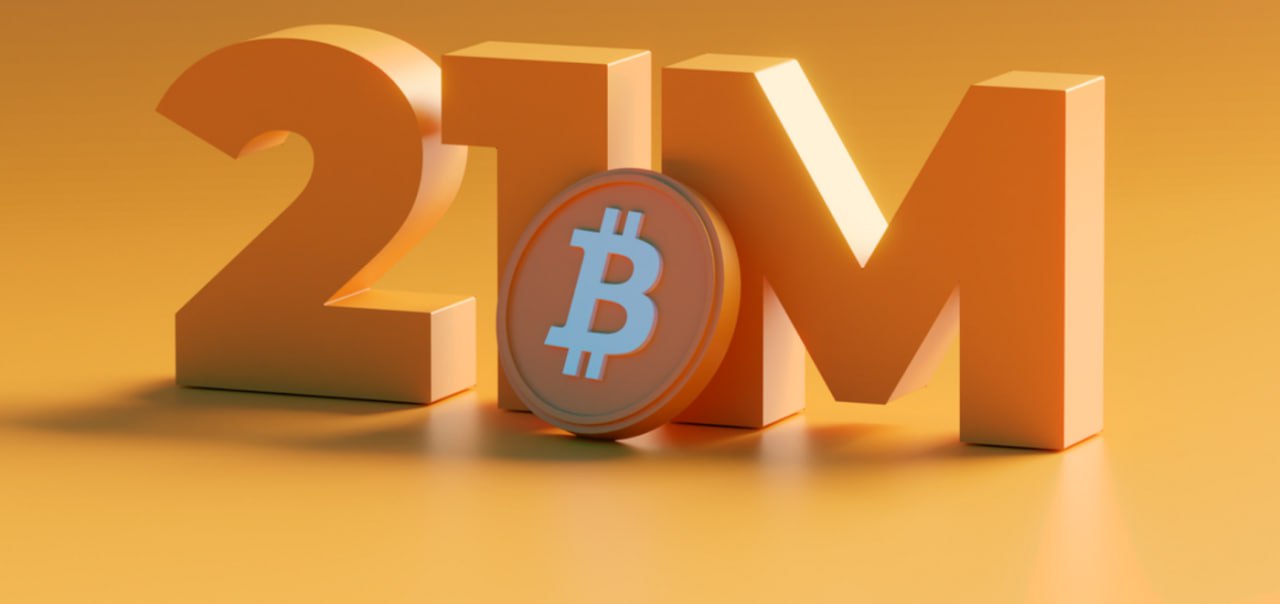
A perfectly scarce asset — only 21 million Bitcoin will ever exist
Not even gold has absolute scarcity.
3. The Secret of Cycles – and the Illusion That “This Time Is Different”
Bitcoin follows a very clear cycle tied to the halving event every four years.
Each halving cuts new supply in half, while demand keeps rising.
Result: a massive surge, followed by a deep correction, and then a new cycle.
Optimists often proclaim: “This time is different. Bitcoin will rise forever.”
But the phrase “this time is different” is the most dangerous sentence in finance.
Every cycle has an end.
History proves that after every parabolic rise, corrections come.
The question isn’t whether Bitcoin will correct—
but whether you’re mentally prepared to survive those corrections.
4. The Real Risk Is Not a Price Drop — It’s Staying Out
Here’s a harsh truth:
Your biggest risk with Bitcoin is not a crash — it’s sitting on the sidelines.
Holding cash feels safe.
But cash quietly loses value every day due to inflation.
Meanwhile, Bitcoin has averaged 50–60% annual growth in the last 5 years.
Gold hits new highs, stocks hit new highs, property hits new highs—everything is chasing the infinite money being printed.
Waiting means missing early accumulation opportunities.
5. Where Are We in the Cycle?
Let’s examine the S-curve adoption model, which all breakthrough technologies follow:
-
Innovators – 2.5%
-
Early Adopters – 13.5%
-
Early Majority
-
Late Majority
-
Laggards
Today, only around 560 million people own crypto—
less than 15% of the global population.
This means we are at the end of the Early Adopters phase.
Not extremely early anymore.
But absolutely not late.

6
6. So… Is It Too Late?
This is the answer everyone wants. And after 15 years watching countless cycles, triumphs, and collapses, here is my conclusion:
No. It is not too late.
But it is also no longer early.
You may not witness Bitcoin rising 1,000x again.
But you will likely witness Bitcoin becoming:
-
digital gold,
-
an accepted reserve asset,
-
a hedge against inflation,
-
and a legitimate pillar of modern finance.
Bitcoin isn’t for getting rich fast—
Bitcoin is for staying wealthy long term.
If you invest blindly believing the price will only go up, you’ll be disappointed.
If you invest to get rich quickly, you’ll be crushed.
But if you understand Bitcoin’s essence—
a scarce asset in an inflating world of unlimited money—
then the question “Is it too late?” becomes irrelevant.
Because sooner or later, every individual will need protection against currency debasement.
And when that time comes, Bitcoin won’t be a choice—
it will be inevitable.
⏳ And that is the paradox of time:
You will always feel like you’re late.
But in reality, with Bitcoin, we are still only at the beginning.