
The foreign exchange market—commonly known as Forex or FX—is the largest and most liquid financial market in the world. It operates 24 hours a day, 5 days a week, where global currencies are continuously bought and sold. Every day, trillions of dollars move between banks, investment funds, corporations, and retail traders.
For beginners, Forex can be both an opportunity and a trap—especially if you enter without proper knowledge.
This guide will help you:
-
Understand what Forex is and how the market works
-
Learn essential concepts (pip, lot size, leverage, etc.)
-
Start trading step-by-step
-
Recognize risks and avoid common mistakes that lead to blown accounts
1. What Is the Forex Market?
Forex (Foreign Exchange) is the global marketplace where currencies are exchanged. Examples include:
-
Converting VND to USD when traveling
-
Importers buying USD to pay international suppliers
-
Retail traders buying/selling currency pairs for profit
In essence, a Forex trade is the simultaneous buying of one currency and selling of another within a pair.

2. Key Characteristics of the Forex Market
Compared with stocks or cryptocurrencies, Forex has several unique advantages:
2.1. Extremely High Liquidity
Daily trading volume reaches trillions of USD. This means:
-
Orders are executed almost instantly (except during major news events)
-
Spreads on major pairs are typically very low
2.2. A Decentralized (OTC) Market
Unlike stock exchanges such as HOSE or NYSE, Forex has no central exchange. Transactions occur through:
-
Banks
-
Financial institutions
-
Forex brokers connected via the internet
2.3. 24/5 Trading
Forex sessions follow the global timeline:
-
Asia-Pacific (Sydney, Tokyo)
-
Europe (London)
-
North America (New York)
This allows traders to choose a time that fits their personal schedule.
3. Essential Forex Concepts
Before pressing “Buy/Sell,” beginners must understand the basics:
3.1. Currency Pair
Example: EUR/USD, GBP/USD, USD/JPY
-
First currency: Base Currency
-
Second currency: Quote Currency
If EUR/USD = 1.2000 → 1 EUR = 1.2000 USD
3.2. Pip
The smallest price movement of most currency pairs.
Typically the 4th decimal place:
EUR/USD moves from 1.2000 → 1.2015 = 15 pips
3.3. Lot Size
Standardized contract sizes:
-
Standard Lot: 100,000 units
-
Mini Lot: 10,000 units
-
Micro Lot: 1,000 units
-
Nano Lot: 100 units
Larger lots = larger pip value → bigger profits or losses.
3.4. Leverage
Leverage allows traders to control large positions with small capital.
Example:
Leverage 100:1 → $100 margin controls a $10,000 position
High leverage magnifies both gains and losses.
3.5. Long & Short Positions
-
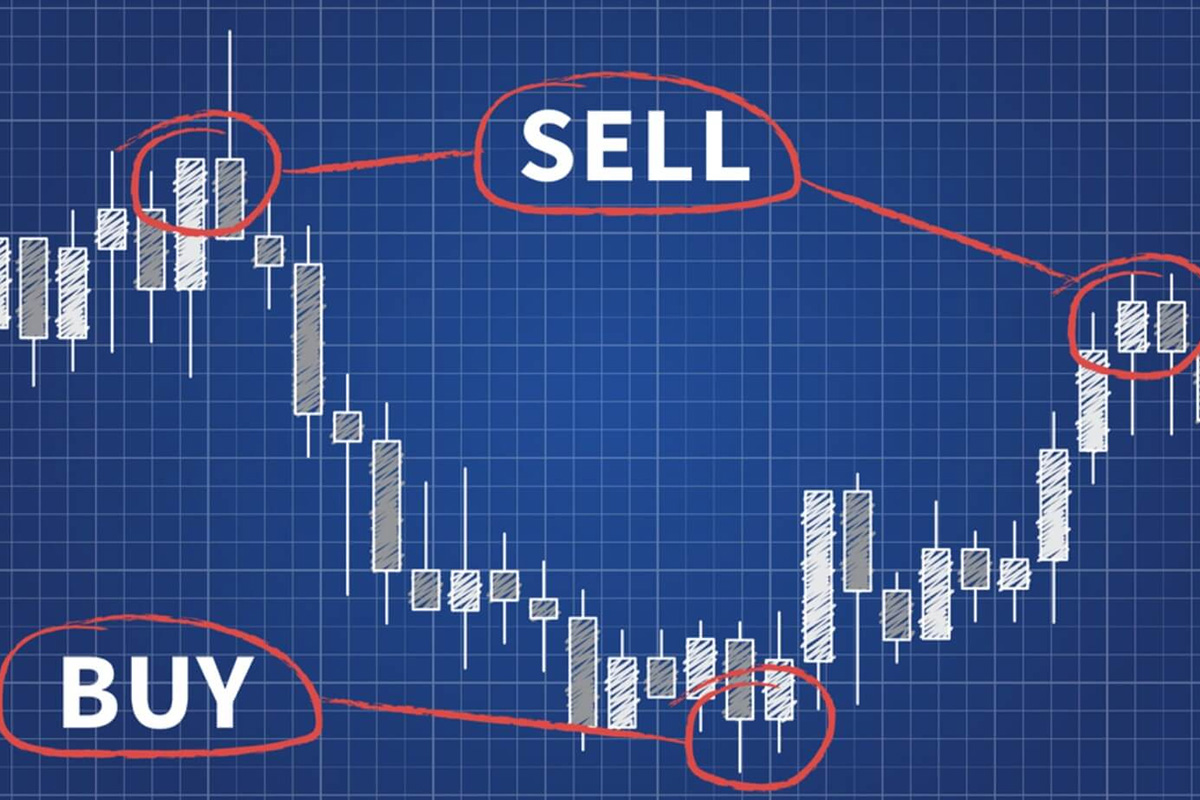
Long (Buy): Expect the price to rise
-
Short (Sell): Expect the price to fall
Forex enables profit in both directions.
4. Three Main Types of Forex Markets
4.1. Spot Market
-
Trades executed at current market prices
-
Influenced by supply–demand, interest rates, and economic news
-
This is the market most retail traders participate in
4.2. Forward Market
-
Private contracts between two parties
-
Exchange currency at a predetermined rate on a future date
-
Used mainly by corporations for hedging
4.3. Futures Market
-
Standardized contracts traded on regulated exchanges
-
Predefined contract size and expiration
Retail traders primarily trade Spot Forex via brokers.

5. Why Do People Trade Forex?
Two primary purposes:
5.1. Speculation
Retail traders aim to profit from exchange rate movements by:
-
Predicting trends
-
Buying or selling currency pairs based on expected direction
Influencing factors:
-
Central bank policies
-
Economic data (GDP, inflation, employment)
-
Geopolitical events
5.2. Hedging
Businesses and institutions use Forex to:
-
Lock in future exchange rates
-
Protect against currency volatility
For example, a Vietnamese exporter expecting USD payments in three months may hedge to secure today’s exchange rate.
6. Simple Example: Pip – Lot – Leverage
You open a Buy position on EUR/USD:
-
Price: 1.2000
-
Size: 1 Mini Lot (10,000 units)
-
Leverage: 100:1
Position value:
10,000 EUR × 1.2000 = 12,000 USD
Margin required:
12,000 / 100 = $120
If price rises to 1.2015 → gain 15 pips
1 Mini Lot ≈ $1/pip → Profit = $15
If price drops 15 pips → Loss = $15
Which equals over 12% of the $120 margin.
This shows how high leverage + small capital = extremely fragile accounts.
7. Step-by-Step Guide to Start Trading Forex
Step 1: Learn the Fundamentals
Understand:
-
Market structure
-
Pip, lot, spread, margin, leverage
-
Economic indicators affecting currencies
Entering Forex without this knowledge is dangerous.
Step 2: Build a Trading Plan
Define:
-
Profit target and maximum acceptable risk
-
Trading timeframe (scalping/day/swing)
-
Main strategy (technical, fundamental, or both)
Step 3: Choose a Reputable Broker
Prefer brokers regulated by trusted authorities (FCA, ASIC, CySEC, etc.)
Check:
-
Spread & commissions
-
Deposit/withdrawal methods
-
Platform (MT4, MT5)
-
Customer support
Avoid scams and unrealistic “guaranteed returns.”
Step 4: Practice on a Demo Account
Use demo trading to:
-
Learn the platform
-
Test strategies
-
Build confidence
Step 5: Start Real Trading—Small and Slow
-
Deposit only what you can afford to lose
-
Trade with minimal lot sizes (0.01)
-
Risk 1–2% per trade
This phase is about discipline—not high profit.
Step 6: Always Use Stop Loss
Stop-loss protects your capital.
Never avoid SL just because you fear being “wicked out.”
8. Risks and Challenges in Forex Trading
8.1. High Leverage Risk
A small market move can wipe out capital, especially for beginners.
8.2. Complex Market Dynamics
Good Forex trading requires:
-
Macroeconomic understanding
-
Knowledge of correlations between currencies, commodities, indices
8.3. Scams & Unregulated Brokers
Beware of:
-
Fake brokers
-
“Guaranteed profit” schemes
-
Influencers pushing unsafe investments
9. Five Important Tips for Beginners
-
Capital management is everything
-
Avoid using maximum leverage
-
Always place a stop-loss
-
Trade demo first
-
Never trade emotionally
Conclusion
Forex is a highly attractive market with enormous liquidity and countless opportunities—but also significant risks. To succeed long-term, traders must develop:
-
Strong foundational knowledge
-
A clear, consistent trading strategy
-
Discipline in risk and emotional management
If you are just beginning to explore Forex, let this guide be your foundation. Before trading real money, strengthen your understanding of money management, trading psychology, and broker selection—your essential armor in this volatile market.
Continue reading:
👉How to Trade Professionally on JustMarkets (2026): Account Types, Strategies & Risk Management
👉Trading Instruments on JustMarkets: Forex, Gold, Indices & Crypto (2026 Guide)
👉JustMarkets Pros & Cons: Honest & Updated Review 2026
👉How to Use Copy Trading on JustMarkets (Beginner to Advanced Guide 2026)
👉JustMarkets vs. Other Brokers: Full Comparison 2026 (XM, Exness, ICMarkets, FXTM)
👉 What Is JustMarkets? Full Broker Review for 2026
👉 How to Open a JustMarkets Account in 2026 – Full Registration Guide
👉 How to Deposit & Withdraw Funds on JustMarkets (Full Guide 2026)
👉 JustMarkets Spreads & Trading Fees Explained (2026 Updated Guide)